Showing posts with label About. Show all posts

Monday, September 22, 2008

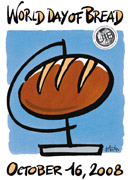
World Day of Bread

3rd World Bread Day hosted by 1x umruehren bitte aka kochtopfJoin me in trying your hand at bread baking, any loaf will do. Can't you just smell that wonderful aroma? I can hear the crackling of the loaf as its crust sets as I pull it out of the oven.

Once when a maintenance worker was working outside my apartment window, I received a knock on the door. When I opened the door, the man was standing there, hat in hand, and he asked me what I was doing--he hadn't smelled anything like what was coming from my window since he was a child. Somewhat incredulously I said I was just making whole wheat bread. He looked so forlorn that I sent him home with a loaf. I guess it's true that the way to a man's heart is through his stomach!

Sunday, November 11, 2007

Thinking Blogger Award …

My thanks to Segolene, of Boire et manger, quelle Histoire!, for nominating me as a Thinking Blogger. The following bloggers have inspired me to do what I do better.

Danno, from Detroit, cooks New Orleans French. His cuisine is exemplified by Louisiane, in southernmost Nouvelle France.

Peter, of à la carte, provides incredible detail and information on traditional French techniques. His boudin blanc is superb!

Kate Hill uses lovely old French kitchenware for recipes both old and new. I feel like I'm in France strolling down the lane to the daily market as I read her blog.

Carole Gillot's Paris Breakfasts paints Parisian dreams for me. I can "have" coffee in the local shops and "buy" macarons from Laduree.

Lucy Vanet's Kitchen Notebook, although a modern blog, looks old-fashioned in its food pictures and inspires me to plate my food in French ways.

Thank you one and all--French cuisine is so much better for your efforts!

Tuesday, June 12, 2007

Where's my passport …

My simple dish of meat and cheese tied for 7th place in a new competition for bloggers to demonstrate at the prestigious Européennes du Goût 2007. Try my rib steak with pepper sauce and cheese and onion crispy toasts to sop up the juices--bon appétit!

Friday, October 27, 2006

Anniversary #2

18thC Cuisine has marked its 2nd anniversary with receipt of enough foie gras to try many recipes. Look for upcoming posts on different ways of preparing this delicacy and also on the archaeology of the ceramic dishes used to cook it sans a flour crust.

Many thanks to my loyal fans--here's to another year of exploring the past in French kitchens!

Enjoy Foie Gras, home of some of the best foie gras and other French treats--charcuterie and truffles.

Sunday, October 22, 2006

Judging Paper Chef 22, the Slow Edition

Owen is amazing–he manages to elicit the most creative dishes from sometimes humble and oftentimes obscure ingredients–and he always throws in a curve at the last minute! But cooks from around the world always come up with combinations that fit in both home-style and haute cuisines. This month’s edition drew barberries, pumpkin, spinach and slow ingredients and when Own emailed me the writeup, my mouth immediately began to water! Eye-popping haute dishes and earthy, unctious home-style casseroles–now the dilemma–how to decide!

First the home category . . . Noodle Cook prepared a smoky dish of grilled and carmelized vegetables–one a capsicum pepper [too hot for me!]–and deglazed the pan with slow-aged balsamic vinegar served over couscous. My kids would eat this dish up before the cook could get a taste!

The Laughing Gastronome introduced me to Middle Eastern cooking and a new use of yoghurt. Her Chicken Barberryani was a spinoff from a famous traditional Iranian recipe using a rice mixture as the “container” of a finished casserole. Emma served it with a beautiful combination of greens and caramelized pumpkin.

Jonskifarms, even though laboring with a broken arm, turned out a complicated and winning entry in the Home category, complete with an interesting history of the dish–again using a slow-cooked rice and yoghurt crust, Oven-baked Rice with Barberries and Butternut Squash on a bed of spinach, also of Persian influence. This dish would bubble merrily away in the back of my fireplace tucked in among the ashes. Congratulations!

Haute category’s entries begin with Columbus Foodie’s fresh-looking salad of goat cheese, blueberries, and crunchy pumpkin seeds dressed with balsamic vinegar. This was her first entry and her salad would certainly do any restaurant proud–her plating was very appetizing and colorful.

Anita’s entry of Parsee Dhansak made me want to lift the lid and dig right in–I could fairly smell the toasted spices and richness of the lentils and pumpkin wafting through my kitchen. She was concerned that the plating did not do the dish justice, but served in an earthen crock with crusty bread this main dish could happily grace any harvest table in the richest restaurant.

Congratulations to our Haute winner, Bron, whose Pumpkin Tortellini stuffed with spinach and cheese served with a berry-wine sauce was a stunner! The colors alone shout Haute cuisine and the tart-sweet taste combination make this a winner in any category. Her plating and photos were superb.

Kudos for a job well done for all of the entrants–your dishes look wonderful and should taste even better. Thanks, too, to Owen for hosting such a fun competition. This edition’s entries would certainly compare to any TV competition–great job.

Thursday, September 21, 2006

To Eat Before I Die . . .


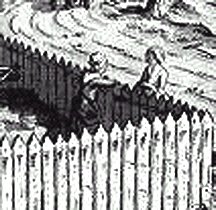
Detail from 18thC Cahokia, Pays Illinois

Pascal stopped by on his way to market and we talked about many things over the fence—especially the types of food we would recommend to someone to eat before we die. My list included:

—Horseradish & crème fraîche eaten with the end cut from a roast of beef [with all the meat juices carmelized on the crispy edges] or with a slice of boiled tongue, either cold or hot.

—Ice cream with rum-soaked fruit mixed in [spumoni], eaten with a small cup of very strong black coffee.

—A slice of charentais melon, fresh from the garden and sprinkled lightly with sea salt.

—A place in the shade after you’ve been working hard on a hot day and a cold glass of beer to quaff while eating a few salty tidbits.

—A group of friends with whom to sip a bit of your own homemade liqueur. My favorite is vin noix, green walnut wine.

Sunday, January 29, 2006

Bread from Levain from my EBBP3 Box


Just out of the oven, a country loaf made from a levain received from Petula, my Euro Blogging by Post sister from Italy. I received a wonderful box filled with candies, torrones smothered in chocolate; 2 bars of dark rich chocolate for use in cooking something truly memorable; a tiny Italian cookbook written in French; chamomile tea and a wonderful chatty letter written in very good French, because Petula doesn’t speak English “so good,” such a wonderful box of goodies.

My thanks to Johanna, the Passionate Cook, for hosting this edition of EBBP.”

Thursday, January 05, 2006

Nominee - Best Theme - 2005 Food Blog Awards

Dearest readers and friends,

Thank you so much for your nomination again in this year's 2005 Food Blog Awards category for Best Theme. I am very honored and pleased. Please cast your votes here. My competition is stiff and each competitor is worthy of the honor.

A special thanks to Kate Hopkins, The Accidental Hedonist, for hosting the competition. Her efforts inspire us all!

Sunday, November 20, 2005

Over the River and Through the Woods . . .


I am off to see my new granddaughter for Thanksgiving in Idaho, where I will also see my four grandsons, one of whom I haven't yet seen. See you when I get back . . .


Monday, October 24, 2005

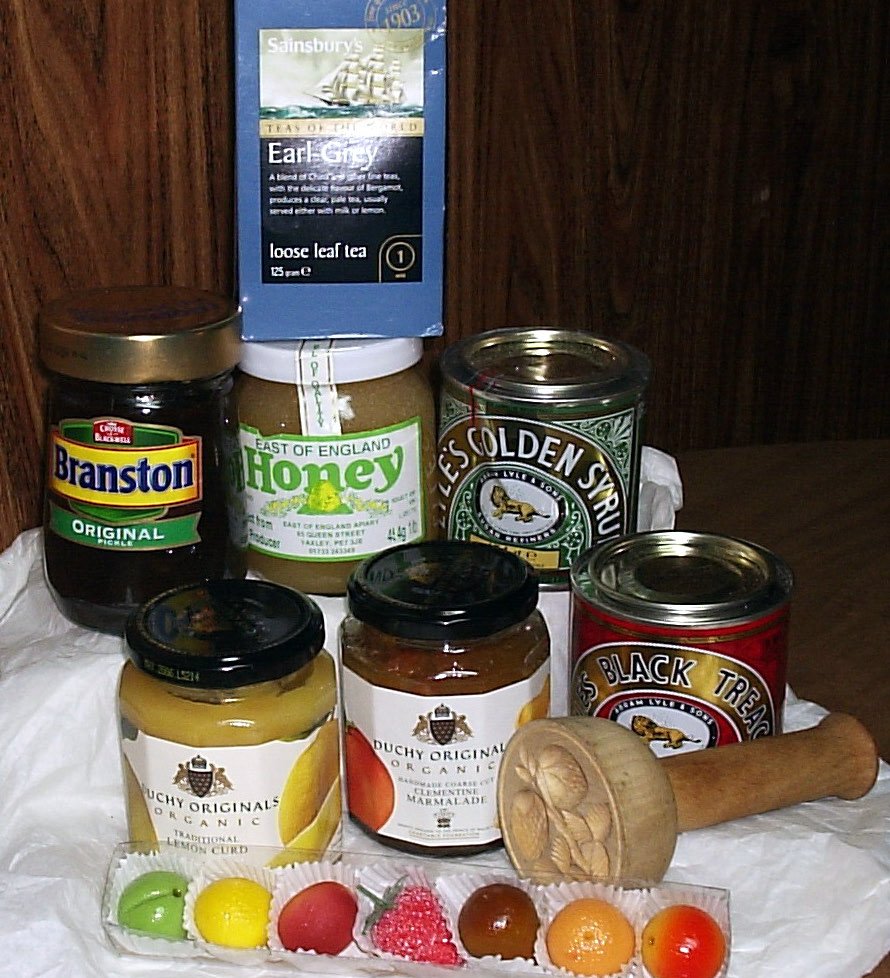
Just in on the last canoe - EBBP2


In September I received an invitation from Andrew to participate in Euro Blogging by Post, a "secret blogger" kind of event in which bloggers send local, seasonal products and secret items from their cupboards to another who then must create a recipe using one of the items received. I sent my package to Christina.

Each time a canoe put into port, I sent my husband down to the lakeshore to see if I had received any packages. Each time he came home empty handed--until today. On the last canoe arriving before freezeup, I received a wonderfully heavy package, brimful with delights from England. Moira had sent me products that are next to impossible to get--sometimes packages are lost in canoe upsets or portages or through the knavery of the those wily boatment--marvelous marzipan, treacle and confitures and a lovely antique butter stamp, pickle and tea.

Thank you, Moira. I plan to use the black treacle to make baked beans.


Search Tags: ebbp food & drink euro blogging by post

Saturday, September 03, 2005

New Orleans Menu - In Remembrance

As a tribute to the refugees from Katrina, IMBB and Paper Chef have joined together in asking you to stay home this weekend and cook, donating what you would have spent on dinner out to the relief effort.  Owen has chosen tomatoes, sausage, shrimp and beer as the ingredients.  I do not eat pork or shellfish, so I will substitute beef sausage and chicken.  I have included both breakfast and lunch, as well.  Enjoy your “day in New Orleans,” in remembrance.


Breakfast
Beignets or
Brioche or Croissants (with jam and real butter)
Café au lait

Lunch
Paté de Campagne
Crusty baguette
Cornichons
Brie or Camembert
Fresh fruit
Bottle of wine

Supper
Chicken & Okra Gumbo (Thanks to Jan and Donna from Metarie, LA, who helped me perfect my roux)

1/3 c flour
1/3 oil
1 chicken, cut up, (back, wings and neck reserved for stock at later date)
½ pound smoked beef sausage, diced or in thin slices
1 onion, diced
1 bay leaf
1 teaspoon dried, crushed thyme
2 teaspoons Louisiana hot sauce (not Tabasco®, but one more vinegary than hot)
1 can okra with juice (frozen or fresh okra will not impart the tang of canned—critical to my version)
1 can diced tomatoes with juice
salt and cayenne pepper to taste
filé powder
water or chicken broth
1 1/3 cup white rice

Make a nut brown roux with flour and oil in a cast iron (enameled Dutch oven) .  When done to your taste, add diced onion to hot roux, along with thyme and bay leaf, sausage and chicken, stirring and browning onion and chicken in the hot roux (Adding the chicken and browning it in the hot roux prior to adding liquid will set the flesh of the chicken—it will stay together—flesh on the bone.). Add canned okra and tomatoes, stirring constantly to prevent scorching.  Add 2 quarts boiling water or broth and Louisiana hot sauce and simmer for at least one hour.  Add salt and cayenne to taste.  Keep hot.

Add 1 1/3 cups uncooked rice, 3 cups cold water and ½ teaspoon salt to a saucepan and bring to a boil--do not stir!  Turn down to low and cover; simmer for 15 minutes or until rice is done and fluff with a fork.  

Stir filé powder into gumbo and serve immediately over rice in soup bowls.  Have extra hot sauce and filé powder on the table to add for taste.

Serve with crusty bread and a glass of cold beer

Dessert
Cream Cheese Ice Cream
Your favorite dessert wine

Sunday, August 14, 2005

July/August Chow Magazine - verjus

I was interviewed by Ella Lawrence for an article on verjus in this month's Chow in the "Tactics" section, portions of which were previously published in MetroActive Online.

I was out looking at my grapes to see what kind of crop I'll have, and there will be plenty for another jug of verjus for myself--I may try several different recipes this Fall.

Monday, June 27, 2005

the cooks next door

A visitor from New Orleans stopped by the other day and asked me some questions about my cooking references. He was preceded by a neighbor who also had questions about when I learned to like working in the kitchen.

Msr. Danno had these questions for me:

Number of Cookbooks I've owned: I can count 123 on the shelves in the common room and I have several by the bed. But that doesn’t count several books that fell overboard the canoe on the trip across the lake.

Last book that I bought: La Varenne's The French Cook, Englished in 1653

Last (Food) book I read: The History of Food, Maguelonne Toussaint-Samat
Cookbooks: Paris Sweets, Dorie Greenspan

Five Cookbooks that mean a lot to me: La Cuisine, Raymond Olivier
Savoring the Past:the French Kitchen Table from 1300-1769, Barbara Ketcham-Wheaton
Nouvelle instruction pour les confitures, les liqueurs et les fruits. de Massialot
Varenne's The French Cook, Englished in 1653
La Techinque, Jacques Pepin

Previously Msr. Chefdoc had these questions for me.

What is your first memory of baking/cooking on your own? When I was six, I got caught in the pantry eating chocolat tablets—ma mère taught me to bake biscuits that very day.

Who had the most influence on your cooking? Peering into the pots and pans of LaVarenne and Massialot via their livres de cuisine.

Do you have an old photo as "evidence" of an early exposure to the culinary world and would you like to share it? Yes, a very old picture of my cuisiniere.


my first cuisiniere

Mageiricophobia - do you suffer from any cooking phobia, a dish that makes your palms sweat? With good instructions or a mentor, there is nothing I am afraid to try cooking.

What would be your most valued or used kitchen gadgets and/or what was the biggest letdown? I couldn’t live without my mortar and pestle—such a wonderful food processor. My biggest letdown was a bundle of sticks tied and used to whip—it didn’t work well.

Name some funny or weird food combinations/dishes you really like - and probably no one else does! Bleu fromages and fruit.

Your favorite ice-cream... Citron Crème Glacé

You will probably never eat... Pork or shellfish

Your own signature dish... Paté de Campagne

Added by Chefdoc of A Perfect Pear... Any signs that this passion is going slightly over the edge and may need intervention? My husband thinks so at times, but I’m sure he’s mistaken!

Wednesday, May 04, 2005

Babette's Feast

Babette's Feast

This foreign film is subtitled in English but that does not detract from the wonder of this movie. I really enjoyed seeing the austere kitchen before Babette arrived and the wonders she was able to produce in what, by modern standards, were very primitive conditions. I see her wood stove and I long for that modern convenience compared to my fireplace, grates and crane. This movie shows what wonders a meal prepared with love can do.

"Some movies can only be described as delicious. In Babette's Feast, a woman flees the French civil war and lands in a small seacoast village in Denmark, where she comes to work for two spinsters, devout daughters of a puritan minister. After many years, Babette unexpectedly wins a lottery, and decides to create a real French dinner--which leads the sisters to fear for their souls. Joining them for the meal will be a Danish general who, as a young soldier, courted one of the sisters, but she turned him away because of her religion. The village elders all resolve not to enjoy the meal, but can their moral fiber resist the sensual pleasure of Babette's cooking?

"The meal itself is the center of the film, and during that meal all the threads of the film are richly woven together. The pious sisters and their community finally learn the true depths of faith - something which is more than just what we believe, but rather also reflects what we do and the love with which we do it.

"Babette's Feast deservedly won the 1987 Academy Award for Best Foreign Language Film. This lovely movie is impeccably simple, yet its slender narrative contains a wealth of humor, melancholy, and hope." amazon.com reviews

Friday, April 15, 2005

Metroactive Dining Online Magazine


Just in: a press clipping regarding an interview on verjus occurred in Metroactive Dining online magazine from the Bay Area of California. Click here for a recipe for verjus.

Thursday, February 10, 2005

Close Your Eyes and Take a Bite!

This is for Jennifer's Fond Food Memories .

One of the church elders' inlaws had come to town and I wanted to have them all over for dinner, as I also knew them. This particular elder had raved about my cooking from the pulpit and I was out to impress. My favorite food at the time was Hungarian Goulash served on a bed of sauerkraut and potatoes--I could eat it seven days a week and cold for breakfast. My teenage children liked it too, but they are not good judges, because unlike most children today, my kids would eat all kinds of vegetables and were always willing to try my new cooking experiments. They usually found that when I told them to "close your eyes and take a bite" they were in for a taste treat that most mothers didn't even dare to proffer.

My recipe for goulash takes about 6 hours to prepare, and may indeed look a little strange if ethnic food is not one's choice, but I was pleased with the taste and aroma and proudly bore the tureens to the table. When the elder removed the lids from the goulash and the kraut and took a deep breath and said, "Carolyn, I thought you always cooked something good when you had company," I was crushed. I told him, "Fred, you know I would never serve a guest something that was not scrumptious--close your eyes and take a bite--I promise you won't be disappointed." He steeled himself to take a tiny bite of each onto his plate and then into his mouth--and he did close his eyes! And he wasn't disappointed, he even told his teenage kids that they had to eat some. But I learned a valuable lesson--when you're out to impress--it has to look as good as it tastes!

Hungarian Goulash with Sauerkraut from McCall's Cooking School Magazine

For the Goulash:
3 lb boneless beef chuck cut into 1 1/2" cubes
1 lb onions sliced
1/4 cup salad oil
1 tablespoon paprika
1 1/2 teaspoons salt
1/8 teaspoon pepper
1 can (10 1/2 oz) condensed beef broth, undiluted

For the Sauerkraut:
2 cans (14-oz size) or 1 quart bag sauerkraut
1 large potato
3 tablespoons butter
1/2 cup chopped onion
1 teaspoon caraway seeds
2 tablespoons light brown sugar
Boiling water

For the Finish:
3 tablespoons flour
1 cup sour cream

In a large skillet, heat oil over high heat and sauté beef cubes until brown on all sides. Remove to a Dutch oven as it browns. It will take 30 minutes or so. Add sliced onions to drippings, cooking and stirring until golden, about 10 minutes. Spoon over beef. Add paprika, salt and pepper. Stir 3/4 cup beef broth into skillet to deglaze pan and bring to boiling. Scrape all into Dutch oven over meat and onions. Place into 300ºF oven and cook, covered about 4-5 hours. When it is done, it will look brown and soft, and the onions will be melted away. Just before beef is done, prepare sauerkraut.

Drain sauerkraut well. Pare potato or not, and grate enough to measure 3/4 cup. In hot butter in a large skillet, sauté chopped onion until golden. Add sauerkraut, potato, caraway seed, brown sugar and 2 cups boiling water. Bring to boil, reduce heat and simmer, uncovered, stirring occasionally, until most of the liquid has evaporated.

To finish, stir remaining beef broth into flour until smooth and then stir into beef goulash, stirring constantly. Simmer on the stove, stirring occasionally for 15 minutes. Just before serving, slowly stir 1/2 cup hot gravy into sour cream in a small bowl. Mix and add slowly back to beef mixture. Stir well to blend, reheat, but do not boil. Serve goulash over sauerkraut. Makes 8 servings.

Sunday, January 30, 2005

La Bonne Espouse - Good Wife Contest


The Chocolate Girl, Etienne Liotard, 1744-45

Plastered all over the walls of my house in the Fall of 2000 were pictures of the Chocolate Girl--a picture I had chosen to encourage me to think of ways I could acquire the accoutrements and knowledge necessary to win La Bonne Espouse contest at Ft. De Chartres' April Trade Faire.

Carol Wunderlich, the originator of the contest conceived to encourage female participation in reenacting, had posted a list of requirements on F&I Women for the contest.

Each participant had to have period correct equipment and be able to compete in three categories: making a beverage of either tea, coffee or chocolate; baking some type of bread; and sewing a small period garment. I was in heaven. That curious passenger pigeon, ebay_france, began to make deliveries to my house; a chocolatière, iron kettles, antique scissors. Another pigeon brought linen from Russia for chemises, bonnets, jupes (petticoats), corsets (jumps) and manteau-de-lit (a bedjacket). Each night after work I was sewing up a storm, gathering cooking equipment, and practicing cooking over a fire. I even managed to talk my husband into moving from Idaho to Illinois (that same passenger pigeon brought an invitation to teach English across the river in Kentucky). Imagine my dissapointment when I was the only woman willing to participate in the contest the next Spring 2001. Carol and I both talked up the contest; Carol even simplified the contest rules.

Then came Spring 2002. Five courageous ladies plopped themselves down on the steps of a ghosted building and were handed a threaded needle, one yard of cloth, a thimble and a pair of scissors. We had one hour to make a cap or bonnet (ladies in the 18th Century usually covered their hair for religious reasons). Each bonnet was given a number at the end of the contest and taken to the tavern to be judged after dinner by everyone at the encampment. My lappets cap won. And here is my prize, a lovely handmade basket by Linda Summerville, full of limes, lemons and a pineapple, the symbol of hospitality in 18thC America.

Learning to cook on an open fire or in a fireplace in a historic home is fun and easy with the proper tools, just as a modern kitchen and exquisite tools contribute to the success of cooking today--they both take practice and perseverance. Join me in reenacting and stretch yourself in learning a new way to provide delectable treats. Who knows--someday your lights may go out and that fireplace will be sitting there waiting to nourish you--give it a try!

Monday, January 17, 2005

Cooking or McCooking?


click photo to enlarge
DH with one too large to fit in the frying pan whole.

When I remarried, now ten years ago (a mid-life commitment to optimism), I asked my husband (DH) to build a wood box to hide the cooler in which I intended to take period-appropriate dishes to events, each dish lovingly prepared on my gas range at home, each dish needing only to be reheated over my camp cooking fire, each dish intended to wow everyone who sampled my preparations. He agreed to build me the box--I am still waiting for it--but he chided me for my "McCooking" intentions; said I was entirely missing the purpose of reenacting.

My husband began shooting muzzleloading firearms in the 1960s. Blue jeans and suede fringe were still seen at rendezvous. Authenticity was fine as long as it didn't get in the way of having a good time. But what he and his friends did was to camp in the manner that Carson or Bridger or an unnamed mountain man might have. They went into the mountains of Oregon and Alaska with their rifles, frying pans and axes. Little else. Once when asked why he took along his ax, he said, "Some of what I shoot won't fit into the frying pan whole." That was true, but not the truth. He and his friends were camping minimalists. In their blue jeans, they were living for a weekend, or a week, or in a few cases, several weeks as mountain men. Costume was less important than experience. They transcended the trappings of their mountain man time period, and they lived day by day off what they killed. No game, no dinner. They took along no coolers concealed in wood boxes, no corn chowder needing only to be reheated, no 20th or now 21st Century MREs [Meals Ready to Eat]. Their seasonings were limited to salt from a horn, and campfire char. And they brought home enough meat to fill winter freezers year after year.

When we married, I informed my husband that I had no intentions of reenacting as a Native American woman, stretching and chewing hides for him. My interests were in how the "civilized" world lived. I had no interest in spending a night burrowed in a mound of spruce branches stripped from nearby trees, then gnawing on a strip of charred meat for breakfast, which he has done while moose hunting in Alaska. And he has humored me by relocating farther east than he ever had any intention of living. But his point about McCooking is valid: are we really reenacting a "civilized" time period when our campfire cooking is limited to a camp stew, charring a few steaks, and reheating dishes prepared at home? Can we prepare the type of dishes that would have come from a habitante's 18th-Century hearth kitchen over an open fire, without first doing all or most of the cooking at home? Of course we can. Of course I can--that's what I told my husband. "Then why," he asked, "do you need the cooler?" "To protect the eggs," I quickly answered. As I mentioned earlier, I'm still waiting for my wood box so apparently my answer wasn't reason enough to motivate my husband. We can do more than reheat period-appropriate dishes, make stew, or grill steaks.

Many if not most of the techniques associated with modern French cuisine were known in the 18th-Century. These techniques were practiced by frugal housewives who had more to work with than a frying pan, an ax, and a dead animal. Habitants didn't practice "cuisine minimalism." At least as early as in the writings of Chaucer [c.1380], French chefs were recognized for their preparation of savory sauces. A frugal habitant's wife would have thickened the drippings from a roasted chicken with an egg yolk and a little cream, beaten together in a separate bowl. She would, then, have poured this enriched sauce over the hot meat to dress up an otherwise plain dish. The use of brandy or wine (or even water) to deglaze a skillet will produce an almost instant sauce that can add superb flavor to camp cooking. Other possibilities, especially for wild game, are fruit juices, preserves, honey and vinegars. French sauce techniques are not difficult to master--consider giving them a try--and bon appétit!

Wednesday, January 12, 2005

18thC Cuisine in the news...


A friend drew my attention to the fact that 18thC Cuisine was mentioned in an article in the Boston Globe today, "Food Bloggers Chronicle Their Delicious Obsessions". I blush to be mentioned along with stars like Clothilde and Pim and Pascale, among many others. Thank you, friends and fellow bloggers for such an honor.

Tuesday, December 21, 2004

2004 Foodblog Awards Nomination - Best Theme

Dear Readers, 18thC Cuisine has been nominated for Best "Theme" in the 2004 Foodblog Awards--what an honor and a privilege just being nominated. Please check out the other wonderful blogs in this category and others and cast your votes while catching glimpses of eye-catching photography and scrumptious recipes.
Related Posts Plugin for WordPress, Blogger...