Showing posts with label Desserts. Show all posts

Saturday, February 14, 2015

Omelette à la Crême de Riz - Omelette with Cream & Rice Flour


Mix two spoonsful of rice flour, with three eggs, a little salt, a quarter pound of sugar, a quarter pound of good butter, and a pint of cream: boil until as thick as Franchipane cream: when almost cold, add a little lemon zest, citrus marmelade, candied orange flowers, macarons [macaroni-drops] crushed fine, ten egg yolks, the whites of which are well beaten; garnish the inside of a deep round pan with a sheet of paper, well buttered, and bake in the oven; turn it over upon a plate, and glaze it with sugar.

A delightful, lightly sweet dessert, more substantial than a soufflé. Use your imagination with inclusions--bread crumbs or almond meal instead of macarons and your choice of zests and marmelades or jams.

Omelette à la Crême de Riz.
Délayez deux cuillerées de farine de riz avec trois oeufs, un peu de sel, demi-quarteron de sucre, deux pains de beurre, chopine de crême: faites cuire & bien lier comme une franchipanne; presque froide, mettez-y citron verd, citron confit, fleurs d’orange pralinées, macarons, le tout haché fin; dix jaunes d’oeufs & les blanc fouettés; garnissez le dedans d’une poupetoniere avec du papier blanc bien beurré; mettez-y votre composition & faites cuire au four; renversez sur le plat; ôtez le papier, servez glacé de sucre.

Les Soupers de la Cour
, Menon, Tome IV, 1755, p. 68-69.

Sunday, February 08, 2015

Omelette à la Mariée - Bride's Omelette


Break ten eggs in a bowl and add a little salt, candied orange petals, citrus marmelade, crushed macarons; beat all very well. Make your omelette in the ordinary manner; serve hot, glazed with sugar [sprinkle on powdered sugar, or use regular sugar and broil or use a salamander].

Omelette à la mariée.
Cassez dix oeufs, mettez-y un peu de sel, de la fleur d’orange prâlinée, citron confit, macarons, le tout haché très-fin; faites votre omelette moëlleuse à l’ordinaire; servez chaud; glacez de sucre.

Les Soupers de la Cour
, Menon, Tome IV, 1755, p. 68.

Tuesday, September 09, 2008

Compotes of Peaches

When the Peaches are full ripe, they can only be roasted; because this sort of Fruit is too soft. Therefore they must be neatly par'd and laid in Quarters, upon a Silver-dish, or Plate, with Sugar, and, if you think fit, with candy'd Lemmon-peel chopt small: Then, being bak'd in an Oven, let them be dress'd, if they are to be serv'd p with any Thing else, and let the red-hot Fire-shovel be pass'd over them, to give them a fine Colour, after they have been strew'd with Sugar.

This Compote, and others of the like nature, may be put into a Tourte, or Pan-pie, and to that end, a Border of Paste, and even the whole Furniture that is usually provided for other Pan-pies, must be laid in the Dish, in which the Peaches are to be roasted, and the Fruit must be set in order therein. In the mean while, another Piece of Paste for Crackling Crust, being roll'd out, may be cut into slips, and separately bak'd in an Oven; in order to be ic'd over with the White of an Egg, and Powder-sugar, well temper'd together. This ic'd Crust must aso be dried in the Oven, till it become very white, and laid upon the Pie, a little before it is serv'd up to Table.
* * * * *

The court & country cook, faithfully translated out of French into English by J. K. A. J. Churchill, London, 1702, p. 71 New Instructions for Confectioners.

Monday, July 28, 2008

Gâteau à l’Italienne frit - Fried [pies] Italian


Take a large sheet of puff paste, that used for the undercrusts of small Pies [cut small squares or circles of dough]; put apricot marmalade, cream-[cheese], &/or other sweet mixtures between two undercrusts and press the two crusts very well together [I used a fork to seal the edges], & fry them in lard [I used butter] until puffed and golden, drain & frost or glaze them, & serve.

Gâteau à l’Italienne frit.
Vous avez un gros feuilletage, vous en faites des abaisses comme pour des petits Pâtés; entre deux abaisses vous mettez marmalade d’abricots, crème, & autre chose; vous fondez bien les deux abaisses, & les faites frire au saindoux, & les glacez, & servez.


Le Cuisinier Gascon. A Amsterdam. 1740, p.141.

Sunday, July 27, 2008

Strouilles à l'Italienne - "Sweet" Strudel

Strudel is normally thought of as an Austrian dish; bear in mind that Southern Austria is on the Northern Italian border and the Piedmont or foothills area of Northern Italy is a margin where ideas flowed both North and South.


Strouilles à l'Italienne - Sweet Strudel
Use the same paste* as that of the savory entrée and in the same way. After melting your butter, spread it on your paste well everywhere; make a preparation [combination of about 3 cups worth] of very thin slices or dices of apple, candied citron melons, green [limes] and yellow lemons, grapes of Corinth, raisins, sweet & bitter almonds, pistachios, pinions, all kinds of [sweet] ingredients of the office [cold kitchen or pantry] and spread all over the well-buttered pastry; roll it like that of the savory strudel, but buttering the top of the pasty as you roll it; place it on a tart plate like a snail, & put it in the oven to cook one hour & one-half [mine cooked 35-40 minutes--just until golden], basting it with butter three or four times while it cooks; once baked, glaze it [with frosting or sprinkle with powdered sugar] & serve.

*Rissolles Paste or Italian Pasta Dough
Make a paste with flour, egg whites, salt, & tepid water; knead it soft [until smooth for about 10 minutes] & let it rest below [covered by] a pan for 15 to 30 minutes; roll out in the manner the recipe directs.


OBSERVATIONS:
Be liberal with your melted butter, lots on the bottom before you add filling, and with each roll, brush the top of the dough with more butter. And don't forget to baste with butter several times during cooking.

This dough is amazingly stretchy--do not be afraid to roll it as thin as possible--if it tears stick it back together. I recommend rolling it as a very long rectangle and rolling it from the longest side--this will give you the longest «snail».

Modern tastes may find the addition of sugar and/or spices to the mixture to be a welcome choice.

Strouilles à l’Italienne.
C’est la même pâte** que celle d’entrée étendue de même; vous faites fonder du beurre; étant fondu, vous beurrez bien votre pâte par-tout; vous avez un appareil de filets de pommes, citrons vert & confits, raisins de Corinthe, gros raisins, amandes douce & ameres, des pistaches, pignons, toutes sortes d’ingrediens d’office, que vous mettez dans cette pâte bien beurrée, & l’étendez par-tout; étant faite, vous la roulez comme celle d’entrée, en la beurrant de tems en tems, vous la roulez sur une tourtiere comme un limaçon, & la mettez au four cuire une heure & demie, la frotter trios ou quatre fois de beurre pendant qu’elle cuit; étant cuite, la glacez & servez pour un plat.


**Pâte à Rissolles à l’Italienne
Vous faites une pâte avec farine, blancs d'œufs, sel, & de l'eau tiede; vous la faites molle & la laissez reposer dessous une casserolle, vous en servez de cette maniere.

Le Cuisinier Gascon. A Amsterdam. 1740, p.172.

Friday, May 30, 2008

Mad for Macarons

Minko's photo, from Couture Cupcakes
May is Mad for Macarons Month


Here is an 18thC recipe for macarons.
Peel & crush a pound of sweet almonds, add four egg whites & a pound of caster sugar [powdered or confectioners’], then mix the whole well together; you can add to it a little orange flower water [flavoring and/or coloring]; deposit your macaron batter on papers in ovals or longitudinally, leaving space between each, so that they are not touched: draw [dry for 15 minutes to develop a skin], powder with fine sugar & cook until they are firm: it is necessary that the heat of the furnace is soft, & that the hearth [sole plate—bottom of the oven] however is a little hot, in order to make it puff out: one can leave there macaroon until the furnace is cooled, then removed it from the paper & store in adry place.

La nouvelle maison rustique, ou, Économie generale de tous les biens de campagne: la manière de les entretenir & de les multiplier : donée ci-devant au public / par le Sieur Louis Liger. Paris : Saugrain, 1755, Tome II, IV. Part. LIV. IV. Chap. I. La Cuisine. B., p. 865.
* * * * *

Macarons. Pelez & pilez une livre d’amandes douces, comme celles de massepain; étant bien pilées, ajoutez-y quatre blancs d’œufs & une livre de sucre en poudre, puis mêlez bien le tout ensemble; vous pouvez y ajouter un peu d’eau de fleur d’orange & le piler encoure un peu, après quoi vous dresserez vos macarons sur du papier en long ou en ovale, les éloignant un peu les uns de autres, afin qu’ils ne se touchent point: ayant tout dressé, vous les poudrerez de sucre fin & les mettrez cuire au four jusqu’à ce qu’ils soient fermes par-dessus: il faut que la chaleur du four soit douce, & que l’âtre pourtant soit un peu chaud, afin de faire pousser la pâte & la faire bouffer: le macaron doit être au four un peu plus long-tems que le massepain, parce qu’il est plus épais: on peut y laisser le macaron jusqu’à ce que le four soit refroidi, ensuite le lever de dessus le papier & le mettre en lieu sec.

Here is a super video on making macarons

Saturday, March 01, 2008

Ladyfingers - Biscuits Cuiller

biscuits cuiller - spoon biscuits Since the turn of the 18th Century, spoon biscuits, savoy biskets or Italian savoiardi, known to us as Ladyfingers, have been used with fruits, for dipping in drinks, and to "garnish certain pies."

These pies were known as "charlottes" by 1796. The typical Charlotte pan can be seen in Diderot's Cyclopaedie, 1767.

The court & country cook, faithfully translated out of French into English by J. K. A. J. Churchill, London, 1702, p. 66.

Saturday, February 02, 2008

Cookies - Biscuits Ordinaire & Cuiller

biscuits ordinaire


Cookies – Biscuits ordinaries.
According to the size & the quantity of cookies which you will want to make, you will increase & decrease the amount here marked. Take eight eggs which you put in a balance, & as much weight of sugar of the other side; weigh also flour by the weight of four eggs, & put the flour and sugar on separate plates. Break eight eggs; put the whites aside in a pot, & the yellows in another pot with sugar & a little lime peel chopped [zested] very-fine. Beat the yellows with sugar during half an hour [until they are almost white and form a ribbon]; then whip the whites until they hold soft peaks. Fold them into the yolk mixture; then carefully fold in the flour little by little. Prepare paper [baking cups] or tinplate moulds, which are very carefully and completed coated with butter; fill molds with paste no more than half full: sprinkle fine [confectioner’s] sugar over tops, & cook in a soft furnace [slow oven 300ºF] for half an hour. Withdraw moulds from oven when they are of a beautiful golden color, and remove from moulds when half-cooled.

Cookies with the spoon – Biscuits cuillier.
They are mixed in the same way as the preceding recipe, with this difference: the weight of four eggs is sufficient. You do not put them in the moulds; when your paste is made, you take a spoonful for each cookie, & longitudinally lay them down on white paper sheets. After having sprinkled powdered sugar on top, cook in a furnace a little softer [250ºF] than the preceding recipe; & when they are cooked, remove them immediately from the paper with a knife.

* * * * *

La cuisinière bourgeoise: suivie de l'office, Menon. 1815.

Biscuits ordinaries.
Suivant la grosseur & la quantité de biscuits que vous voudrez faire, vous augmenterez & diminuerez la dose ici marquee. Prenez huit œufs que vous mettez dans une balance, & autant pesant de sucre de l’autre côté’ pesez aussi de la farine en en mettant la pesanteur de quatre œufs, & la mettez ensuite une assiette. Cassez les huit œufs; mettez les blancs à part dans une terrine, & les jaunes dans une autre terrine avec la sucre & un peu d’écorce de citron verd hachée très-fine. Battez bien les jaunes avec le sucre pendant une demi-heure; ensuite vous fouettez les blancs jusqu’à ce qu’ils soient bien montés. Mêlez-les avec le sucre’ ensuite vous y mêlerez peu à peu & légerement la faine en remuant toujours votre composition de biscuits. Vous avez des moules de fer-blanc ou de papier, qui sont tout prêts & bien beuréz en dedans avec du beure affine; mettez-y votre pâte; ne les emplissez qu’un peu plus de moitié: jettez du sucre fin par-dessus, & les faites cuire dans un four d’une chaleur douce pendant une demi-heure. Quand ils seront d’une belle couleur dorée, vous les retirerez des moules quand ils seront à demi-froids.

Biscuits à la cuiller.
Ils se sont de la meme façon que les précédens, à cette difference que la pesanteur de quatre œufs est suffiante. Vous ne les mettez point dans les moules; lorsque votre pâte est faite, vous en prenez une cuillerée pour chaque biscuit, & les couchez en long sur des feuilles de papier blance. Après avoir jettédu sucre fin dessus, vous les faites cuire dans un four un peu plus doux que les précédens; & quand ils sont cuits, vous les enlevez tout de suite de dessus le papier avec un couteau.

Thursday, December 20, 2007

Poudin cuit au four - Baked Mincemeat Pudding - SHF#38

Zorra hosts this month's Sugar High Friday, "The Proof is in the Pudding."

Fat around the kidneys [suet] is specifically proscribed from use, as is fat from ox, sheep and goats [Lev 3:3-5], so I use butter in the preparation of my puddings.

Baked Mincemeat Pudding
2 cups mincemeat [I used homemade, brandied mincemeat]
4 eggs
1/2 cup [1 stick] butter
1 1/2 cups flour
1/2 cup sugar
1 teaspoon soda
1/2 teaspoon salt
2 teaspoons cinnamon
1/2 teaspoon nutmeg
Optional: chopped nuts, about 1/2 cup [I did not use]

Cream butter and sugar; beat in one egg at a time. Sift dry ingredients and stir into creamed mixture. Fold in mincemeat and nuts, if using. Butter and sugar a baking dish [charlotte mold works well] and pour batter in. Cover with a piece of greased paper to fit top of dish. Set dish into another larger dish and surround with boiling water [bain marie], place in moderate oven [350ºF] and bake for at least one hour.

Continue to check for doneness by inserting a broom straw in the middle--if it comes out clean, the pudding is done. Remove from water bath and allow to cool before running a knife around the edge and slipping from the pan onto a serving platter.

Can douse with more brandy and flambé or serve with dessert sauce [Sabayon: 1 egg yolk, 1/4 cup sugar, 1/4 cup Marsala. Whip over a boiling water bath (Bain Marie) until thick. Serve over pudding slices.] Pudding texture and taste improves with age.

See also my post on boiled pudding, steamed fig pudding and 18thC French Puddings.

Wednesday, December 19, 2007

Poudin bouilli - Boiled Pudding SHF#38

Zorra hosts this month's Sugar High Friday, "The Proof is in the Pudding."

Fat around the kidneys [suet] is specifically proscribed from use, as is fat from ox, sheep and goats [Lev 3:3-5], so I use butter in the preparation of my puddings.

Poudin bouilli.
Boiled Pudding
1 cup chopped, candied citrus peel [I used grapefruit, lemon and orange]
1 cup currants [Zantes not Ribes]
2 cups raisins [regular or golden]
2 Tablespoons brandy [I used vin noix]
1 cup butter [2 sticks]
2 cups sugar [either brown or white or mixture]
5 eggs
1 ½ cups flour
1 teaspoon nutmeg
½ teaspoon cinnamon
¼ teaspoon white pepper
¼ teaspoon galingale
½ teaspoon ginger
3-5 cups day-old bread crumbs, crusts removed

Blanche for 30 seconds in boiling water your dried currants and remove to a bowl and cover with brandy.

Cream butter and sugar and add eggs, one at a time, beating well after each. Sift dry ingredients together, except crumbs, and stir into creamed mixture. Fold in peels, raisins, currants and 3 ½ cups of crumbs. Let mixture sit for one half hour. If mixture appears to be too moist, fold in more bread crumbs until mixture looks right to your eye.

In the meanwhile, boil your pudding cloth [1 yard cotton muslin] for half an hour to remove soap residue and to sterilize cloth. Wring out cloth and flour heavily in the center, pour your batter onto cloth and tie your pudding up. Suspend inside kettle of boiling water and tie to handles of kettle to keep pudding from settling on the bottom. Keep the kettle filled with boiling water and boil pudding for about 2 hours or until done. Hang pudding in cloth for about 15 minutes, then cut string invert onto serving platter and carefully peel back pudding cloth. Allow to cool before serving. The outside of the pudding will darken with time.

If you wish to keep if for several days, cover with cheesecloth and drizzle with brandy to keep moist and fresh.

See also my posts on baked mincemeat pudding, steamed fig pudding and 18thC French puddings.

Saturday, December 15, 2007

Poudin - Pudding Boiled & Baked

This month's Sugar High Friday focuses on Pudding in all its forms.

PUDDING: type of pastry made of grease, raisins, eggs & sugar.

Boiled Pudding. Do it more or less like the preceding. Butter and flour a towel, put the pudding in, & tie it. Cook it for three hours, with boiling water. Drain & draw it from the towel; sprinkle it with melted butter and with much caster sugar, & serve for dessert.

Baked Pudding. Take four pounds of beef suet, the peels of two candied lemons and chop well with the suet, a pound of currants, and as much Spanish raisins from which you’ve removed the stem ends. Add fifteen raw egg yolks, half a pound of bread crumbs soaked in hot milk, but drained well, half a pound of caster sugar; mix the whole, & put it in a well buttered pan; bake with the furnace for two hours, or with a tart plate with coals above and below. Draw it up and reverse onto a dish; sprinkle it with powdered sugar and serve for dessert.

* * * * *


POUDIN: espece de patisserie faite de graisse, raisins sec, œufs & sucre.

Poudin bouilli. Faites-le comme le precedent plus ou moins fort. Beurrez ou farinez une serviette, mettez dessus le poudin, & le nouez. Faites le cuire pendant trois heures, à l’eau bouillante. Egouttez & le tirez de la serviette; dresses & l’arrosez de beurre fondu avec beaucoup de sucre en poudre, & servez de meme, pour entremets.

Poudin cuit au four. Prenez quatre livres de graisse de bœuf, l’écorce de deux citrons confits que vous hacherez bien avec la graisse, une livre de raisin de Corinthe, autant de raisin d’Espagne. Otez en les pépins, quinze juanes d’œufs cruds, une demi-livre de mie de pain trempée dans du lait chaud, mais bien égouttée, une demi-livre de sucre en poudre; mêlez le tout, & le mettez dans une casserole bien beurrée; faites cuire au four, pendant deux heures, ou avec un couvercle de tourtiere, entre deux feux. Dressez-le, en le renversant sur un plat; poudre de sucre fin, & servez pour entremets.


Dictionnaire Portatif de Cuisine, d'Office, et de Distillation. Chez Vincent, Paris 1767, p. 225-226.

Sunday, April 08, 2007

Pruneaux & Chocolat Biscotins

Inspired by David Lebovitz' French Chocolate Macarons with Prune Filling I tried my hand at Biscotins using the liquor and some mashed prunes from my Pruneaux instead of marmalade; I also added cocoa to the flour before mixing. I used the first recipe from my previous biscotins post.

I used about 1 3/4 cups of flour and 1/4 cup cocoa to the 3 egg whites [remember these old recipes seldom contain propotions, and most officers and cooks seldom shared tips--it was way too much flour!]. In my mind I was seeing Italian-type biscotti--and these cookies were definitely dry and hard when baked. If your teeth are old like mine, I highly recommend a good soaking of the cookie in coffee or other liquid before biting and chewing. However, if you have a good cup of strong coffee and some time to savour each morsel, you will not be disappointed.

Next post: more on biscotins.

Saturday, March 31, 2007

Biscotins - Passover Desserts

Desserts for Passover often present a problem—how to cook something new and delicious without the addition of leavening, which is proscribed during the Days of Unleavened Bread. Following is a delightful French biscotin or dry cookie still made in artisanal bakeries in France, especially Provence.

Biscotins
Take 3 egg whites, four spoonfuls of caster sugar, & a spoonful of marmalade of anything you wish, oranges, lemons, apricots, etc; the remainder will be of flour that you will knead in until your paste is quite handy; form your biscotins of various figures, the one round, the other long, in “noose of love” better known as true lovers knot or figure-eights, & any other figure [you like]. You will bake them with small fire [slow oven]; & when you see that they are of lightly russet-red colored, withdraw them. To detach them, you moisten the paper sheet behind with water, & it should come off easily; but it should be done at once. [This implies that the biscotins have been placed on a sheet of paper and then onto the oven sole or bottom of the bake oven, instead of being placed on a baking sheet as in the following recipe. This is a common baking method.]

Another manner of Biscotins
Take a half-pound of sugar; cook it to the feather stage (Hess* identifies the temperature as 232ºF, Recipe S6, "grand soufflé or feather."). Once cooked, remove it from the fire, & weigh three-quarters [pound] of flour which you will put inside your sugar syrup, reserve some flour that you will keep to handle it on the table. Having put your flour in your syrup, you will stir it well with a spoon: when your paste is well done [all your syrup has been absorbed into the flour], take it from the stove, & put it onto a clean table [marble pastry board], where you will have strewn a little flour before; it is necessary to stir it up; at the same time you will pour out your paste, & make small balls about one inch: you must work quickly; because when the paste is cold, one cannot work with it anymore: when the balls are formed, cook in the oven without paper; on copper sheets. When they are cooked, take out of the oven, & put them in a paper cone at the drying oven.

Another manner.
You will take a pound & half wholewheat flour: cook twenty ounces of sugar to the small feather; you will pour it in a mortar; let it cool & afterwards put in the flour, six fresh eggs & a spoonful of orange flower water; pound the whole together one quarter-of-an-hour, & pour out of the mortar onto a clean table, & roll the aforementioned paste in rolls, as large as a hazel nut, & cook in an oven until hot [cooked through or set] and sweet-smelling.

Nouvelle Instruction pour les Confitures, les Liqueurs, et les Fruits, François Massialot. Chez Claude Prudhomme, Paris, 1716, pp. 194-196.

*Karen Hess Martha Washington's Booke of Cookery

* * * * *

Prenez trios blancs d’œufs, quatre cuillerées à bouche de sucre en poudre, & une cuillerée de marmalade de quoy que ce soit, oranges, citrons, abricots, etc. Le reste sera de farine, que vous pêtrirez tout ensemble jusqu’a ce que vôtre pâte soit bien maniable; & vous en dresserez des biscotins de differentes figures, les une ronds, les autres longs, en lacs d’amour, chifres & autre chose. Vous les ferez cuire à petit feu; & quand vous voyez qu’ils le sont & d’un roux un peu coloré, vous les retirez. Pour les detacher, vous humectez la feüille de papier par derriere avec de l’eau, & vous en venez à bout aisément; il faut le faire sur le champ.

Autre maniere de Biscotins
Prenez une demi-livre de sucre; faites-le cuire dans une petite poële à la plume. Etant cuit, vous l’ôterez du feu, & peserez trios quarterons de farine que vous mettrez dedans vôtre sucre, à la reserve d’une poignée que vous garderez pour la manier sur la tables. Ayant mis vôtre farine dans vôtre sucre, vous la remuërez bien avec la gâche: quand vôtre pâte sera bien délayée, vous la tirerez de la poële, & mettrez sur une table bien nette, là où vous aurez semé un peu de farine auparavant; il la faut bien remüer; en même temps vous filerez vôtre pàte, & la cou-pour en faire de petites boules grosses comme le poûce: Cela vout être travaillé promtement; car quand la pâte est froide, on n’en peut plus venire à bout: les boules étant toutes faites, on les fait cuire dans le four sans papier; sur des feüilles de cuivre. Quand elles sont cuires, on les tire du four, & on les met dans un cornet de papier à l’etuve.

Autre maniere.
Vous prendrez une livre & demie de farine de froment: vous serez cuire vingt onces de sucre à la petite plume; vous le verserez dans un mortier; le laisserez refroidir après vous y mettrez la farine, six œufs frais & une cuillerée d’eau de fleur d’orange; batter le tout ensemble un quart-d’heure, & le tiret du mortier, le mettre dessus une table bien nette, & rouler ladite pâte en de petits pains, gros comme une noisette, & les faire cuire dans un four n.oderément chaud.

Saturday, February 24, 2007

Darioles

Whereas before mid-17thC the pastrycooks seldom revealed the trade secrets of the paste [pastry], the pastissier François reveals them all: including the fine paste which is used for pies and the tarts. However, the medieval pie of the can type [raised] remains, even if its decline starts. Darioles are of this raised pie type.

Raised pies usually used a heavy crust formed around a mold which was removed, allowing the pie crust to stand in the shape desired. It was filled and brushed with an egg wash that not only helped to act as a glue to keep the crust together but also results in the name, dorage or doré—gilded crust, dariole being a small, almost bite-sized version. But as you can see from the second recipe, dated 1767, the dariole crust was being seen as heavy and was not being eaten, hence the distinctive molds to shape and cook the custards as we see today.

Darioles
Break in a pot [bowl] seven to eight fresh eggs, & whip them well with a quart of your best white flour, add a little salt with discretion; you may add caster sugar if you wish: when that is well stirred, pour milk little-by-little stirring after each addition the quantity that is necessary, as if you want to make [pudding]: when it is well stirred, cook it on a fire like [custard pudding]: cook and stir it [until it is thickened], pour it in[to] another pot [to cool so it won’t separate], then make a fine paste [pastry crust], form the darioles any size you wish [over the outside of a mold or pinch them with your fingers as in a pinch-pot-- the pastissier François says they are to be no more than two fingers-width high], & leave them to dry & harden in the air on a shelf; when they are well dried, you will fill them with the cooked [pudding] an inch deep, & will spread it also everywhere [into the corners of the crust]; add a little piece of fresh butter on top & will bake them in the oven on greased paper or on a dusting of flour; one needs only one quarter hour to cook them: once cooked, withdraw them from the oven, powder them with sugar, & put a small drop of orange-or rose-flower water on top.

La nouvelle maison rustique, ou, Économie generale de tous les biens de campagne: la manière de les entretenir & de les multiplier : donée ci-devant au public / par le Sieur Louis Liger. Paris : Saugrain, 1755, Tome II, IV. Part. LIV. IV. Chap. I. La Cuisine. B., p. 860.

Darioles
Cassez dans une terrine sept à huit œufs frais, & les délayez bien avec un litron de fleur de farine, mettez-y du sel menu à discretion; vous pou-vey y mettre du sucre en poudre si vous souhaitez: quand cela sera bien délayé, versez-y peu-à-peu du lait la quantité qu’il en faut, comme si vous vouliez faire de la bouillie: le tout étant bien délayé, faites le cuire sur le feu aussi comme de la bouillie: étant cuite, tirez-la & la versez dans une autre terrine, puis faites une pâte fine, formez les darioles de la grandeur que vous souhaitez, & les laissez ressuyer & raffermir à l’air sur une planche; quand elles seront bien ressuyées, vous les garnirez de la farce cuite de l’épaisseur d’un pouce, & l’étnedrez également par-tout; vous mettez dessus un peu de beurre frais par petits morceaux & les ferez cuire au four sur du papier graissé de beurre ou poudré de farine; il ne faut qu’un quart-d’heure pour les cuire: étant cuites, tirez-les, poudrez-les de sucre, & mettez-y une petite goutte d’eau de fleur d’ornage ou d’eau rose.

* * * * *

Darioles a small piece of pastry.
Put in a pot a quart of flour; break two fresh eggs there; beat with a spoon, & pour there, for better softening, little-by-little some milk, salt & [sweet] butter, which you consider suitable [this preamble of stirring a dense mass helps to break up any lumps prior to stirring in the rest of the liquid]. Once it’s well softened [no lumps], still add a pint of milk, or similar quantity of almond milk; but then one needs a little more flour. When that is in consistency of cream [smooth], one fills some small tart shells made of fine paste, but well wiped & closed undercrusts [tightly formed pastry brushed with egg wash so that the filling will not leak]; cook the darioles in the oven. When they are cooked, one puts on each one a small piece of butter, powders them with sugar, & puts a little orange flower water on top. This pastry shell and all the ingredients which make it up are very healthy naturally.

Dictionnaire Portatif de Cuisine, d'Office, et de Distillation. Chez Vincent, Paris 1767, p. 213.

Darioles - Petite piece de patisserie.
Mettez dans une terrine le quart d’un litron de fleur de farine; cassez-y deux œufs frais; délayez avec une cuillere, & versez-y, pour mieux détremper, du lait petit-à-petit; du sel & beurre frais, ce que vous jugez convenable. Le tout bien détrempé, ajoûtez encore une chopine de lait, ou pareille quantité de lait d’amandes; mais alors il faut un peu plus de farine. Quand cela est en consisstance de crême, on en remplit de petites abaisses faites de pâte à tartes, mais bien essuyées & fermées; on met les darioles au four. Quand elles sont cuites, on met sur chacune un petit morceau de beurre; on les poudre de sucre, & on y met un peu d’eau de fleurs d’orange. Cetre patisserie paroît d’autant plus faine, que tous les ingrediens qui la composent sont très – sains de leur nature.

Thursday, January 25, 2007

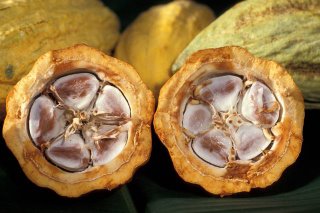
Chocolat - From Bean to Confection

US Department of Agriculture photo
Chocolate is dry paste, made with cocoa beans, & sugar, to which vanilla or an infinity of ingredients that the inventive Americans add. One makes and stores tablettes [of prepared chocolate] in the [pantry]; one drinks it; one employs it to make creams. The chocolate cannot succeed, if one did not choose mature cocoa pods; the best known pods are of gall color [ripe and brown; inside the pod are beans both brown color & dark crimson; those which are red are not worth anything: they are the hard & bitter chocolate; but the quality of the cocoa will only be known after it is roasted; because then it is seen whether there are many of these red grains]. It is necessary that the cocoa is roasted in order to find the taste & the color of chocolate you desire.

To roast the chocolate to the appropriate color, put it [chocolate beans removed from the pulp] in a pan of copper or iron, or in an unglazed terracotta pot, and put it on the fire & stir it up constantly until it is black on the outside, like roasted chestnuts; for this first time, one cannot brown too much; then the cocoa should be peeled, & winnowed well [to remove the outsides of the seeds]; to see if it is roasted enough, it is best to make a test of it; take one ounce of cocoa, & an half-ounce of sugar, which you reduce to a paste to better distinguish the taste & the color; because if it is not brown enough, & if it does not feel roasted enough, one shouldn’t fear to roast it once again, but carefully, because once its bark is removed, it is burned easily; & takes a malicious taste.

When one reaches the proper color, smell and taste, one crushes it with the mortar, so that it is a rather tiny grained masse when some is put on a plate. When the paste of the chocolate approaches this fine grain, it is necessary to add to it vanilla*, & a little powdered cinnamon[or other spice and flavor]; the quantity depends on the will. The whole being mixed together, you add to it three quarters or a pound sugar, for a pound of cocoa; mix your sugar in well and put the mixture back into your mortar, and put it back in the mortar or put it on the stone [metate] or the iron pan heated below with a chafing dish or small fire; also get the roller [mano]: then reduce this compound powder until very fine, a paste will develop with pressure and heat; pass the roller above little-by-little, until it is fine when it does not crunch on the teeth; then tablettes of one ounce are formed, or rolls of a quarter or of half-pound.

*It is necessary to choose strong vanilla, not too dry, nor too fatty; because they are often mixed with oil of balsam [to preserve them], pare them to make sure they are good & fresh: they are very difficult to reduce to a powder; but after having cut them in small pieces with scissors, pulverize them & pass them by the sieve [before adding to the mortar].

Dictionnaire Portatif de Cuisine, d'Office, et de Distillation. Chez Vincent, Paris 1767, p. 156-158.

Friday, September 22, 2006

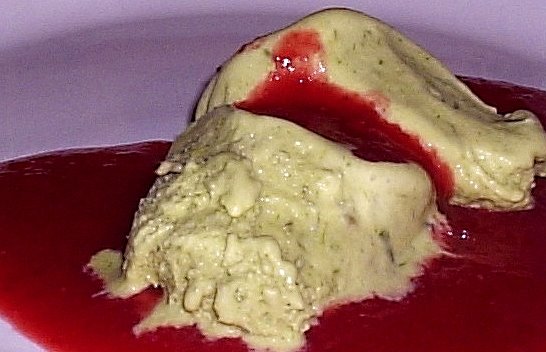
Asparagus Ice Cream, or how to get your kids to eat their vegetables!


For this month's Sugar High Friday, I offer a delightful taste and color combination, vegetables in ice cream--whoever heard of such a thing! Officers [cold kitchen cooks] in the 17th and 18th centuries, made ices from everything imaginable, including asparagus. As this recipe's creator found recipe here, Asparagus Ice Cream does taste a little like pistachio, so it's odd green color can be forgiven. Pairing it with strawberry coulis with a touch of balsamic vinegar is pure genius.

Strawberry Coulis with Balsamic Vinegar
300 g fresh strawberries
150 ml water
100 g icing sugar
15 ml lemon juice
25 ml balsamic vinegar

Wash the strawberries and place them in a blender;
add the water, icing sugar and lemon juice and blend everything together thoroughly;
place the coulis in a sauté pan and cook for a few minutes;
let cool for 5 minutes;
add balsamic vinegar to taste.

NB: This ice cream previously appeared as an entry in blog appetit!

Tuesday, July 04, 2006

Beignets de Fleurs d'Acacia & Baie de Sureau - Flower Fritters

On a quick trip through Ontario to attend Old Fort Niagara's French & Indian Encampment, I found many elderberry plants in full bloom, and I could smell the acacia or locusts, as well. A delicious fritter or beignet can be made from the blossoms; actually any edible flower, including squash and calendula or four o'clocks.

Sift 1 1/4 cups flour with a pinch of salt. Stir in 1 egg yolk (save the white to beat for later addition), 2 tablespoons oil and enough beer to make a light batter. You may flavor this batter with brandy or flower water (orange or rose). Leave to set for several hours.

Pick your flowers in the morning and leave a little bit of stem to dip with. Fold in your stiffly beaten egg white and dip each flower into the batter. Deep-fry until golden. Drain on paper and sprinkle with sugar. Serve with hot tea and lemon.

Sunday, May 28, 2006

Ginger Ice Cream with Balsamic Caramel Sauce


Ruth at Once Upon a Feast is host for this month's Sugar High Friday--she chose ginger as her focus. Enjoy.

GINGER ICE CREAM from epicurious.com

4 large egg yolks
1/2 cup sugar
1/4 cup coarsely grated peeled fresh gingerroot
2 tablespoons water
2 cups half-and-half
1 cup heavy cream
1 teaspoon vanilla
1/2 cup crystallized ginger*
*available at some supermarkets and specialty foods shops.

In a large bowl lightly whisk yolks. In a 3-quart heavy saucepan cook sugar, fresh gingerroot, and water over moderate heat, stirring occasionally, 5 minutes. Add half-and-half and bring to a simmer. Add hot half-and-half mixture to yolks in a slow stream, whisking, and pour into pan. Cook custard over moderately low heat, stirring constantly, until a thermometer registers 170°F. (Do not let boil.)
Pour custard through a sieve into cleaned bowl and stir in cream and vanilla. Cool custard. Chill custard, its surface covered with plastic wrap, until cold, at least 3 hours, and up to 1 day.
Finely chop crystallized ginger. Freeze custard in an ice-cream maker, adding crystallized ginger three fourths of way through freezing process. Transfer ice cream to an airtight container and put in freezer to harden. Ice cream may be made 1 week ahead.

Makes about 1 quart.
Gourmet
November 1998

* * * * *


Balsamic-Caramel Sauce from Michael Chiarello foodnetwork.com
2 cups heavy cream, divided
2 cups granulated sugar
2 tablespoons water, plus more for brushing
4 tablespoons balsamic vinegar
1 lemon, juiced
1/2 teaspoon salt

Bring 1 cup cream just to a boil in a small saucepan over high heat. Reduce the heat to low and keep the cream warm. In a large high-sided saucepan over medium-high heat, dissolve 1 cup of sugar with 2 tablespoons of water. As the sugar mixture begins to bubble, watch for crystals developing on the inside of the pan just above the liquid. Using a pastry brush dipped in water, brush the inside of the pan right above the crystals so the water drips down and dissolves the crystals back into the liquid. When the sugar begins to brown, occasionally move the pan to swirl the liquid gently and cook it evenly. Continue to cook until the mixture is dark golden brown. The total cooking time will be 8 to 9 minutes. Remove the pan from the heat. Very carefully add the hot cream to the sugar mixture a few tablespoons at a time. The liquid will bubble up dramatically. Stir the sauce and cook for 1 minute. Add the vinegar, lemon juice and 1/2 teaspoon salt, mix well. Pour into a heatproof bowl. You should have about 1 1/4 cups of sauce. The sauce can be made several weeks ahead, covered with plastic, and stored either at room temperature or in the refrigerator. If refrigerated, warm in a microwave oven before using.
Serve on top of ice cream.

Tuesday, May 23, 2006

Asperges Glacé avec Fraises Coulis Balsamique


Pour blog appetit! de ce mois J'offre un goût délicieux et colore la combinaison. Les dirigeants [cuisiniers froids de cuisine] aux 17èmes et 18èmes siècles, faits glace de tout imaginable, y compris l'asperge. Comme le créateur de cette recette trouvé, la glace Cream de Asparagus de goûte comme la pistache, ainsi elle est la couleur verte impaire peut être pardonnée [la recette suit]. L'appareillement de elle avec des coulis de fraise avec un contact de vinaigre balsamique est génie pur.

Ingrédients
Une asperge de groupe
sucre de 1 tasse (pour faire le double sirop de sucre)
l'eau de tasse de 1/2
tasse Amaretto de 1/2
2 oeufs (à la température ambiante)
sucre de tasse de 1/2
(1 pinte) crème 600mL
(pinte de 1/2) lait 200mL
Méthode

NOTA:. Cette crême glacée est complètement expérimentale. Ainsi j'ai enregistré la méthode que j'ai employée et des pensées j'ai eues pendant la fabrication. Si vous avez n'importe quoi à ajouter, satisfaire /msg je.

Dissolvez 1 tasse de sucre dans l'eau et l'apportez à l'ébullition. Enlevez la partie boisée de l'asperge, et du coup de hache dans de petits morceaux. Ajoutez l'asperge. Revenez à l'ébullition et enlevez la chaleur. Puisque l'asperge était d'être puréed, j'à gauche il pour se refroidir vers le bas dans le sirop, pour tremper dans le sirop de sucre.

Faites la crème. Battez les oeufs et le sucre ensemble. Chauffez doucement la crème et le lait. Ajoutez la crème/lait aux oeufs tout en remuant. Filtrez la crème de nouveau dans le pot au-dessus d'une chaleur douce. Remuez jusqu'à la crème enduira le dos d'une cuillère.

Mélangez la liqueur d'asperge et d'amande. Je n'ai pas vidangé l'asperge complètement, tellement il y avait un peu du sirop de sucre dans le mélangeur, mais pas trop. Je sûrement n'ai pas voulu concentrer la saveur d'asperge.

Ajoutez le purée d'asperge à la crème. Bien que j'aie voulu à, je n'ai pas tendu le mélange encore. J'ai pensé qu'une texture douce serait une bonne idée. Mais l'éloge de la crême glacée était son inclusion de fibre.

Battez selon les instructions sur la machine de crême glacée.

Fraises Coulis Balsamique
300 fraises fraîches de g
150 ml d'eau
sucre glace de 100 g
15 ml de jus de citron
25 ml au vinaigre balsamique

Lavez les fraises et placez-les dans un mélangeur ;
ajoutez l'eau, le sucre glace et le jus et le mélange de citron tout ensemble complètement ;
placez les coulis dans une casserole et un cuisinier de sauté pendant quelques minutes ;
laissez frais pendant 5 minutes ;
ajoutez le vinaigre balsamique au goût.

* * * * *


For this month's blog appetit! I offer a delightful taste and color combination. Officers [cold kitchen cooks] in the 17th and 18th centuries, made ices from everything imaginable, including asparagus. As this recipe's creator found, Asparagus Ice Cream does taste a little like pistachio, so it's odd green color can be forgiven [recipe follows]. Pairing it with strawberry coulis with a touch of balsamic vinegar is pure genius.

Ingredients
One bunch asparagus
1 cup sugar (to make double sugar syrup)
1/2 cup water
1/2 cup Amaretto
2 eggs (at room temperature)
1/2 cup sugar
600mL (1 pint) cream
200mL (1/2 pint) milk
Method

NB. This ice cream is completely experimental. So I have recorded both the method I used and thoughts I had during the making. If you have anything to add, please /msg me.

Dissolve 1 cup of sugar in the water and bring to the boil. Remove the woody part of the asparagus, and chop into small pieces. Add the asparagus. Return to the boil and take off the heat. Because the asparagus was to be puréed, I left it to cool down in the syrup, to steep in the sugar syrup.

Make the custard. Whisk the eggs and sugar together. Gently warm the cream and milk. Add the cream/milk to the eggs while stirring. Strain the custard back into the pot over a gentle heat. Stir until the custard will coat the back of a spoon.

Blend the asparagus and almond liqueur. I didn't drain the asparagus completely, so there was a small amount of the sugar syrup in the blender, but not too much. I surely did not want to concentrate the asparagus flavour.

Add the asparagus purée to the custard. Although I wanted to, I did not strain the mixture again. I thought a smooth texture would be a good idea. But the praise of the ice cream was its inclusion of fibre.

Churn as per the instructions on the ice cream machine.

Strawberry Coulis with Balsamic Vinegar
300 g fresh strawberries
150 ml water
100 g icing sugar
15 ml lemon juice
25 ml balsamic vinegar

Wash the strawberries and place them in a blender;
add the water, icing sugar and lemon juice and blend everything together thoroughly;
place the coulis in a sauté pan and cook for a few minutes;
let cool for 5 minutes;
add balsamic vinegar to taste.

Thursday, May 11, 2006

Puff Paste -- Pâte de Feüilletage

Pâte de feüilletage Massialot's Les Confitures (1717), p. 217.

Faites une pâte à l’ordinaire, avec de la farine, de l’eau, du sel, & si vous voulez quelques jaunes d’œufs: quand vôtre pâte est bien petrie & renduë bien maniable; vous l’étendez sur le tour avec vôtre rouleau, en long d’une bonne épaisseur; vous le couvrez ensuite d’autant de bon beurre: & ayant renversé l’un des bouts sur l’autre, que cela renferme tout le beurre en-dedans; vous la détendrez une seconde fois, la replirez, & la détendrez de rechef avec le rouleau, continuant ainsi jusqu’a cing ou six fois: sur trois livres de farine, vous y mettez deux livres & demie de bon beurre frais.

Cette pâte est propre pour d’autres tourtes qu’on auroit à faire hors d’un dessert, où ce n’est point l; ordre de rien servir où il entre du beurre. On en peut aussi faire des feüillantines [ ] & des mazatines[tartlets of mashed potatoes, eggs and butter; filled wth a hash]; qui sont des petites tartes de la largeur de la paûme de la main; que l’on replit aussi de confiture, pour garnir quelque autre tourte plus grande pour l’entremets: & si c’est pour le dessert, on en peur faire avec des abaisses croquantes, comme ci-devant.


Method for preparing puff-pastry

Let some paste be made after the usual manner, with flour, water, salt, and if you please, the yolk of an egg. As soon as it is well kneaded, and made very pliable; roll it out upon the table, of a convenient length and thickness. Then cover it with as much good butter, and having turned one of the ends upon the other, so as all the butter may be enclosed on the inside, roll it again, continuing to do the same thing five or six times. Two pounds and a half of good fresh butter ought to be allowed for every three pounds of flour.

This sort of paste is proper for other tarts/tourtes/pies that are brought to table without a dessert, in which it is not customary to serve up anything that is prepared with butter. However, feuillantines [small individual pies--think turnovers], feuillantins[think Napoleans - sheets of puff pastry] and mazarines [small, pressed or molded tart shells], which are certain small tarts of the breadth of the palm of a man’s hand, may be made ot it, being ususally filled with sweet-meats, to garnish some other pie of a larger size, set among the intermesses; but if these little tarts are designed for the dessert, they may be made of crackling crust [marzipan or pistachio].

Very good on-line instruction in French and in English, with pictures and video for making puff-paste can be found here.
Related Posts Plugin for WordPress, Blogger...