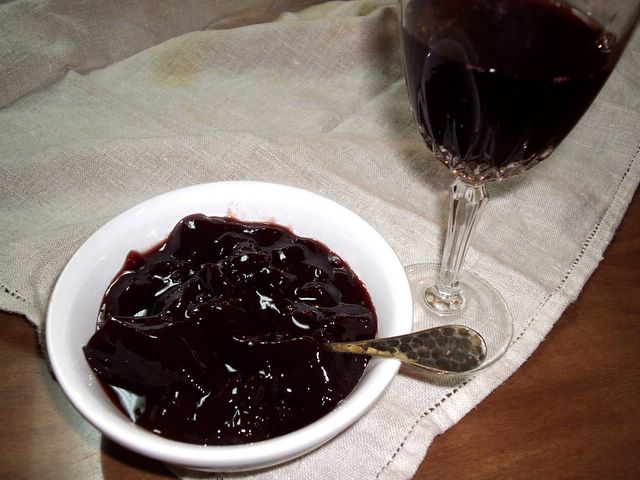
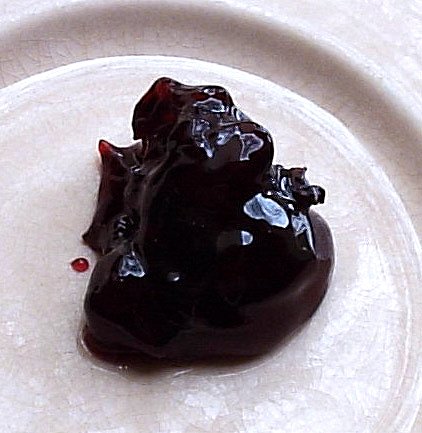
Showing posts with label Confitures. Show all posts

Thursday, October 09, 2008

October for the Confectioner

In this Month and the following, you have other sorts of Apples and Pears, for all the above-mentioned Uses, and also for Jellies, if you shall think fit to prepare them.

But this is the chief time, for making the Pastes, Jellies and Marmelade of Quinces, as also Confits with Must or sweet Wine and others, which nevertheless only fall under the management of the Country People.

The Officers [those who preside over the cold kitchen/confectioners] and Butlers are otherwise employ'd in this Season, that is to say, in gathering the Fruits, that ought to be in their Custody, which requires a more than ordinary Skill and Precaution.
* * * * *

The court & country cook, faithfully translated out of French into English by J. K. A. J. Churchill, London, 1702, p. 14 New Instructions for Confectioners.

Monday, June 16, 2008

Cherries Preserved as Olives

CHERRIES. The recipes call for Kentish, Flemish, Cornelian, Morello, and Black cherries. Some of Bradley’s most interesting comments about cherries are to be found in his General Treatise of Husbandry and Gardening. At that time (c.1721) about ten sorts were available in the nurseries about London. Furthermore, red and white cornelian cherries were ‘often gathered green, and put in Salt and Water, to imitate pickled Olives’. (See volume II, 1726, pp. 14, 121.) (Richard Bradley, 1736) citation

CHERRY OLIVES
Wash cherries, leaving on the stems. Place in pint jars with 1 teaspoon salt on top. Pour over equal parts of cider vinegar and cold water. Seal immediately. Nothing is heated. Let stand several months before opening. These are a delicious and attractive garnish for meat. This recipe calls for red sour cherries, but it was also suggested that bing cherries may be used. (Mrs. Leo McCoy, Welton, Iowa)

Sunday, May 18, 2008

Amandes vertes--Green Almonds

Green Almonds Preserved. Choose almonds green and tender, slightly peel them, drill them with a big needle and put them in cold water. Blanche the fruit in boiling water, drain and rub between cloths to remove down; let them soak for 2 hours in cold water, which you will renew several times, drain again, put them in terrines, cover with boiling sugar syrup (25 degrees density) and a round of paper; drop in the cellar. Give eight ways with almonds, adding each time a little syrup and increasing by 2 degrees the density of syrup, which must be 6 to 37 degrees at the last way. Make sure sugar broth covers fruit at all times. Let them stand for twelve to fifteen days prior to the eighth way. Finish as for other fruits.

Green Almonds. Take green almonds preserved in brandy; being drained dip them one after another in sugar prepared au cassé (twelfth degree), and roll them in white nonpareils, or of any other color, or several colors mixed together, and dry them in the stove, or in a soft oven. They are also done after this manner—cut them into two or four pieces, put them on a baking-plate rubbed with oil, and pour some hot sugar caramelized over; turn them to do the same over again and keep them in a very dry place.

Green almond tarts. Pull the almonds from the tree before they shell, scrape off the down, and put them into a pan with cold spring water; then put them into a skillet with more spring water; set it on a slow fire, and let it remain till it simmers. Change the water twice, and let them remain in the last till tender, then take them out, and dry them well in a cloth. Make a syrup with double refined sugar, put them into it and let them simmer; do the same the next day, put them into a stone jar, and cover them very close, for if the least air comes to them they will turn black; the yellower they are before they are taken out of the water, the greener they will be after they are done. Put them into the crust, cover them with syrup, lay on the lid, and bake them in a moderate oven.
* * * * *
Recipes collected from friends and relatives
* * * * *


GREEN ALMOND CONSERVE

For true aficionados of green almonds, the prime moment is when the seed case has just begun to plump, the interior is still liquid, and there is no hint of a shell. The whole almond, including the green hull, is served chilled, sometimes in salted ice water, and eaten with a little salt.

In this recipe the green almonds are chopped and combined in a spiced mixture with dates and raisins to make a conserve. The intense almond taste contrasts well with the dense, rich background of the other ingredients. The conserve can be spread on buttered bread for teatime or spooned alongside grilled eggplant and peppers for a sweet-and-savory combination. It also makes a good filling for cookies.


50 to 60 green almonds at the soft nut stage (about 1 1/2 pounds), or 1/2 cup unsalted mature shelled almonds
1 cup raisins
1 cup distilled white vinegar
1 cup loosely packed brown sugar
8 to 10 large Medjool dates (about 1/2 pound), pitted and coarsely chopped
1 cup water
6 whole cloves, crushed

Using a sharp knife, slice through the green almonds lengthwise, splitting the interior nut in half. Pick out the ivory nut halves with the knife tip and set aside. Do not be concerned if some of the nuts are still in the semi-liquid stage. Set aside 8 halves and coarsely chop the remainder. If you are using mature almonds, chop all of them.

Combine the raisins and the vinegar in a nonreactive saucepan and let stand for 10 minutes. Place over medium-low heat, bring to a simmer, and cook for 5 to 6 minutes. Add the sugar, dates, water, and cloves and cook for another 5 minutes. Then add the green or mature almonds and simmer for 2 to 3 minutes. The mixture will be rather thick and dense.

Remove from the heat and spoon into a hot, dry, sterilized jar with a lid. Tuck the reserved green almond halves along the walls of the jar, making a decorative band or arrangement. Cover with the lid.

Store in the refrigerator. The conserve will keep for up to 2 weeks.

Makes 1 pint.


[recipe from The Glass Pantry, Georgeanne Brennan]seen on gourmetsleuth.com


Buy Green Almonds
Buy Preserved Almonds

Thursday, May 15, 2008

mere de vinaigre--vinegar mother

I just received some mere de vinaigre--vinegar mother from a generous friend, some for white, rosé and red wine vinegar and I can hardly wait to try Christine's instructions over at holy basil. I'll keep you posted on the results.

Thursday, January 17, 2008

Fruits Preserved Entire

mostarda-di-frutta To preserve fruits entirely, one must replace the moisture in the fruit with a solution of sugar syrup or honey. This is accomplished by carefully peeling away the outer skins or rinds [citrus rinds have other preservation techniques, as well] and cooking slowly in several boilings of sugar syrup or honey, and allowing to stand over night in the solution in a non-reactive vessel in a cool place. At the beginning of each day the syrup is drained from the fruit and reboiled and the fruits are again added to the boiling liquid and allowed to cool in the syrup overnight. This is repeated until the fruits have absorbed most of the sugar. The shape and color of the fruit can be ameliorated to some degree by only boiling the syrup and pouring it over the fruit, allowing it to cool without actually boiling in the syrup--this preserves the texture of the fruit and is exemplified by what is known as glacéd fruit; indeed, almost any fruit can be preserved in this manner.

Friday, January 11, 2008

Candied Oranges - anneaux, tailladins, orangettes

Winter is the time for citrus fruit, especially oranges. The golden fruit and juice are so sweet and remind me of summer tastes. At this time of year I am reminded how long it is 'til Spring, and I try to savor every possible remembrance. After I eat the fruit I candy the peel and dry some to use in herbal mixtures and to make vin d'orange.

Cut the top and bottom off the orange and set aside [use to dry and grate for seasoning]. Cut through the side of peel in three places, but not into the orange itself. Carefully lift off peel in three sections and turn pith side up. Use a spoon to scrape away as much pith as possible. Cut peels into strips about 3/8" wide. Place strips in pan and cover with water and bring to boil. Blanche for 5 minutes [this removes any impurities and mellows any bitter taste that may remain from the pith]. Drain and cover again with water and freshly crushed sugar. Place back on the fire and simmer until almost all sugar syrup has been absorbed by the peel. If you have any syrup left, use it to flavor a cup of coffee or tea. Remove to a rack and drain; when dry, roll in crushed sugar. At this point the ends can be dipped in some melted chocolate. Serve orangettes with strong coffee after dinner or with tea when you are feeling down. One taste and you'll think Spring.
*****

Oranges & Citrons.
Levez la peau des oranges le plus delicatement que vous pourrez, mettez la pelure dans de d’eau, faites boüillir de l’eau, fendez les oranges par le bout, & les mettez cuire, faites-les boüillir demie heure, & les tirez & mettez dans l’eau fraische, vuidez le jus, les zestes & le grains de dedans avec une petite cueillere d’acier, faites cuire du sucre à perle, égoutez les oranges, faites les boüillir à grand feu jusqu’à ce que le sucre soit cuit à la plume, ostez les de dessus le feu, les laissez un peu reposer, tirez les oranges sur de la paille, & les laissez secher avant que le les lever: Pour un quarteron d’oranges il faut environ six livres de sucre.


Oranges & Lemons.
Cut off ends of oranges, carefully raise the [peel], (save juice & pulp for salad or marmalade or citrusade. [this is most easily accomplished by cutting off ends of orange, removing peel in quarter section, then supreming the flesh from the sections]), remove seeds with a small steel spoon, & blanche peels in fresh boiling water, drain them & put in fresh water and sugar to cover, cook to the perle stage [220° F], drain oranges, cool syrup, reboil in sugar cooked until the feather [235°F], remove quickly from the fire, allow to rest a little in the hot syrup [they may absorb most of it], remove and drain oranges on straw mat, & let them dry a little, then roll in sugar to coat, allow to thoroughly dry: For 20-25 oranges [quarteron] one needs approximately six pounds sugar. [Save the sugar syrup, which may have crystallized, to use, dissolved in other preparations or as a flavoring in water for a refreshing drink].

Oranges en tailladins.
Pelez les oranges de mesme les autres, mettez-les à mesure dans de l’eau fraische, coupes-les en quatre, vuidez bien le dedans, & les nettoyez avec un couteau, coupez les par bandes comme des lardoons, mettez les à mesure dedans l’eau fraische, faites boüillir de l’eau & les égoutex, & les mettez dedans, faites-les cuire, & les remettez dans l’eau fraische, confisez-les comme les autres, & les tirez sur la paille avec des fourchetes en forme de petits rochers.


Peel oranges the same as the others, cut them into quarters, remove the inside [flesh], & clean them [the white pith] with a knife, cut them into bands like lardoons [strips], boil in fresh water and sugar to barely cover, drain them, let cool, reheat sugar syrup and cook them again in the boiling syrup, & preserve them like the others, & roll in white sugar & dry them on the straw mats until hard like rocks.

Oranges par anneaux.
Pelez les oranges comme les entieres, & les coupez par roüelles de l’épaisseur d’un demy doigt, mettez-les dans de l’eau fraische, faites boüillie de l’eau. égoutez-les, vuide-le dedans des anneaux, faites les cuire à l’eau, estans cuites tirez-les & les mettez dans l’eau fraische, & les confisez comme les oranges entieres, & les separez en les tirant sur la paille.


Oranges by rings.
Peel oranges, & cut them by rounds of the thickness of a little finger, put them in fresh boiling water, drain them, hollow the inside of the rings, saving flesh for salad or marmelade, cook [peels] once more with water [and sugar], when cooked withdraw them & put them [again] in fresh water [and more sugar], & preserve them like whole oranges, & separate them, roll in sugar and dry them on a straw [mat] or rack.
***

Le Cuisinier François, François Pierre La Varenne. Chex Jacques Canier, Paris, 1680, p. 400-401.

Tuesday, November 27, 2007

Blog-appétit #12 - Potiron Confiture - Pumpkin Marmelade

Cette édition, Blog-Appétit #12, accentue la conservation de nourriture-bloque, des chutney, sauces. J'ai pris un potiron accroître sur ma vigne ceci qu'année-il est entré dans le sol ainsi tard-mais j'ai eu beaucoup de fleurs à bourrer et faire frire. Il y avait juste assez de viande dans le potiron pour faire un groupe de la confiture. La recette de Christine Farber pour la confiture de vanille de potiron est potiron très bon-juste, jus d'orange, un haricot de vanille et un citron. La confiture est ainsi frais-échantillon et demeure une si belle couleur.

This edition, Blog-Appétit #12, highlights preservation of food—jams, chutneys, sauces. I had one pumpkin grow on my vine this year—it went into the ground so late—but I did have many blossoms to stuff and fry. There was just enough meat in the pumpkin to make one batch of jam. Christine Farber’s recipe for Pumpkin Vanilla Jam is very good—just pumpkin, orange juice, a vanilla bean and one lemon. The jam is so fresh-tasting and remains such a lovely color.

Sunday, June 17, 2007

Noix Vertes & Cerises - Walnuts and Cherries

June 23rd is the usual day to pick green walnuts to make vin noix, chutneys and pickled walnuts. But the key is to begin picking a nut and piercing it with a darning needle to make sure the shell has not formed. Then process your nuts for each recipe.

Try Jean-Luc Odeyer’s Chutney de noix vertes if you’re in France—his is just like the taste of mine—it’s marvelous on grilled bread with goat cheese.

Cherries make a delicious aperitif, sometimes known as guignolet, and which sometimes uses cherry leaves n addition to fruit and pits. Start checking your cherry trees to make sure the robins haven’t stolen each fruit as it ripens or shows color. You might have to gather them here one, there another and hold them in the cold room until you have enough to make your wine.

Thursday, January 25, 2007

Chocolat - From Bean to Confection

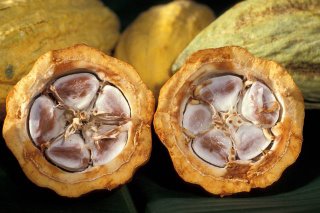
US Department of Agriculture photo
Chocolate is dry paste, made with cocoa beans, & sugar, to which vanilla or an infinity of ingredients that the inventive Americans add. One makes and stores tablettes [of prepared chocolate] in the [pantry]; one drinks it; one employs it to make creams. The chocolate cannot succeed, if one did not choose mature cocoa pods; the best known pods are of gall color [ripe and brown; inside the pod are beans both brown color & dark crimson; those which are red are not worth anything: they are the hard & bitter chocolate; but the quality of the cocoa will only be known after it is roasted; because then it is seen whether there are many of these red grains]. It is necessary that the cocoa is roasted in order to find the taste & the color of chocolate you desire.

To roast the chocolate to the appropriate color, put it [chocolate beans removed from the pulp] in a pan of copper or iron, or in an unglazed terracotta pot, and put it on the fire & stir it up constantly until it is black on the outside, like roasted chestnuts; for this first time, one cannot brown too much; then the cocoa should be peeled, & winnowed well [to remove the outsides of the seeds]; to see if it is roasted enough, it is best to make a test of it; take one ounce of cocoa, & an half-ounce of sugar, which you reduce to a paste to better distinguish the taste & the color; because if it is not brown enough, & if it does not feel roasted enough, one shouldn’t fear to roast it once again, but carefully, because once its bark is removed, it is burned easily; & takes a malicious taste.

When one reaches the proper color, smell and taste, one crushes it with the mortar, so that it is a rather tiny grained masse when some is put on a plate. When the paste of the chocolate approaches this fine grain, it is necessary to add to it vanilla*, & a little powdered cinnamon[or other spice and flavor]; the quantity depends on the will. The whole being mixed together, you add to it three quarters or a pound sugar, for a pound of cocoa; mix your sugar in well and put the mixture back into your mortar, and put it back in the mortar or put it on the stone [metate] or the iron pan heated below with a chafing dish or small fire; also get the roller [mano]: then reduce this compound powder until very fine, a paste will develop with pressure and heat; pass the roller above little-by-little, until it is fine when it does not crunch on the teeth; then tablettes of one ounce are formed, or rolls of a quarter or of half-pound.

*It is necessary to choose strong vanilla, not too dry, nor too fatty; because they are often mixed with oil of balsam [to preserve them], pare them to make sure they are good & fresh: they are very difficult to reduce to a powder; but after having cut them in small pieces with scissors, pulverize them & pass them by the sieve [before adding to the mortar].

Dictionnaire Portatif de Cuisine, d'Office, et de Distillation. Chez Vincent, Paris 1767, p. 156-158.

Wednesday, August 30, 2006

To Preserve Cucumbers


Take the best sort of cucumbers, that are not too ripe, and set them in good order in a pail, earthen pan, or some other vessel, in which is put an equal quantity of water and vinegar, with some salt; so as they may be thoroughly steept: they must be well cover’d, and not touch’d for the space of a whole month. Thus when cucumbers are out of season, these may be us’d, after they have been well par’d and soak’d. If you would garnish potages with them, they must be scalded; also when they are us’d for filets, as well on day of abstinence as on flesh-days, they must be cut after the usual manner, and dress’d, as if they were fresh. Indeed they will be of great use through-out the whole Winter, and during the time of Lent. To those that are to be eaten in a sallet, some pepper is usually added, with some handfuls of salt, and they may be stuck with cloves, at least one for every cucumber. They are commonly call’d girkins or pickled cucumbers; and to this purpose, the lesser sort is to be chosen, such as grow in the latter season. They are generally pickled with the stalk or leaves of purslane, and more especially with samphire, which serves instead of sweet herbs for that sort of sallet.

The court & country cook, faithfully translated out of French into English by J. K. A. J. Churchill, London, 1702, p. 100.

These cucumbers are Parisian Pickling from Baker Creek Rare Seeds. They are the crunchiest, crispest non-bitter cucumbers I have ever eaten!

Friday, August 25, 2006

Cantaloupe Preserves


SHF's Can You Can? entry.

To preserve cantaloupe . . .

2 pounds firm, ripe cantaloupe
4 cup sugar
juice of 1 lemon

Peel cantaloupe and cut in thin slices [I mashed mine, as I will be using this in calissons later in the year]. Mix sugar and cantaloupe. Stand overnight [I find this causes the cantaloupe to lose too much water and can then make a tough preserve. Just long enough to get the fruit to begin loosing its liquid is enough time--after all, you're looking for enough liquid to dissolve the sugar]. Add lemon juice and cook until clear in a large pot. Pour into hot jars. Cover with a piece of white paper soaked in brandy [can cover with a thin film of wax]. Makes about 2 pints

Thursday, June 08, 2006

Spruce Tips - Jelly & Beer & Salad


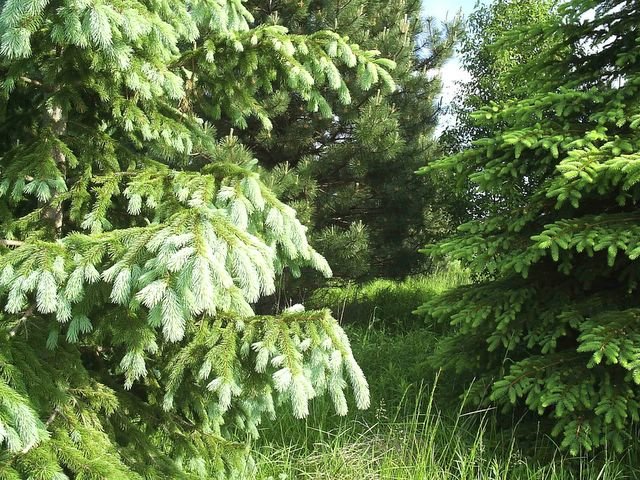
Pick only soft, light-colored tips--if they are hard, or dark, they will taste of "turpentine."


Spruce Tip Jelly
Pick about 6 cups of spruce tips selecting only the smallest, less open ones in the early spring. Rinse in cold water. Chopping them gives them more flavor than leaving them whole. Cover the tips with water and simmer for 10 minutes. Let stand overnight, strain with cheesecloth.

7 cups prepared spruce tip juice
1 cup lemon juice
2 packages MCP pectin (18thC cooks would have used tart apples or quince jelly)
10 cups sugar
1/4 tsp. butter (optional)
Mix juice with lemon juice and pectin, stir until dissolved. Bring to a full rolling boil for 2 minutes (or jelly test). Add butter to control foaming and pour into jars and seal. Serve on your favorite breads or heat and serve on pancakes. Or just spoon it out of the jar. But don't get caught!

Prince of Wales Island Fair Recipes, 1st issue, 1998
Recipe submitted by Sharon Hillis, Whale Pass, Alaska

Use left over tea for drinking or brew up another batch just for drinking. Add water to dilute and honey to taste.

Spruce beer was the frontier's answer to scurvy prevention.

Benjamin Franklin's Spruce Beer Source: Thomas Manteufel

A Way of Making Beer with Essence of Spruce:

For a Cask containing 80 bottles, take one pot of Essence and 13 Pounds of Molases. -or the same amount of unrefined Loaf Sugar; mix them well together in 20 pints of hot Water: Stir together until they make a Foam, then pour it into the Cask you will then fill with Water: add a Pint of good Yeast, stir it well together and let it stand 2 or 3 Days to ferment, after which close the Cask, and after a few days it will be ready to be put into Bottles, that must be tightly corked. Leave them 10 or 12 Days in a cool Cellar, after which the Beer will be good to drink.

Comments: Translated from the french while he was stationed in France.

The light bluish-green tips make a delightfully citrusy, spritely addition to green salads.

Friday, April 21, 2006

Tangy & Sweet With a Kick!


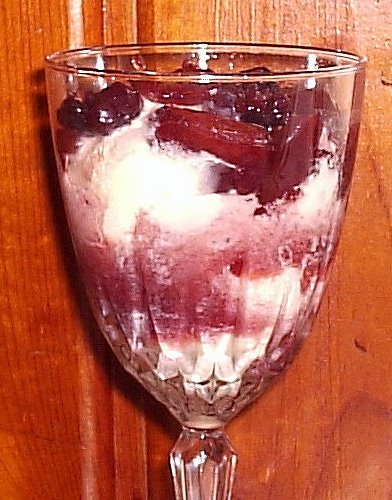
Today is Sugar High Friday, the dream child of Jennifer, and to console a friend in the doldrums, I served fresh fromage blanc with a ladle of last summer's Bachelor Jam or confiture, also known to some as Rumtopf.

The fruits were all now shades of a rich red and the ruby liqueur was sweet, thick and abundant. Drizzled over fresh, tangy fromage blanc the liqueur and fruit made a lovely dessert.

Needless to say, Madame Blanche has now left my table in a somewhat blissful state!

Tuesday, November 15, 2005

Duck Confit


Some barnyard quackers became duck confit this week. I cannot provide a better recipe than Tom Colichhio's from Gramercy Tavern, NY, NY--it is just as done in the old days. Do try, as one reviewer suggests, using rock salt--it is easier to brush off the meat [keep the meat in one layer--using a bowl causes too much liquid to be withdrawn from the flesh and makes for dry confit]. When your duck is cooked, layer the meat in your confit pot and pour in duck fat to cover--it should keep for weeks in your spring house [refrigerator].

NEVER thow out confit fat! Duck fat left from confit adds an unctiousness that is unbeatable in flavoring soups, stews and casseroles. Use it for frying bread for croutons to use in the bottom of bowls for ladling on soups like garbure.


Technorati Tags:

Thursday, October 27, 2005

Cornichons


Les cornichons sont des concombres qui n’ont pû profiter & parvenir à maturité. Onles confit sur la fin d’Aout & en Septembre de cette maniere; on les lave dans le l’eau fraîche,ou les essuye, on les pique avec un piquoir fin en plusieurs endroits; on les range dans un pot avec de bon vinaigre; assaisoné de sel & poivre concassé, & de quelque clous de girofle; qu’ils trempent aisément, & les tenir bien couverts. On confit aussi de gros concombres, mais tenders & avant que la graine y soit formée.

The gherkins are cucumbers which do not have to arrive at maturity to be useful. Pickle them at the end of August or September in this manner; one washes them in fresh water, or wipes them, one pricks them with a fine pricker in several places; one arranges them in a pot with good vinegar; seasoned salt & crushed pepper, & of some cloves; that they soak easily, & to hold them covered well. One pickles also large cucumbers, but [while they are still] tender & before the seed is formed there.

Page 448-9, Nouvelle instruction pour les confitures, les liqueurs et les fruits de Massialot

Wash and wipe your cucumbers, prick all over with a needle and layer as tightly as possible in a crock. Add salt, pepper and a couple of whole cloves to enough good vinegar to cover the cucumbers and bring to a boil in a non-reactive pan. Pour over cucumbers, cover and leave for two days. Drain vinegar and bring to a boil again and repour it over pickles in crock. Repeat at the end of two days; repeat one more time; then leave covered for two weeks [be certain vinegar mixture completely covers pickles at all time--weight with a piece of crockery, if necessary]. Cornichons will be crisp and sour--just right to serve with richly seasoned meat preparations.

I grew Parisian Pickling cucumbers, a rare, tiny variety, especially grown for cornichons. The weather here has been somewhat mild for so late in the fall. At the beginning of October, I pulled up my cucumber vines and picked through them to find the smallest cucumbers to preserve as cornichons to use with patés.

Tuesday, August 16, 2005

oignon confit

Le confit d'oignon est employé avec des gras de fois, agneau, canard ou juste seule comme spead sur le pain avec l'apèratif. J'emploie également ceci comme base en quiche d'oignon avec le gruyère.

La fonte 4 cuillers à soupe chaque huile et beurre d'olive dans le skillet et ajoutent 3 grands oignons coupés en tranches. Arrosez légèrement avec du sel et le sucre. Placez ou 1 feuille de laurier ou quelques feuilles emiettées de thym au-dessus des tranches puis ajoutent 3 oignons et sels coupés en tranches plus grands de répétition, sucre et herbes.

L'endroit sur un bas au feu moyen et remuent occassionally, ne veillant jamais à roussir, jusqu'à ce que profondément et caramalized. Finissez avec une éclaboussure du vinaigre ou du vin blanc pour l'oignon blanc, vin rouge pour les oignons rouges. Feuilles enlevées de compartiment si utilisé. Couverture et congé à adoucir avant l'emploi. Gardera plusieurs semaines si resté calme.

* * *


Onion confit is used with fois gras, lamb, duck or just on its own as a spead on bread with apèratif. I also use this as a base in onion quiche with gruyere.

Melt 4 tablespoons each olive oil and butter in skillet and add 3 large sliced onions. Sprinkle lightly with salt and sugar. Place either 1 bay leaf or a few crumbled leaves of thyme over slices then add 3 more large sliced onions and repeat salt, sugar and herbs.

Place on a low to medium fire and stir occassionally, making sure never to scorch, until thick and caramalized. Finish with a splash of vinegar or white wine for white onion, red wine for red onions. Removed bay leaves if used. Cover and leave to mellow before use. Will keep several weeks if kept cool.

Thursday, July 14, 2005

Confiture - Bachelor's Jam

Confiture - Bachelor's Jam


Looking forward to Winter evenings' desserts and after dinner coffee, prepare now by making a confiture of summer fruits otherwise known as "bachelor's jam."

Layer fruits with their weight in sugar into a sealable jar and pour 40 proof (or more) alcohol over the fruit. Marc, eau de vie, armagnac, kirsch are all good alcohols to use. You can continue to add fruits and sugar, but always make sure the alcohol covers all. Seal the jar and set in a dark, cool place; shaking the jar occasionally to help dissolve the sugar.

The melange of fruits and their resulting liqueur can be used over iced creams or custards, or just served in a glass with after dinner coffee.

Sunday, June 26, 2005

Canadian Wild Grapes - an Ode


 Posted by Hello

Ode: a lyric poem usually marked by exaltation of feeling and style—and sweetly did the Vikings of yore, brave boatmen of Leif the Lucky, son of Eric the Red, sing as they discovered the wild grapes (Vitis riparia) near L’Anse aux Meadows, Northern Newfoundland. Grapes meant wine, a heady beverage to quaff after a hard day’s rowing and a necessity for a new land to become civilized. Vitis riparia can still be found growing along the rivers of Nouvelle France, from Upper Canada, the Pays Illinois and down into Louisiane, and today makes a foxy wine and great jams.

Glaze a roast with jam prior to putting on the spit. Use the wine to deglaze a pan to capture all those tantalizing juices for your sauces or as a refreshing hearty taste with artisanal cheese at the end of your meal. Grapes can be dried and later used by soaking in spirits to liven up great breads and sweets. Enjoy with me some of the oldest tastes of Canada.

Sunday, May 22, 2005

Cherry Jam


Last summer I dried some black cherries because at the time I didn’t have enough sugar to make jam and I didn’t want them to go to waste. This week I took them out and set them to soak in some cherry leaf wine, vin de feuilles de cerise, that I had also made last summer from some wild cherry trees along the river bank. Elise chose jelled for this month’s Is My Blog Burning?, so now it was time to make jam.

Into my copper preserving kettle went my reconstituted cherries and their weight in sugar. I also added the soaking juices and wine. After they came to a simmer and the sugar had all dissolved, I added more fire and brought the mixture to a rolling boil. I continued cooking the jam for longer than I normally would because I have decided to use this jam to make a filling for some chocolate-cherry truffles. You will notice from the sides of the pan, that I have caused a lot of moisture to evaporate and the cooking in the copper pan has made my mixture jell without the use of pectin (which hasn’t been invented in the 18thC) or added apple jelly to achieve a set. If I were just making jam, I would not cook the cherries so long, but would have tested the set by putting a little onto a cold plate and tilting it to see if the jam stayed put and didn’t run. Sometimes I can tell it is set by allowing a curtain of jam or jelly to sheet off the edge of the spoon. It’s just one of those things you learn by practicing.


And here is my beautiful cherry jam filling to use in my truffles. The taste is an exploding taste of intense cherry flavor and the tiniest hint of almond from the leaves and pits used to make the wine. When the truffles are done and I bite into one, I am in for a wonderful treat.

Sunday, April 03, 2005

Carrot Marmelade

Carrot Marmelade Simmering in the fireplace.
copper preserving pan with marmelade

A parishioner's knock at the door brought a small basketful of scraggly carrots, some of the last from her cellar. After thanking her for her contribution, I set them on the table, wondering what to do with them, as several other baskets had arrived in a similar manner recently. I now had plenty for soups and stews and an occasional pie. Aha! I had an orange and a lemon--I would make marmelade.

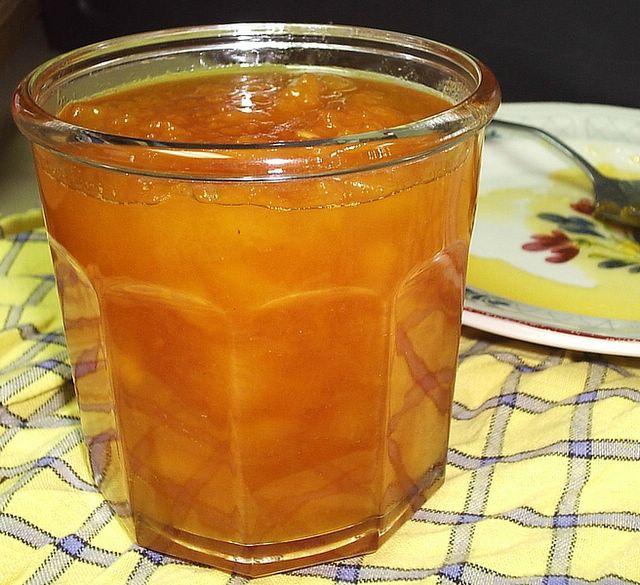
I scrubbed and peeled the carrots, removing any core, and then finely grated them into my large copper preserving pan. I sliced the orange and lemon into very fine slices and then cut the slices into eighths, adding them and their juice to the carrots, along with some sugar. A quick stir to help in dissolving the sugar and then I set the pan on the trivet in the fireplace, adding coals underneath to start the pan simmering. After the carrots began to soften, I checked the set of my preserves by dropping a bit of the syrup onto a cold plate. When I counted to 25, I tilted the plate and since the syrup stayed where it was and didn't run, I took the pan off the heat and immediately ladled the marmelade into pots, set them to cool, then sealed them with circles of white paper dipped in brandy. A square of cloth tied over the rim of the pot and into the jam cupboard they went, ready to use for breakfast, dessert or to cheer someone on my next visiting round.
Related Posts Plugin for WordPress, Blogger...