Showing posts with label Liqueurs. Show all posts

Thursday, October 09, 2008

October for the Confectioner

In this Month and the following, you have other sorts of Apples and Pears, for all the above-mentioned Uses, and also for Jellies, if you shall think fit to prepare them.

But this is the chief time, for making the Pastes, Jellies and Marmelade of Quinces, as also Confits with Must or sweet Wine and others, which nevertheless only fall under the management of the Country People.

The Officers [those who preside over the cold kitchen/confectioners] and Butlers are otherwise employ'd in this Season, that is to say, in gathering the Fruits, that ought to be in their Custody, which requires a more than ordinary Skill and Precaution.
* * * * *

The court & country cook, faithfully translated out of French into English by J. K. A. J. Churchill, London, 1702, p. 14 New Instructions for Confectioners.

Tuesday, January 15, 2008

Vin d’Orange

5 quarts of wine [can use, white, rosé, or a dry red]
5 Seville oranges [add one lemon, if not Seville]
Zests of your oranges [and lemon]
1 pound sugar
1 quart of brandy or Marc
Vanilla bean, optional

Slice oranges [plus optional lemon] after zesting [do not remove pith] and layer with sugar into a large glass jar with a lid. Gently pour in wine. You may add one vanilla bean, if desired. Dry zests for an hour in a slow oven and add to wine along with a quart of brandy or Marc. Cover and place in a dark cool place and macerate for 40 days or so. Every other day, gently shake or roll jar to help dissolve sugar. After 40 days, remove pulp and peels* and pour through a paper filter into clean bottles and cork and seal. Place again in a dark place. Wine will be ready to drink after 60 days. The longer you can resist opening, the better it will be.

*After my wine has macerated, I cook down removed orange solids with a little more sugar to taste, and make a jam that I use to deglaze the pan when cooking game and poultry.

Wednesday, August 08, 2007

Rossoli

Most of us do not have access to stills today. I suggest pouring measured boiling water over your petals and spices in a glass jug. Cover and allow to cool. Add your cooled sugar syrup and stir; and spirits and stir again. Cover and allow to steep for several weeks. Filter and bottle; store in a cool place for several more weeks before drinking. You may leave out the carmine, but as a result, your liqueur will be only slightly pink.

Rossoli: You will take musk roses, Spanish Jasmine, orange flowers [four ounces each], cinnamon [one half ounce] & [12] cloves [if clove is too strong for you, use common garden pinks flowers {œillet}, again four ounces]. When you choose well, according to what we said, you will put the whole in the Still, according to quantities' prescribed in the receipt, with [four pints] water, & will distil these matters with simple water, on a medium fire; when this receipt is distilled, you will dissolve sugar [two and three-quarters pounds] in this distillation, & when it is molten, you will pour into this distilled syrup [one bottle] brandy, or the spirit of wine [marc], according to quality or the force [proof] which you will want to give to your liquor; this being made, you will colour your liquor a crimson red [cochinille or carmine]. [Filter and bottle; store in a cool place for several weeks before drinking.]

Dictionnaire Portatif de Cuisine, d'Office, et de Distillation. Chez Vincent, Paris 1767, p. 286.

Rossoli
Vous prendrez des roses musquées, un peu de lys, du jasmine d’Espagne, de la fleur d’orange, de la cannelle & du clou de girofle; le tout avec leurs qualités décrites dans chacun de leurs chapitres. Quand vous aurez bien choisi, selon ce que nous avons dit, vous mettrez le tout dans l’alambic, selon les qualités presecrites dans la recette, avec de l’eau; & vous distillerez ces matieres avec de l’eau simple, sur un feu tant soit peu vif: quand cette recette sera distillée, vous ferez fonder du sucre dans cette distillation; & quand il sera fondu, vous verserex dans ce syrop distillé de l; eau-de-vie, ou de l’esprit de vin, selon la qualité ou la force que vous voudrez donner à votre liqueur; ceci étant fait, vous colorerez votre liqueur un rouge cramoisi.


Cook's Note: Carmine is cochinille/cochineal, red coloring matter derived from the carapaces of beatles that chew on Cacti in the American Southwest and Mexico--used since Spanish conquest times.

Although I have reproduced the recipe as it was written in the 17-18thC, carmine/cochineal has proven to be highly allergenic today.

Cheat and use food coloring or just be happy with the light pink color from the petals.

Sunday, August 05, 2007

Hypocras

Hypocras can be a refreshing drink over ice in the summer, or when heated in winter will warm the soul.

Take two pints good wine, put it into a non-reactive pot that will not cause an off-taste. Add one and one half pounds sugar or brown sugar, a little cinnamon, ginger the size of a hazel nut, two seed strands of long pepper, twelve cloves, nutmeg flower or two blades of mace, a Cox's orange pippin peeled & cut in round slices; let the whole soak approximately half an hour, covered. Then half-crush a dozen sweet almonds in a mortar with a little sugar, & add a little orange flower water. At this point if you want to add two amber grains & one musk grain, crush your amber & musk with the almonds and sugar, & place crushed nuts, sugar and flavorings into a cotton straining bag [jelly bag or cotton lined filter], & pour hypocras back forth over the grains and crushed nuts – from one pot to another; if you want to keep it more than eight days use lemon instead of apple.

Le Cuisinier François, De LaVarenne. Chez Jaquez Canier, Paris, 1680, 11 Edition, p. 384-5

Prenez de bon vin, le mettez dans quelque vaisseau bien net, & qui ne puisse pas donner de mauvais goust. Mettez dedans du sucre ou castonnade, un peu de canella, du gingembre la grosseur d’une noisette, du poivre long deux brains, douse cloux de girofle, de la fleur de muscade, ou massis deux feüilles, une pomme de reinette pelée & coupée par roüelle; laissez le tout tremper environ demie heure, tenez le couvert, puis pilez une douzaine d’amandes douces à demise pile, & les mettez dans vostre chasse quand vostre sucre sera fondu, & que vous serez prest à passer vostre hypocras, mettez dedans un peu d’eau de fleur d’orange, & le passez sur vos amandes, & le passes trios ou quatre fois: si vous le voulez ambret & musquer, broyez vostre amber & musc dans un petit mottier avec un peu de sucre en poudre, & le mettez dans du cotton, ou filasse, & l’attachez au bas de vostre chausse, & passes l’hypocras par dessus; si vous voulez le garder plus de huit jours, n’y mettez point de pomme, n’y de citron. Il faut à deux pintes de vin environ une livre & demie de sucre, deux grains d’ambre, & un grain de musc.

Saturday, July 07, 2007

Cherry Ratafia

Ratafia de Cerises.
Take cherries* and their pits, & put them in a pot to crush them, & let them ferment 24 hours. Usually three pounds of cherries produce a pint of juice. When you strain them, squeeze them to extract all the juice, & put as much of eau-de-vie (brandy*) as that of juice, pint for pint; add a quarter pound of sugar per pint; i.e., on a jug of twelve pints; three pounds sugar; & to that jug; you will add a piece of cinnamon and a handful of crushed cherry pits & stopper the jug, letting it infuse six weeks. After six weeks, strain, bottle and cork, and set back in a cool place for at least 4 months. This ratafia only gets better with age.

Make certain your cherries are ripe and mature, without being spoiled; otherwise all the spices, which one has habit to put at it, are not worth anything for ratafia.

Dictionnaire Portatif de Cuisine, d'Office, et de Distillation. Chez Vincent, Paris 1767, p. 143-144.

* * * * *


*If you use Royal Ann (Napoleon or Bigarreaux) cherries, use a white brandy (Marc, vodka). If you use a dark cherry (Bing or Black Tartarian) use dark brandy.

Sunday, June 17, 2007

Noix Vertes & Cerises - Walnuts and Cherries

June 23rd is the usual day to pick green walnuts to make vin noix, chutneys and pickled walnuts. But the key is to begin picking a nut and piercing it with a darning needle to make sure the shell has not formed. Then process your nuts for each recipe.

Try Jean-Luc Odeyer’s Chutney de noix vertes if you’re in France—his is just like the taste of mine—it’s marvelous on grilled bread with goat cheese.

Cherries make a delicious aperitif, sometimes known as guignolet, and which sometimes uses cherry leaves n addition to fruit and pits. Start checking your cherry trees to make sure the robins haven’t stolen each fruit as it ripens or shows color. You might have to gather them here one, there another and hold them in the cold room until you have enough to make your wine.

Friday, March 23, 2007

Eau de Chocolat [Liqueur]

Raw chocolate is this month's Sugar High Friday, the conception of Jennifer, and hosted by Chocolate in Context.

Here is my recipe for Chocolate Liqueur, made from fresh roasted cocoa nibs and vanilla bean.

Eau de Chocolat [Liqueur]
As to what composes the chocolate, it is especially the two fruits of vanilla & the cocoa, which should be employed to make the chocolate water. It seems that [vanilla] makes the chocolate even more chocolatety, as it does with cinnamon & other cordials; but experiments showed that vanilla is best with chocolate. Thus you only need cocoa nibs & vanilla to make it. Roast them both, as if you wish to make chocolate: you will only pulverize the cocoa, & you will leave the vanilla without crushing it: you will put them together in the still, with water & brandy: you will distill them with an ordinary fire. When your spirits are ready to tap, you will mix them with syrup that you will make, usually, with sugar melted in fresh water: you will pass the liquor through a filter and when it is clear, bottle it.

Ingredients: Two ounces of cocoa [nibs], one large vanilla [bean], three & one-fourth pints of brandy, & two & three-fourths pints of water. A pound & one-half of sugar,

* * * * *


Dictionnaire Portatif de Cuisine, d'Office, et de Distillation. Chez Vincent, Paris 1767, p. 160-161.

DEMI-SETIER. s.m. Petite mesure de liqueur, qui contient le quart d'une pinte. Un demi-setier de vin.

Chocolat. (Eau de)
Comme ce qui compose le chocolat, est sur-tout la vanilla & le cacao, ce sont ces deux fruit, qu’il faut employer pour faire l’eau de chocolat. Il semble qu’il seroit plus à propos de se servir du chocolat même, puisque dans sa composition se trouvent la cannelle & d’autres drogues très-cordiales; mias l’expérience a démontré que cette façon étoit impracticable. C’est donc au cacao & à la vanilla seuls qi’il faut avoir recours. Vous ferez rôtir l’un & l’autre, comme si vous vousliez faire du chocolat: vous broyerez ensuite le cacao seulement, & vous laisserez la vanilla sans la piler: vous les mettrez ensemble dans l’alambic, avec de l’eau & de l’eau-de-vie: vous les distillerez à un feu ordinaire, & ne tirerez point de phlegmes. Quand vos esprits seront tires, vous les mettrez dans un syrop que vous ferez, à l’ordinaire, avec du sucre fondu dans de l’eau fraîche: vous passerez la liqueur à la chausse; & quand elle sera Claire, prenez deux onces de cacao, un gros de vanilla, trios pintes & un demi-septier d’eau-de-vie, une livre & demie du sucre, & deux pintes & trios demi-septiers d’eau.

Thursday, June 29, 2006

Vin de Noix - Walnut Wine


I cannot give you an aperitif/digestif wine recipe, nor pictures of its preparation, better than William Rubel's instructions for vin de noix, or green walnut wine. His instructions are the ones I follow, as they are just like my family's recipe

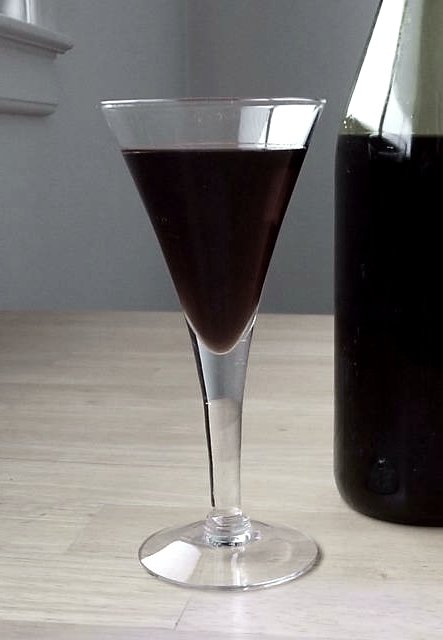
Pictured above is my batch from 2004, sweet, dark, and mellow, like a fine port. The longer it sits in a dark cupboard, the better. Enjoy!

Thursday, June 08, 2006

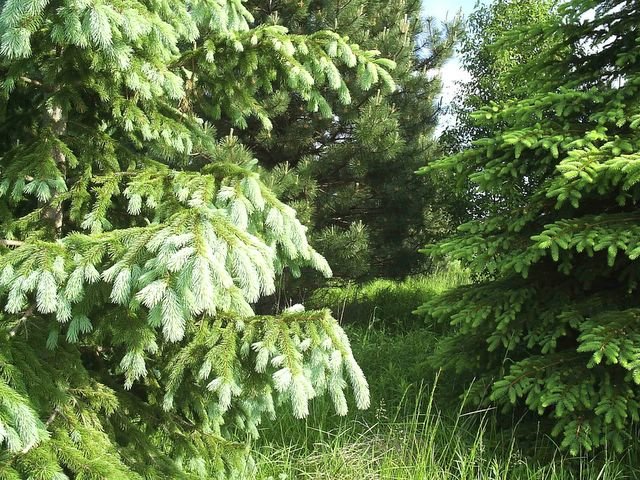
Spruce Tips - Jelly & Beer & Salad


Pick only soft, light-colored tips--if they are hard, or dark, they will taste of "turpentine."


Spruce Tip Jelly
Pick about 6 cups of spruce tips selecting only the smallest, less open ones in the early spring. Rinse in cold water. Chopping them gives them more flavor than leaving them whole. Cover the tips with water and simmer for 10 minutes. Let stand overnight, strain with cheesecloth.

7 cups prepared spruce tip juice
1 cup lemon juice
2 packages MCP pectin (18thC cooks would have used tart apples or quince jelly)
10 cups sugar
1/4 tsp. butter (optional)
Mix juice with lemon juice and pectin, stir until dissolved. Bring to a full rolling boil for 2 minutes (or jelly test). Add butter to control foaming and pour into jars and seal. Serve on your favorite breads or heat and serve on pancakes. Or just spoon it out of the jar. But don't get caught!

Prince of Wales Island Fair Recipes, 1st issue, 1998
Recipe submitted by Sharon Hillis, Whale Pass, Alaska

Use left over tea for drinking or brew up another batch just for drinking. Add water to dilute and honey to taste.

Spruce beer was the frontier's answer to scurvy prevention.

Benjamin Franklin's Spruce Beer Source: Thomas Manteufel

A Way of Making Beer with Essence of Spruce:

For a Cask containing 80 bottles, take one pot of Essence and 13 Pounds of Molases. -or the same amount of unrefined Loaf Sugar; mix them well together in 20 pints of hot Water: Stir together until they make a Foam, then pour it into the Cask you will then fill with Water: add a Pint of good Yeast, stir it well together and let it stand 2 or 3 Days to ferment, after which close the Cask, and after a few days it will be ready to be put into Bottles, that must be tightly corked. Leave them 10 or 12 Days in a cool Cellar, after which the Beer will be good to drink.

Comments: Translated from the french while he was stationed in France.

The light bluish-green tips make a delightfully citrusy, spritely addition to green salads.

Tuesday, April 25, 2006

You are a dainty Violet . . .


Title from A Meditation for his Mistress by Robert Herrick, 1591-1674

“These are the two months of the year [March & April] that afford matter for new comfits, that is to say, violets, which are the first flowers of a fragrant smell that the earth brings forth, after it has been delivered from the tyranny of the sharp winter.”

Eau de Violette
Prenez de la violette une quantité suffisante; par exemple, deux bonne poignées pour deux pintes de liqueur, epluchez-les, & les meetez dans de l’eau, avec une demi-livre de sucre; & étant infuse du matin au soir, ou pendant cinq ou six heures, vous coulerez vôtre liqueur à travers quelque linge, ou seulement au tamis, & la mettre glacer.


Violet Water
Take a sufficient quantity of violet; for example, two good handfuls for two quarts of liquor, peel them [strip flowers from stems and leaves], & put them in [two quarts ] of water, with a quarter or half a pound of sugar; & infuse from morning till evening, or during five or six hours; strain your liquor through some [white] linen, or only with the sieve, & to put it to ice [bottle and set back in a cool, dark place].
* * *

Sirop Violet
Prenez une livre de violette épluchée, & la pilez dans un mortier, avec un demi-verre d’eau, afin que cela la puisse un peu humecter: ensuite faites cuire quatre livres de sucre à perlé; & étant à cette caisson, vous le descendrez de dessus le fue, & laisserez rabaisser le bouillon; puis vous y mettrez votre violette, & délayerez bien le tout: vous le passerez ensuite par un linge bien fin, recevant vôtre sirop dans une terrine; & quand il ser froid, vous le mettrez dans des bouteilles.

Pour le marc qui vous restera, prenez deux livres de sucre, que vous serez cuite à perlé; & quand le bouillon sera rabaissé, vous y jetterez vôtre marc, & délayerez bien le tout; puis le mettrez dans un pot, pour vous en server quand vous voudrez faire des pâtes & de la conserve de violette, comme il a été dit ailleurs.

La meilleure violetter pour cela, est celle qui est d’un violet vermeil, & non pale, & d’une odeur tres-suave, il la faut cueillir le matin, qu’il n’ait pas plu, & auparavant que le soleil ait dissipé sa vertu.


Violet Syrup
Take a pound of violet flowers, and crush them in a mortar, with half a glass of water, to moisten them a little, while four pounds of sugar are brought to the pearled quality: then taking the pan off from the fire, as soon as the boiling sinks, throw in your violets and stir all together. Afterwards you are to press the mixture through a fine linen cloth, so the syrup may be collected in an earthenware pan, and put into bottles when cold.

The mass that remains may then be slipped into two pounds of pearled sugar, after its boiling has settled; when well mixed, pour it into a pot. This sugary mixture can be used in the making of pastes and conserve of violets, according to the instructions elsewhere laid down. The best violets for this purpose are of a dark purple color, not pale, and of a very sweet scent. They ought to be gathered in the morning, when no rain has fallen, and before the sun had impaired their virtue.
* * *

Conserve de Violette
Vous prendrez de la violette la plus belle, vous en pe-serrez deux onces que vous pilerez dans un mortier: en la pilant mettez y une petite goute de jus de citron. Vous serrez cuire une livre de sucre a la premiere plume, vous le lasserez un peu refroidir, & remuërez avac une cuiillier trios ou quatre tours, & y mettez la fleur dedans; la remuer encore un tour, & la dresser. Quand vous en aurez verse un moule, si vous voulez déguiser le reste, presses y promtement un peu de jus de citron, le remuer avec la cuilllier, & le verser dans un autre moule.

Conserve of Violets
Take the most beautiful violets, two well-packed ounces which you will then crush in a mortar while adding a few drops of lemon juice. Cook a pound of sugar to the first feather, allow it to cool slightly while stirring three or four turns, & then put the flowers in; stir till crystals begin to form around the edge of the pan. Pour immediately into moulds. If you want to use the remainder [clinging to the pan], add a few drops of lemon juice and stir to dissolve, & to pour it in another mould.
* * *

Pâtes de Violette
Prenez une livre de violette épluchée; pilez la dans un mortier, & mettez-y une goute ou deux de jus de citron en la pilant; mettez la dans un plat, & joignez-y denx ou trios cuillerées de marmalade de pommes: faites cuire du sucre à la plume, & en mettez dans vôtre marmalade le quantitez qu’il en faut, en délayant doucement avec une cuillier: faites la fremir, & la dresses à demi-froide, dans voc mouls, ou sur des ardoises; & les mettre à l’Etuve, & les finir comme les autres: en les retournant, poudrez les legerement de sucre.


Violet Paste
Take a pound of violet flowers; crush in a mortar, while adding several drops of lemon juice; put it in a dish, & add two or three spoonfuls of apple marmalade [or jelly]. Cook one pound of sugar to the feather, & add in your violet and marmalade mixture, stir gently: cook gently and at a low heat, & draw it up [cook until most moisture is gone and the bottom of the pan can be seen when drawing a spoon through the paste]; pour onto a slate or marble or into moulds; & put them in the Drying oven. When dry, turn them in powdered sugar to cover all the paste edges.
* * *

Pastilles de Violette, & autres
Pour leur donner la couleur & l’odeur de violette, vous d’etrempez d’indigo & de l’iris, & vous mêlez cette eau avec vôtre gomme, quand elle est fondue & dans le mortier. Vous y ajoûtez ensuite du sucre fin en poudre; & continuez de tourner & bien démêler le tout, tant que vous a yez une pâte maniable. On en forme ensuite des pastilles rondes, en batons, & lacs-d’amour; & on les finit comme les autres.

Si on en veut faire des rouge, il n’y a qu’a y mettre de la cochenille preparée en pisant le pâte, ou bien une cuillerée de marmalade d’epine-vinette, qui soit d’un beau rouge.


Violet Pastilles
To give them the color & the odor of violet, steep some indigo & orris with your violets, & mix this water with your gum [Arabic]; when it is dissolved add fine powdered sugar; & continue to turn & pound in your mortar until you have a handy paste. Form them as round pastilles, in sticks, & tongues of love; finish them like the others [roll in powdered sugar].

If you want a red color, prepare cochineal by making a paste, or a spoonful of marmalade of berberis, which is of a beautiful red.

From Massialot's Les Confitures (1717), translation (c) 2006, Carolyn Smith-Kizer.

Tuesday, December 27, 2005

Vin Brûlé

During this holiday season as the weather outside is cold and drear, I promise you this wonderful beverage will warm you and bring feelings of contentment. Dim the lights, cuddle in that cozy chair by the fire, and sip away. Enjoy!

Il faut prendre une pinte du meilleru Vin de Bourgogne. Les Vins de Champagne ne valent rein pour cela. Mettez ce Vin dans une Chocolatiere, avec demi-livre de sucre, une feüille de Macis, deux clous de girofle, & un petit baton de canella, deux dousaines de grains de coriander, & deux ou trios zests de citron, & deux feüilles de laurier franc: mettez ensuite vôtre chocolatiere devant un bon feu, & du charbon allumé tour autour; & quand vôtre vin fera bien chaud, ce que vous connoîtrez à la vapeur ou fume, vous y mettrez le feu avec du papier allumé, & la laisserz brûler jusqu’a ce qu’il s’éreigne tout seul: ensuite moûillez une serviette blanche, & le passez au travers dans une éguiere. Le server tout chaud.

Page 340, Nouvelle Instruction Pour Les Confitures, Les Liqueurs et Les Fruits de Massialot


• It is necessary to take one pint of the best wine of Burgundy. The Champagne wines are not the best for this.

• Put this wine in a chocolatiere or pipkin [ceramic, non-reactive oven-proof vessel], with a half-pound of sugar, a blade of mace, two cloves, a small stick of cinnamon, two dozen grains of coriander, two or three zests of lemon [I sometimes use orange], & two leaves of French bay-laurel [I find any other laurel to be too strong]:

• then put your chocolatiere in front of a good fire; as it sets in the coals, turn it around until it’s quite hot, which you will know from the steaming vapor;

• you will set the vapors on fire with lit paper, & allow it to burn until it dies out:

• then strain it through a wet, white cloth napkin into a ewer [tin, pewter, silver, vermeil, crystal were all used]. Serve very hot.

Thursday, January 27, 2005

Wine - for an 18thC Taste

Wine and other bottles from the Fortress Louisbourg archaeological digs on display in the museum

Recently, I asked Patrick Chazallet what might be wines, both white and red, that I could recommend to drink to approximate the taste of wines in the 18thC. He had an interesting reply:

"With the 18thC the wines were extracted very little (not much color, few tannins), because of the type of vine from which they were drawn. The wines were not very good either, the bottle was not generalized and they were often oxidized. To prevent being too bad, they were often aromatized with spices. It was the period when one gradually stopped using these spices, but they were still in use. Moreover more often one sweetened them.

They were always manufactured in the abbeys, except in Bordeaux where some English and Dutch bought properties.

Thus no current wine will resemble them. You can come close with:

« wines at base of the type of vine Pineau d' Aunis, and cabernet which one finds in names Coteaux of the Dormouse and Jasnières, close of the city of LeMans in Sarthe (north of the Loire Valley)

« wines at base of the type of vine Chinon and Bourgueil relatively light red wines made from the Cabernet Franc, 'Breton' (center of the Loire Valley)

« wines of the Beaujolais containing Gamay; a light dry red table wine made from the same grape used for French Beaujolais gamay rosé (south of Burgundy)."

So if I have a variety of gamay beaujolais, cabernet, and chenin blanc in my cave, I should be able to have a wine to go with most of my meals, although my cave is not as extensive as Voltaire's, who "ordered casks of wine, bottles by the thousand, corks as many as three thousand at a time. Beaujolais was his favorite wine; on one occasion he topped off the casks with Burgundy, which has not, I think, been done in recent years." Wheaton, p.216.

1983 Wheaton, Barbara Ketcham. SAVORING THE PAST : The French Kitchen And Table from 1300 to 1789. Touchstone, New York, NY.

Coming soon . . . more on the history of wine in the 18thC and a separate posting on champaign.

Related Posts Plugin for WordPress, Blogger...