Thursday, July 14, 2005

Confiture - Bachelor's Jam

Confiture - Bachelor's Jam


Looking forward to Winter evenings' desserts and after dinner coffee, prepare now by making a confiture of summer fruits otherwise known as "bachelor's jam."

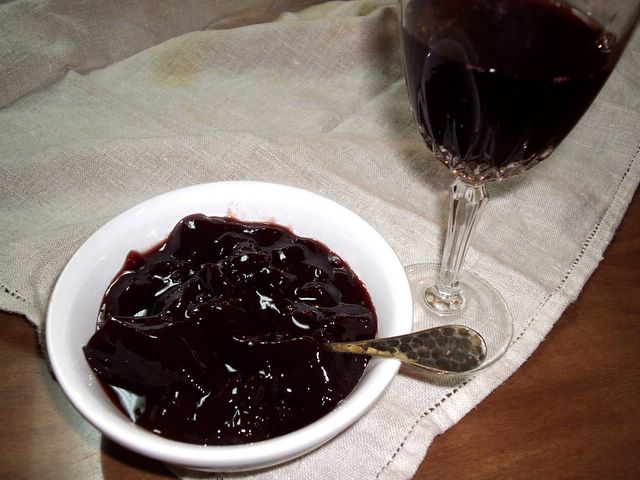
Layer fruits with their weight in sugar into a sealable jar and pour 40 proof (or more) alcohol over the fruit. Marc, eau de vie, armagnac, kirsch are all good alcohols to use. You can continue to add fruits and sugar, but always make sure the alcohol covers all. Seal the jar and set in a dark, cool place; shaking the jar occasionally to help dissolve the sugar.

The melange of fruits and their resulting liqueur can be used over iced creams or custards, or just served in a glass with after dinner coffee.

Wednesday, July 06, 2005

Utensibility


Kitchens can be a bête noir or a paradise, depending upon one’s stock of kitchen utensils—those implements that go beyond a mixing bowl, a frying pan and a butcher knife. Sam asked for a recommendation for an item she “cannot do without.” My immediate response was I couldn’t be without my food processor, more commonly known as a mortar and pestle. With my lovely marble mortar, I can pound garlic for aioli or grind herbs and spices to add just the right nuance to my latest sauce.

Monday, July 04, 2005

Radishes


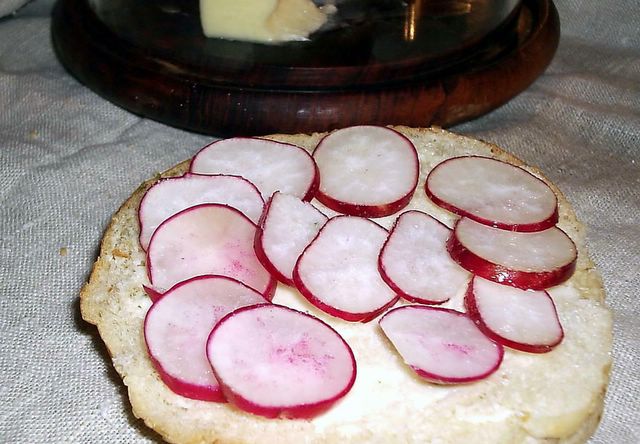
Radishes, if harvested regularly, do not take on that pithy, extra hot texture and taste. For a fresh, country taste slice radishes over a slather of butter on crusty bread and sprinkle on a pinch of salt. A great taste for a snack or picnic treat.

Monday, June 27, 2005

the cooks next door

A visitor from New Orleans stopped by the other day and asked me some questions about my cooking references. He was preceded by a neighbor who also had questions about when I learned to like working in the kitchen.

Msr. Danno had these questions for me:

Number of Cookbooks I've owned: I can count 123 on the shelves in the common room and I have several by the bed. But that doesn’t count several books that fell overboard the canoe on the trip across the lake.

Last book that I bought: La Varenne's The French Cook, Englished in 1653

Last (Food) book I read: The History of Food, Maguelonne Toussaint-Samat
Cookbooks: Paris Sweets, Dorie Greenspan

Five Cookbooks that mean a lot to me: La Cuisine, Raymond Olivier
Savoring the Past:the French Kitchen Table from 1300-1769, Barbara Ketcham-Wheaton
Nouvelle instruction pour les confitures, les liqueurs et les fruits. de Massialot
Varenne's The French Cook, Englished in 1653
La Techinque, Jacques Pepin

Previously Msr. Chefdoc had these questions for me.

What is your first memory of baking/cooking on your own? When I was six, I got caught in the pantry eating chocolat tablets—ma mère taught me to bake biscuits that very day.

Who had the most influence on your cooking? Peering into the pots and pans of LaVarenne and Massialot via their livres de cuisine.

Do you have an old photo as "evidence" of an early exposure to the culinary world and would you like to share it? Yes, a very old picture of my cuisiniere.
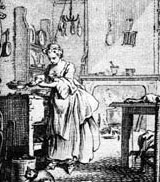

my first cuisiniere

Mageiricophobia - do you suffer from any cooking phobia, a dish that makes your palms sweat? With good instructions or a mentor, there is nothing I am afraid to try cooking.

What would be your most valued or used kitchen gadgets and/or what was the biggest letdown? I couldn’t live without my mortar and pestle—such a wonderful food processor. My biggest letdown was a bundle of sticks tied and used to whip—it didn’t work well.

Name some funny or weird food combinations/dishes you really like - and probably no one else does! Bleu fromages and fruit.

Your favorite ice-cream... Citron Crème Glacé

You will probably never eat... Pork or shellfish

Your own signature dish... Paté de Campagne

Added by Chefdoc of A Perfect Pear... Any signs that this passion is going slightly over the edge and may need intervention? My husband thinks so at times, but I’m sure he’s mistaken!

Sunday, June 26, 2005

Canadian Wild Grapes - an Ode


 Posted by Hello

Ode: a lyric poem usually marked by exaltation of feeling and style—and sweetly did the Vikings of yore, brave boatmen of Leif the Lucky, son of Eric the Red, sing as they discovered the wild grapes (Vitis riparia) near L’Anse aux Meadows, Northern Newfoundland. Grapes meant wine, a heady beverage to quaff after a hard day’s rowing and a necessity for a new land to become civilized. Vitis riparia can still be found growing along the rivers of Nouvelle France, from Upper Canada, the Pays Illinois and down into Louisiane, and today makes a foxy wine and great jams.

Glaze a roast with jam prior to putting on the spit. Use the wine to deglaze a pan to capture all those tantalizing juices for your sauces or as a refreshing hearty taste with artisanal cheese at the end of your meal. Grapes can be dried and later used by soaking in spirits to liven up great breads and sweets. Enjoy with me some of the oldest tastes of Canada.

Sunday, June 12, 2005

Fromage: Pied-de-Vent


If you like Brie, you will like this cheese. As Derrick expressed, “ I'm always fascinated to read about these lesser-known breeds, especially when I hear they're making a comeback.” And I would like to encourage you to support this brand of cheese, Pied-deVent, which comes only from the Vache Canadienne.

Monday, June 06, 2005

Fraise et la Rhubarbe


Blog Appetit! de ce mois appels pour les fraises et la rhubarbe.
Tandis que j'ai un bon nombre de rhubarbe accroître dans le jardin, les fraisiers communs sont tardifs cette année, avec seulement des fleurs, mais aucun fruit réglé encore.

Pour véritable un dessert de printemps, la crème de vanille de couche dans un verre de parfait avec la rhubarbe cuite et de culis de fraise. Dans ce cas-ci j'ai employé le dernier petit pot de conserves de fraise de la moisson de l'année dernière.

* * * * *


This month’s blog appetit! calls for strawberries and rhubarb. While I have lots of rhubarb growing in the garden, the wild strawberries are late this year, with only blossoms, but no fruit set yet.

For a truly Springtime dessert, layer vanilla custard in a parfait glass with stewed rhubarb and strawberry culis. In this case I’ve used the last little pot of strawberry preserves from last year’s harvest.

Sunday, June 05, 2005

Buttermilk & Honey Sorbet with Date Crunch Topping

Buttermilk, honey, dates (medjul) and eggs are this month's Paper Chef competition. Unfortunately my illustration apparatus (digital camera) is on the fritz and I can only describe my entry.

I made a buttermilk and honey sorbet using this recipe from a friend named epicurious.

Just before the sorbet had finished curing in my ice cream machine, I beat an egg to a froth and put in a cup of kasha or buckwheat grains and dry-fried them in a hot dry skillet stirring the grain until it began to pop open. Then I poured on some boiling water and a pinch of salt, covered the skillet and set it at the back of the fire to cook and fluff the buckwheat. When the buckwheat was cooked and still crunchy, I mixed some with cut dates for a crunchy topping for my sorbet. The buckwheat adds an interesting crunch and flavor with the sometimes too-sweet taste of the dates but compliments the unique flavors of buttermilk and honey in the sorbet.

Friday, May 27, 2005

Whetting a Knife


Have you ever started slicing or chopping vegetables or meat and find your knife won't even cut soft butter? Here is a tip for you.

Turn over a plate or cup and whet your knife along the edge of the bottom where the glaze is missing. Fired porcelaine or pottery makes as fine a whet stone as the most expensive ceramic stones available today.

First stroke your knife on one side, then the other--from haft to tip--until you achieve an appropriate edge. But be careful! Your knife will now be very sharp!

Sunday, May 22, 2005

Cherry Jam


Last summer I dried some black cherries because at the time I didn’t have enough sugar to make jam and I didn’t want them to go to waste. This week I took them out and set them to soak in some cherry leaf wine, vin de feuilles de cerise, that I had also made last summer from some wild cherry trees along the river bank. Elise chose jelled for this month’s Is My Blog Burning?, so now it was time to make jam.

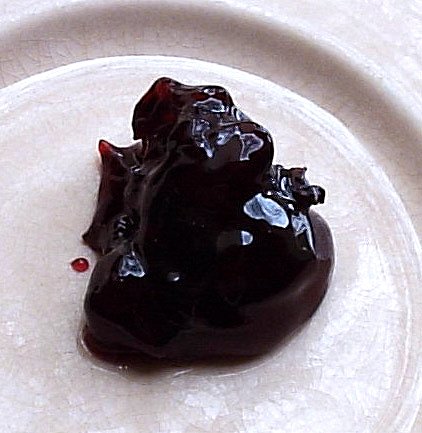
Into my copper preserving kettle went my reconstituted cherries and their weight in sugar. I also added the soaking juices and wine. After they came to a simmer and the sugar had all dissolved, I added more fire and brought the mixture to a rolling boil. I continued cooking the jam for longer than I normally would because I have decided to use this jam to make a filling for some chocolate-cherry truffles. You will notice from the sides of the pan, that I have caused a lot of moisture to evaporate and the cooking in the copper pan has made my mixture jell without the use of pectin (which hasn’t been invented in the 18thC) or added apple jelly to achieve a set. If I were just making jam, I would not cook the cherries so long, but would have tested the set by putting a little onto a cold plate and tilting it to see if the jam stayed put and didn’t run. Sometimes I can tell it is set by allowing a curtain of jam or jelly to sheet off the edge of the spoon. It’s just one of those things you learn by practicing.


And here is my beautiful cherry jam filling to use in my truffles. The taste is an exploding taste of intense cherry flavor and the tiniest hint of almond from the leaves and pits used to make the wine. When the truffles are done and I bite into one, I am in for a wonderful treat.

Friday, May 20, 2005

Shaker Lemon Pie

Shaker Lemon Pie

Pucker Up with Citrus! is this month's Sugar High Friday, originated by Jennifer and hosted this month by Alice. And pucker up was just what I did when I first saw a picture of Shaker Lemon Pie. Now I had grown up with images of lemon pie as being only lemon meringue. As I got older I tried lemon tarts, curd and chiffon pie, but I could just not imagine eating, let alone making a pie filling of lemon slices. Today's SHF presented the perfect opportunity.

The key to this pie is slicing the lemons paper thin and leaving them to macerate overnight with the sugar, not just several hours. You will find the recipe for this pie here. In addition, use your favorite two-crust pie crust recipe and get ready for an old-fashioned taste treat.

A slice of lemon pie--tart and sweet and light!

A slice of lemon pie--tart and sweet with an incredibly light taste of lemon--do give it a try.

Tuesday, May 17, 2005

Vache Canadienne

Vache Canadiennes - and Soldats du Roy et Habitants en Canada
Photo used by permission, courtesy
Soldats du Roy et Habitants en Canada/
Societe d'Histoire IN MEMORIAM


Can you imagine towing a cow aboard ship in Normandy as you set sail for Nouvelle France, and then once you arrive, traveling on into the interior of the country, either up the Mississippi to Pays Illinois or overland via river and lake from the St. Lawrence? This is exactly what our ancestors did over several generations. When Marie-Rouensa died in 1725 in the village of Kaskaskia in the Pays Illinois her inventory revealed that she had 6 beefs, four cows and two heifers. Maps from Cahokia, also Pays Illinois, show house lots with gardens and stables and barns surrounded by strong pickets. Each household was mostly self-sufficient with its own cow(s), pigs, chickens, doves, orchards and potagers, in addition to the grains and hay grown in the longlots.

These sturdy cows from Normandy developed into the vache Canadienne, a breed known for its quantity of milk in relation to its size and browsing-grazing conditions. Thankfully vache Canadienne is again making a comeback due to its docility and lean meat.

Thursday, May 12, 2005

Rice With Milk Well Sugared

Rice with milk well sugared

Although France received rice through trade with Turkey and Brazil, Nouvelle France received rice from the Carolinas and Brazil through the triangle trade in ships bound for France with sugar, rum and molasses that also stopped off in Louisbourg to pick up cod. From Louisbourg, rice reached the interior up the St. Lawrence River

Here is my recipe for rice with milk well sugared from La Varenne's Cuisinier françois, 1653.

Make a caramel of 1/2 cup sugar and 1 tablespoon of water. Cook until a medium, rich brown. Remove from the heat and stir in 2 more tablespoons of water (be careful! It splashes). Pour the caramel into a mold and swirl the caramel to cover the bottom and sides of the mold. Set aside to cool.

Cover 1 1/4 cups of rice with cold water and bring to a boil. Remove and drain rice. Bring 1 1/2 quarts of milk to a boil with one vanilla bean. Add rice and simmer gently for 35 minutes or until the milk is mostly absorbed. Remove the vanilla bean.

Whisk 9 egg yolks and 1 1/4 cups sugar until thick and lemon colored; then stir into the rice and milk. Pour rice mixture into caramel-lined mold and set mold in a baking pan with an inch of water. Bake in a moderate oven until a straw inserted in the middle of the pudding comes out clean. Allow to cool slightly, then turn out onto a plate with a rim. Chill. Serve with cream or custard sauce.

Wednesday, May 04, 2005

Babette's Feast

Babette's Feast

This foreign film is subtitled in English but that does not detract from the wonder of this movie. I really enjoyed seeing the austere kitchen before Babette arrived and the wonders she was able to produce in what, by modern standards, were very primitive conditions. I see her wood stove and I long for that modern convenience compared to my fireplace, grates and crane. This movie shows what wonders a meal prepared with love can do.

"Some movies can only be described as delicious. In Babette's Feast, a woman flees the French civil war and lands in a small seacoast village in Denmark, where she comes to work for two spinsters, devout daughters of a puritan minister. After many years, Babette unexpectedly wins a lottery, and decides to create a real French dinner--which leads the sisters to fear for their souls. Joining them for the meal will be a Danish general who, as a young soldier, courted one of the sisters, but she turned him away because of her religion. The village elders all resolve not to enjoy the meal, but can their moral fiber resist the sensual pleasure of Babette's cooking?

"The meal itself is the center of the film, and during that meal all the threads of the film are richly woven together. The pious sisters and their community finally learn the true depths of faith - something which is more than just what we believe, but rather also reflects what we do and the love with which we do it.

"Babette's Feast deservedly won the 1987 Academy Award for Best Foreign Language Film. This lovely movie is impeccably simple, yet its slender narrative contains a wealth of humor, melancholy, and hope." amazon.com reviews

Sunday, May 01, 2005

Walnut Cake

Walnut Cake, soaked with an orange syrup

McAuliflower recently commented about my Biscuits de Chocolat being a vehicle to include some ground nuts so I was inspired by this recipe for my final dessert during Days of Unleavened Bread.

Pound 1 pound of shelled walnuts in a mortar with a small part of 1 cup of sugar, but not into a paste. Separate 6 eggs and beat the yolks and another part of that 1 cup of sugar until they are light and lemon colored. Stir 3 Tablespoons of orange juice, some grated orange zest and 3 Tablespoons of flour (potato flour if keeping Kosher) into the yolks. Fold in the ground walnuts and 6 egg whites stiffly beaten with the remainder of that 1 cup of sugar. Pour into a greased cake pan and bake in a moderate oven (350ºF) until a broom straw inserted into the middle comes out clean. Cool in the pan and pour a syrup boiled and cooled of 1 cup sugar, 1/4 cup orange juice and 1/2 cup water over cake. Set in a cool place for 4 hours or overnight. Serve with fresh fruit.

You can find other recipes for Unleavend Bread and Desserts here.
Related Posts Plugin for WordPress, Blogger...