Tuesday, June 27, 2006

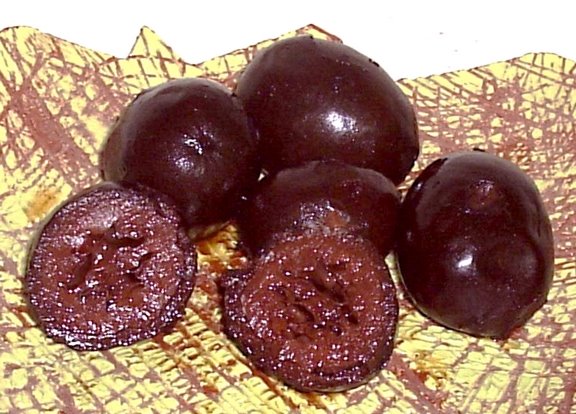
Pickled Green Walnuts


2 - 3 lb young green walnuts
1/4 lb salt
3 1/2 pints water
1 oz black peppercorns
1 teaspoon allspice berries
2 1/2 pints malt or wine vinegar
2 1/2 cups sugar
1 tablespoon mustard seed
1 teaspoon grated fresh ginger
2 inch stick of cinnamon, crushed


Prick the walnuts all over with a large needle (these nuts are best picked before June 24th--you don't want any developed hard shell within the nut itself). Place the nuts in a ceramic bowl, dissolve half the salt in half the water and pour over the walnuts. Cover and leave for 5 days in a cool place, stirring twice a day to ensure even brining.

Drain the walnuts, mix the remaining salt and water, pour over the brine and leave for another five days, stirring twice a day as before. Drain, spread out in a single layer on a flat dish and leave to dry in the sun until they are black but not dry, turning every few hours.

Crush the peppercorns and allspice berries and simmer the vinegar with the sugar and spices for 20 minutes. Allow to cool and strain. Pack the walnuts into sterilized, wide-mouth jars, filling them no more than three-quarters full, and pour in the spiced vinegar. Cover and leave in a cool place for 6 weeks before using.

These pickles are delicious smashed into a viniagrette or mayonnaise for a salad or sandwich dressing. Try a slice of pickle and a slice of cheese for a canapé.

Thursday, June 08, 2006

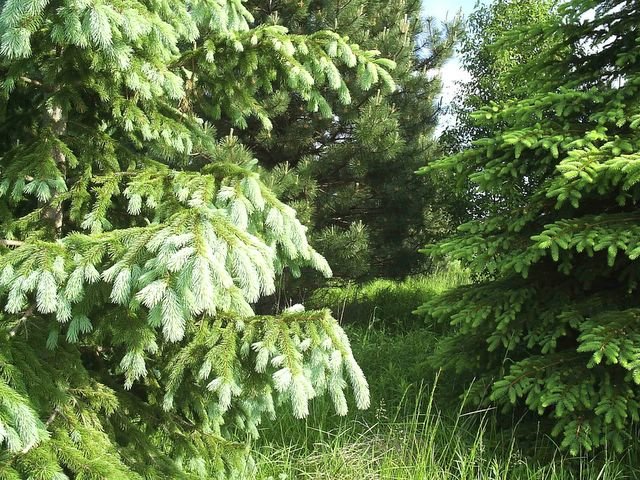
Spruce Tips - Jelly & Beer & Salad


Pick only soft, light-colored tips--if they are hard, or dark, they will taste of "turpentine."


Spruce Tip Jelly
Pick about 6 cups of spruce tips selecting only the smallest, less open ones in the early spring. Rinse in cold water. Chopping them gives them more flavor than leaving them whole. Cover the tips with water and simmer for 10 minutes. Let stand overnight, strain with cheesecloth.

7 cups prepared spruce tip juice
1 cup lemon juice
2 packages MCP pectin (18thC cooks would have used tart apples or quince jelly)
10 cups sugar
1/4 tsp. butter (optional)
Mix juice with lemon juice and pectin, stir until dissolved. Bring to a full rolling boil for 2 minutes (or jelly test). Add butter to control foaming and pour into jars and seal. Serve on your favorite breads or heat and serve on pancakes. Or just spoon it out of the jar. But don't get caught!

Prince of Wales Island Fair Recipes, 1st issue, 1998
Recipe submitted by Sharon Hillis, Whale Pass, Alaska

Use left over tea for drinking or brew up another batch just for drinking. Add water to dilute and honey to taste.

Spruce beer was the frontier's answer to scurvy prevention.

Benjamin Franklin's Spruce Beer Source: Thomas Manteufel

A Way of Making Beer with Essence of Spruce:

For a Cask containing 80 bottles, take one pot of Essence and 13 Pounds of Molases. -or the same amount of unrefined Loaf Sugar; mix them well together in 20 pints of hot Water: Stir together until they make a Foam, then pour it into the Cask you will then fill with Water: add a Pint of good Yeast, stir it well together and let it stand 2 or 3 Days to ferment, after which close the Cask, and after a few days it will be ready to be put into Bottles, that must be tightly corked. Leave them 10 or 12 Days in a cool Cellar, after which the Beer will be good to drink.

Comments: Translated from the french while he was stationed in France.

The light bluish-green tips make a delightfully citrusy, spritely addition to green salads.

Sunday, May 28, 2006

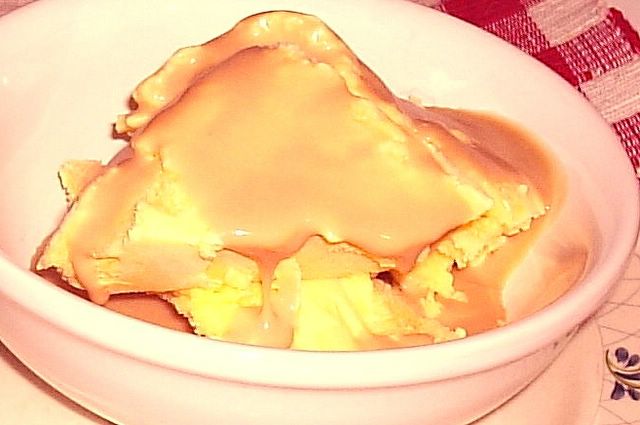
Ginger Ice Cream with Balsamic Caramel Sauce


Ruth at Once Upon a Feast is host for this month's Sugar High Friday--she chose ginger as her focus. Enjoy.

GINGER ICE CREAM from epicurious.com

4 large egg yolks
1/2 cup sugar
1/4 cup coarsely grated peeled fresh gingerroot
2 tablespoons water
2 cups half-and-half
1 cup heavy cream
1 teaspoon vanilla
1/2 cup crystallized ginger*
*available at some supermarkets and specialty foods shops.

In a large bowl lightly whisk yolks. In a 3-quart heavy saucepan cook sugar, fresh gingerroot, and water over moderate heat, stirring occasionally, 5 minutes. Add half-and-half and bring to a simmer. Add hot half-and-half mixture to yolks in a slow stream, whisking, and pour into pan. Cook custard over moderately low heat, stirring constantly, until a thermometer registers 170°F. (Do not let boil.)
Pour custard through a sieve into cleaned bowl and stir in cream and vanilla. Cool custard. Chill custard, its surface covered with plastic wrap, until cold, at least 3 hours, and up to 1 day.
Finely chop crystallized ginger. Freeze custard in an ice-cream maker, adding crystallized ginger three fourths of way through freezing process. Transfer ice cream to an airtight container and put in freezer to harden. Ice cream may be made 1 week ahead.

Makes about 1 quart.
Gourmet
November 1998

* * * * *


Balsamic-Caramel Sauce from Michael Chiarello foodnetwork.com
2 cups heavy cream, divided
2 cups granulated sugar
2 tablespoons water, plus more for brushing
4 tablespoons balsamic vinegar
1 lemon, juiced
1/2 teaspoon salt

Bring 1 cup cream just to a boil in a small saucepan over high heat. Reduce the heat to low and keep the cream warm. In a large high-sided saucepan over medium-high heat, dissolve 1 cup of sugar with 2 tablespoons of water. As the sugar mixture begins to bubble, watch for crystals developing on the inside of the pan just above the liquid. Using a pastry brush dipped in water, brush the inside of the pan right above the crystals so the water drips down and dissolves the crystals back into the liquid. When the sugar begins to brown, occasionally move the pan to swirl the liquid gently and cook it evenly. Continue to cook until the mixture is dark golden brown. The total cooking time will be 8 to 9 minutes. Remove the pan from the heat. Very carefully add the hot cream to the sugar mixture a few tablespoons at a time. The liquid will bubble up dramatically. Stir the sauce and cook for 1 minute. Add the vinegar, lemon juice and 1/2 teaspoon salt, mix well. Pour into a heatproof bowl. You should have about 1 1/4 cups of sauce. The sauce can be made several weeks ahead, covered with plastic, and stored either at room temperature or in the refrigerator. If refrigerated, warm in a microwave oven before using.
Serve on top of ice cream.

Friday, May 26, 2006

Asparagus Disguised as Peas


Kevin, of Seriously Good, has asked for a plethora of recipes, an Asparagus Extravaganza, if you will.

Asperges en petits pois
Ayez des petites asperges; coupez tout le tender comme des petis pois; étant bien lavées vous les faites faire deux ou trios bouillons à l’eau bouillante; égouttez et les passez sur le feu avec un bon morceau de beurre, un bouquet de persil, ciboules, un clou de girofle, un peu de sariette; mettez-y une pincée de farine; mouillez de bouillon, un peu de sucre et du sel; faites cuire et réduire à courte sauce; en finissant mettez-y une liaison de juanes d’oeuf et de crème.


Menon, Les Soupers de la cour (1755), 4:173-74.

Asparagus Disguised as Peas
1 pound slender asparagus, weighed after the tough ends are cut off
3 tablespoons butter
a bouquet of 3 or 4 sprigs of parsley, 2 scallions, trimmed, 1 whole clove, and 3 or 4 sprigs winter savory, all tied with string
2 teaspoons flour
½ cup bouillon
1 teaspoon sugar
salt to taste
2 egg yolks
¼ cup cream

Clean the asparagus and cut it into pea-sized lengths. Bring water to a boil and parboil them in it for or two minutes, then drain. Melt the butter in a saucepan until it bubbles; add the asparagus and the bundle of herbs; sauté until half cooked, and then stir in the flour. Cook and stir for another minute or two, then add the bouillon, the sugar, and some salt. Cook and stir until the liquid has thickened and reduced slightly. Remove the mixture from the fire, also remove the herb bouquet. Beat together the egg yolks and the cream; stir some of the asparagus mixture into it, and then pour the liaison into the saucepan; stir the mixture well together and heat, but do not boil. Serve at once as a separate dish or as a garnish.

1983 Wheaton, Barbara Ketcham. SAVORING THE PAST : The French Kitchen And Table from 1300 to 1789. Touchstone, New York, NY, p. 268.

Tuesday, May 23, 2006

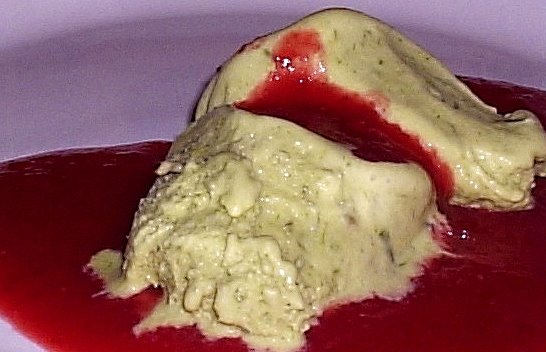
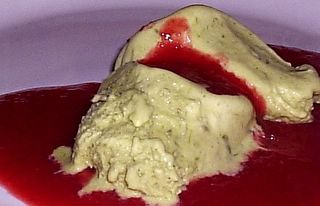
Asperges Glacé avec Fraises Coulis Balsamique


Pour blog appetit! de ce mois J'offre un goût délicieux et colore la combinaison. Les dirigeants [cuisiniers froids de cuisine] aux 17èmes et 18èmes siècles, faits glace de tout imaginable, y compris l'asperge. Comme le créateur de cette recette trouvé, la glace Cream de Asparagus de goûte comme la pistache, ainsi elle est la couleur verte impaire peut être pardonnée [la recette suit]. L'appareillement de elle avec des coulis de fraise avec un contact de vinaigre balsamique est génie pur.

Ingrédients
Une asperge de groupe
sucre de 1 tasse (pour faire le double sirop de sucre)
l'eau de tasse de 1/2
tasse Amaretto de 1/2
2 oeufs (à la température ambiante)
sucre de tasse de 1/2
(1 pinte) crème 600mL
(pinte de 1/2) lait 200mL
Méthode

NOTA:. Cette crême glacée est complètement expérimentale. Ainsi j'ai enregistré la méthode que j'ai employée et des pensées j'ai eues pendant la fabrication. Si vous avez n'importe quoi à ajouter, satisfaire /msg je.

Dissolvez 1 tasse de sucre dans l'eau et l'apportez à l'ébullition. Enlevez la partie boisée de l'asperge, et du coup de hache dans de petits morceaux. Ajoutez l'asperge. Revenez à l'ébullition et enlevez la chaleur. Puisque l'asperge était d'être puréed, j'à gauche il pour se refroidir vers le bas dans le sirop, pour tremper dans le sirop de sucre.

Faites la crème. Battez les oeufs et le sucre ensemble. Chauffez doucement la crème et le lait. Ajoutez la crème/lait aux oeufs tout en remuant. Filtrez la crème de nouveau dans le pot au-dessus d'une chaleur douce. Remuez jusqu'à la crème enduira le dos d'une cuillère.

Mélangez la liqueur d'asperge et d'amande. Je n'ai pas vidangé l'asperge complètement, tellement il y avait un peu du sirop de sucre dans le mélangeur, mais pas trop. Je sûrement n'ai pas voulu concentrer la saveur d'asperge.

Ajoutez le purée d'asperge à la crème. Bien que j'aie voulu à, je n'ai pas tendu le mélange encore. J'ai pensé qu'une texture douce serait une bonne idée. Mais l'éloge de la crême glacée était son inclusion de fibre.

Battez selon les instructions sur la machine de crême glacée.

Fraises Coulis Balsamique
300 fraises fraîches de g
150 ml d'eau
sucre glace de 100 g
15 ml de jus de citron
25 ml au vinaigre balsamique

Lavez les fraises et placez-les dans un mélangeur ;
ajoutez l'eau, le sucre glace et le jus et le mélange de citron tout ensemble complètement ;
placez les coulis dans une casserole et un cuisinier de sauté pendant quelques minutes ;
laissez frais pendant 5 minutes ;
ajoutez le vinaigre balsamique au goût.

* * * * *


For this month's blog appetit! I offer a delightful taste and color combination. Officers [cold kitchen cooks] in the 17th and 18th centuries, made ices from everything imaginable, including asparagus. As this recipe's creator found, Asparagus Ice Cream does taste a little like pistachio, so it's odd green color can be forgiven [recipe follows]. Pairing it with strawberry coulis with a touch of balsamic vinegar is pure genius.

Ingredients
One bunch asparagus
1 cup sugar (to make double sugar syrup)
1/2 cup water
1/2 cup Amaretto
2 eggs (at room temperature)
1/2 cup sugar
600mL (1 pint) cream
200mL (1/2 pint) milk
Method

NB. This ice cream is completely experimental. So I have recorded both the method I used and thoughts I had during the making. If you have anything to add, please /msg me.

Dissolve 1 cup of sugar in the water and bring to the boil. Remove the woody part of the asparagus, and chop into small pieces. Add the asparagus. Return to the boil and take off the heat. Because the asparagus was to be puréed, I left it to cool down in the syrup, to steep in the sugar syrup.

Make the custard. Whisk the eggs and sugar together. Gently warm the cream and milk. Add the cream/milk to the eggs while stirring. Strain the custard back into the pot over a gentle heat. Stir until the custard will coat the back of a spoon.

Blend the asparagus and almond liqueur. I didn't drain the asparagus completely, so there was a small amount of the sugar syrup in the blender, but not too much. I surely did not want to concentrate the asparagus flavour.

Add the asparagus purée to the custard. Although I wanted to, I did not strain the mixture again. I thought a smooth texture would be a good idea. But the praise of the ice cream was its inclusion of fibre.

Churn as per the instructions on the ice cream machine.

Strawberry Coulis with Balsamic Vinegar
300 g fresh strawberries
150 ml water
100 g icing sugar
15 ml lemon juice
25 ml balsamic vinegar

Wash the strawberries and place them in a blender;
add the water, icing sugar and lemon juice and blend everything together thoroughly;
place the coulis in a sauté pan and cook for a few minutes;
let cool for 5 minutes;
add balsamic vinegar to taste.

Thursday, May 11, 2006

Puff Paste -- Pâte de Feüilletage

Pâte de feüilletage Massialot's Les Confitures (1717), p. 217.

Faites une pâte à l’ordinaire, avec de la farine, de l’eau, du sel, & si vous voulez quelques jaunes d’œufs: quand vôtre pâte est bien petrie & renduë bien maniable; vous l’étendez sur le tour avec vôtre rouleau, en long d’une bonne épaisseur; vous le couvrez ensuite d’autant de bon beurre: & ayant renversé l’un des bouts sur l’autre, que cela renferme tout le beurre en-dedans; vous la détendrez une seconde fois, la replirez, & la détendrez de rechef avec le rouleau, continuant ainsi jusqu’a cing ou six fois: sur trois livres de farine, vous y mettez deux livres & demie de bon beurre frais.

Cette pâte est propre pour d’autres tourtes qu’on auroit à faire hors d’un dessert, où ce n’est point l; ordre de rien servir où il entre du beurre. On en peut aussi faire des feüillantines [ ] & des mazatines[tartlets of mashed potatoes, eggs and butter; filled wth a hash]; qui sont des petites tartes de la largeur de la paûme de la main; que l’on replit aussi de confiture, pour garnir quelque autre tourte plus grande pour l’entremets: & si c’est pour le dessert, on en peur faire avec des abaisses croquantes, comme ci-devant.


Method for preparing puff-pastry

Let some paste be made after the usual manner, with flour, water, salt, and if you please, the yolk of an egg. As soon as it is well kneaded, and made very pliable; roll it out upon the table, of a convenient length and thickness. Then cover it with as much good butter, and having turned one of the ends upon the other, so as all the butter may be enclosed on the inside, roll it again, continuing to do the same thing five or six times. Two pounds and a half of good fresh butter ought to be allowed for every three pounds of flour.

This sort of paste is proper for other tarts/tourtes/pies that are brought to table without a dessert, in which it is not customary to serve up anything that is prepared with butter. However, feuillantines [small individual pies--think turnovers], feuillantins[think Napoleans - sheets of puff pastry] and mazarines [small, pressed or molded tart shells], which are certain small tarts of the breadth of the palm of a man’s hand, may be made ot it, being ususally filled with sweet-meats, to garnish some other pie of a larger size, set among the intermesses; but if these little tarts are designed for the dessert, they may be made of crackling crust [marzipan or pistachio].

Very good on-line instruction in French and in English, with pictures and video for making puff-paste can be found here.

Sunday, May 07, 2006

Gene Hunting in Canada--Quebec "founder" population

"In the 17th century, 15,000 French immigrants bravely made their way to eastern Canada. Some headed further west, many returned to France, but a hardy few stayed in Quebec. Starting with a total of just 2,600 people between 1608 and 1760, this group would grow 800-fold over the next 10 or so generations, with little marriage outside the group. The result is the Quebec "founder" population -- a genetically homogenous group of individuals that is ideally suited to the genetic study of disease."

Read more of this fascinating article here.

My thanks to Franco-American News & Events, 4 for drawing my attention to this post.

Saturday, April 29, 2006

Leftovers


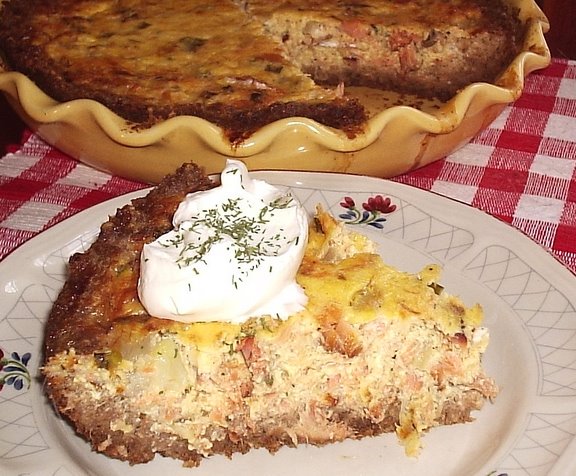
Sometimes all you have in the kitchen is a piece of this and some of that. Derrick asked me to find a use for that stale bread in the panetiere.

I “freshened” the bread by drying it even further to a golden color before crushing into crumbs. I added a pinch of dried dill weed and some melted butter and patted it into a pie pan for crust.

A piece of flaked, smoked salmon and some eggs, cream, sauteed onions and more dill weed poured into the crust made for a very tasty quiche. Bake in a slow oven until center is set.

Serve cold with sour cream and more dill.

Tuesday, April 25, 2006

You are a dainty Violet . . .


Title from A Meditation for his Mistress by Robert Herrick, 1591-1674

“These are the two months of the year [March & April] that afford matter for new comfits, that is to say, violets, which are the first flowers of a fragrant smell that the earth brings forth, after it has been delivered from the tyranny of the sharp winter.”

Eau de Violette
Prenez de la violette une quantité suffisante; par exemple, deux bonne poignées pour deux pintes de liqueur, epluchez-les, & les meetez dans de l’eau, avec une demi-livre de sucre; & étant infuse du matin au soir, ou pendant cinq ou six heures, vous coulerez vôtre liqueur à travers quelque linge, ou seulement au tamis, & la mettre glacer.


Violet Water
Take a sufficient quantity of violet; for example, two good handfuls for two quarts of liquor, peel them [strip flowers from stems and leaves], & put them in [two quarts ] of water, with a quarter or half a pound of sugar; & infuse from morning till evening, or during five or six hours; strain your liquor through some [white] linen, or only with the sieve, & to put it to ice [bottle and set back in a cool, dark place].
* * *

Sirop Violet
Prenez une livre de violette épluchée, & la pilez dans un mortier, avec un demi-verre d’eau, afin que cela la puisse un peu humecter: ensuite faites cuire quatre livres de sucre à perlé; & étant à cette caisson, vous le descendrez de dessus le fue, & laisserez rabaisser le bouillon; puis vous y mettrez votre violette, & délayerez bien le tout: vous le passerez ensuite par un linge bien fin, recevant vôtre sirop dans une terrine; & quand il ser froid, vous le mettrez dans des bouteilles.

Pour le marc qui vous restera, prenez deux livres de sucre, que vous serez cuite à perlé; & quand le bouillon sera rabaissé, vous y jetterez vôtre marc, & délayerez bien le tout; puis le mettrez dans un pot, pour vous en server quand vous voudrez faire des pâtes & de la conserve de violette, comme il a été dit ailleurs.

La meilleure violetter pour cela, est celle qui est d’un violet vermeil, & non pale, & d’une odeur tres-suave, il la faut cueillir le matin, qu’il n’ait pas plu, & auparavant que le soleil ait dissipé sa vertu.


Violet Syrup
Take a pound of violet flowers, and crush them in a mortar, with half a glass of water, to moisten them a little, while four pounds of sugar are brought to the pearled quality: then taking the pan off from the fire, as soon as the boiling sinks, throw in your violets and stir all together. Afterwards you are to press the mixture through a fine linen cloth, so the syrup may be collected in an earthenware pan, and put into bottles when cold.

The mass that remains may then be slipped into two pounds of pearled sugar, after its boiling has settled; when well mixed, pour it into a pot. This sugary mixture can be used in the making of pastes and conserve of violets, according to the instructions elsewhere laid down. The best violets for this purpose are of a dark purple color, not pale, and of a very sweet scent. They ought to be gathered in the morning, when no rain has fallen, and before the sun had impaired their virtue.
* * *

Conserve de Violette
Vous prendrez de la violette la plus belle, vous en pe-serrez deux onces que vous pilerez dans un mortier: en la pilant mettez y une petite goute de jus de citron. Vous serrez cuire une livre de sucre a la premiere plume, vous le lasserez un peu refroidir, & remuërez avac une cuiillier trios ou quatre tours, & y mettez la fleur dedans; la remuer encore un tour, & la dresser. Quand vous en aurez verse un moule, si vous voulez déguiser le reste, presses y promtement un peu de jus de citron, le remuer avec la cuilllier, & le verser dans un autre moule.

Conserve of Violets
Take the most beautiful violets, two well-packed ounces which you will then crush in a mortar while adding a few drops of lemon juice. Cook a pound of sugar to the first feather, allow it to cool slightly while stirring three or four turns, & then put the flowers in; stir till crystals begin to form around the edge of the pan. Pour immediately into moulds. If you want to use the remainder [clinging to the pan], add a few drops of lemon juice and stir to dissolve, & to pour it in another mould.
* * *

Pâtes de Violette
Prenez une livre de violette épluchée; pilez la dans un mortier, & mettez-y une goute ou deux de jus de citron en la pilant; mettez la dans un plat, & joignez-y denx ou trios cuillerées de marmalade de pommes: faites cuire du sucre à la plume, & en mettez dans vôtre marmalade le quantitez qu’il en faut, en délayant doucement avec une cuillier: faites la fremir, & la dresses à demi-froide, dans voc mouls, ou sur des ardoises; & les mettre à l’Etuve, & les finir comme les autres: en les retournant, poudrez les legerement de sucre.


Violet Paste
Take a pound of violet flowers; crush in a mortar, while adding several drops of lemon juice; put it in a dish, & add two or three spoonfuls of apple marmalade [or jelly]. Cook one pound of sugar to the feather, & add in your violet and marmalade mixture, stir gently: cook gently and at a low heat, & draw it up [cook until most moisture is gone and the bottom of the pan can be seen when drawing a spoon through the paste]; pour onto a slate or marble or into moulds; & put them in the Drying oven. When dry, turn them in powdered sugar to cover all the paste edges.
* * *

Pastilles de Violette, & autres
Pour leur donner la couleur & l’odeur de violette, vous d’etrempez d’indigo & de l’iris, & vous mêlez cette eau avec vôtre gomme, quand elle est fondue & dans le mortier. Vous y ajoûtez ensuite du sucre fin en poudre; & continuez de tourner & bien démêler le tout, tant que vous a yez une pâte maniable. On en forme ensuite des pastilles rondes, en batons, & lacs-d’amour; & on les finit comme les autres.

Si on en veut faire des rouge, il n’y a qu’a y mettre de la cochenille preparée en pisant le pâte, ou bien une cuillerée de marmalade d’epine-vinette, qui soit d’un beau rouge.


Violet Pastilles
To give them the color & the odor of violet, steep some indigo & orris with your violets, & mix this water with your gum [Arabic]; when it is dissolved add fine powdered sugar; & continue to turn & pound in your mortar until you have a handy paste. Form them as round pastilles, in sticks, & tongues of love; finish them like the others [roll in powdered sugar].

If you want a red color, prepare cochineal by making a paste, or a spoonful of marmalade of berberis, which is of a beautiful red.

From Massialot's Les Confitures (1717), translation (c) 2006, Carolyn Smith-Kizer.

Friday, April 21, 2006

Tangy & Sweet With a Kick!


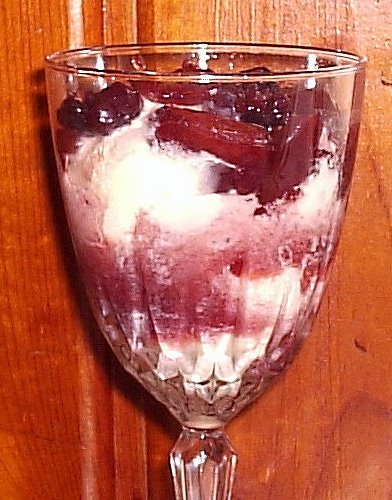
Today is Sugar High Friday, the dream child of Jennifer, and to console a friend in the doldrums, I served fresh fromage blanc with a ladle of last summer's Bachelor Jam or confiture, also known to some as Rumtopf.

The fruits were all now shades of a rich red and the ruby liqueur was sweet, thick and abundant. Drizzled over fresh, tangy fromage blanc the liqueur and fruit made a lovely dessert.

Needless to say, Madame Blanche has now left my table in a somewhat blissful state!

Tuesday, April 18, 2006

Maple Syrup and Sugar Candy


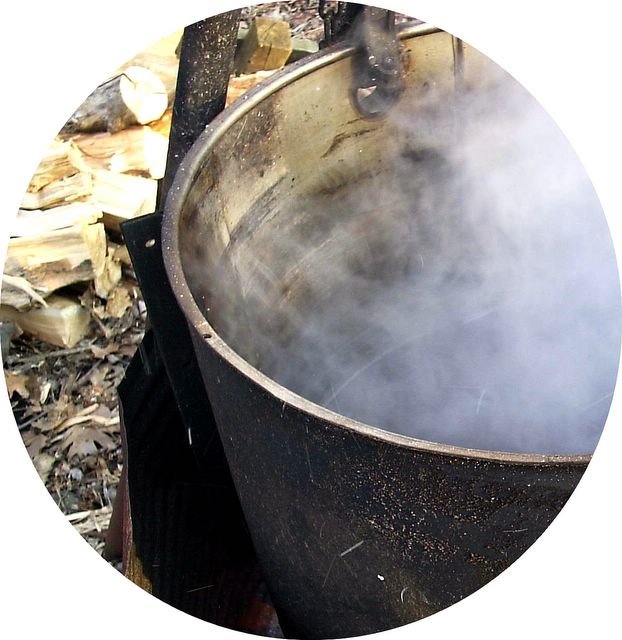
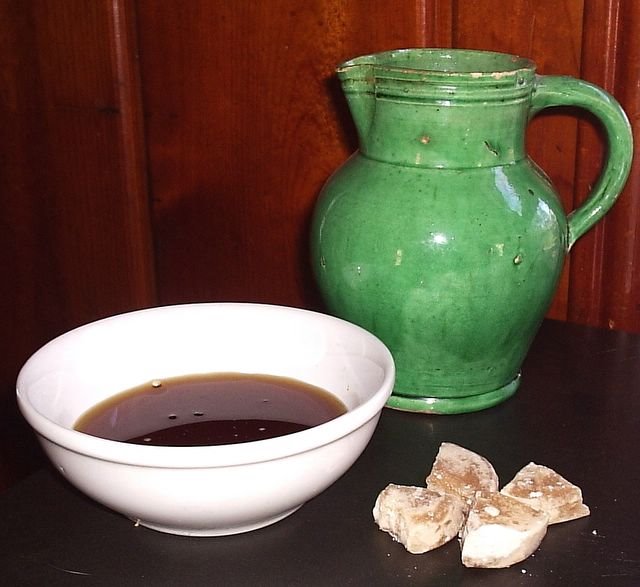
After boiling the syrup down for about 9 hours, I was able to put away many quarts of syrup.


As a treat for the children, I always introduce crystals into the last of the syrup to cause maple sugar to form. Not only does the maple candy taste wonderful, but it keeps much longer than syrup, which sometimes can mold before it's eaten.

I will use the syrup as a binder and flavor for ground meat dishes, such as pâté and boudin. Crushed maple sugar can be used in many dishes and is a special treat for all ages.

Tuesday, April 04, 2006

Pâté en croûte de poulet et de chou

Sauté a déchiqueté le chou et a coupé les oignons jusqu'à mou et l'offre dans un skillet. Assaisonnez avec les menues epices et le sel pour goûter ; mettez de côté dans une cuvette séparée. Le lambeau avec deux froids de fourchettes ou de cube a fait cuire le poulet fini gauche. Ajoutez au mélange de chou.

Ajoutez le beurre et/ou l'huile d'olive au skillet et le beurre brun pour la saveur. Ajoutez la farine à la casserole et éraflez vers le haut et remuez constamment jusqu'à ce que de la farine soit légèrement brunie. Ajoutez le bouillon de poulet et le vin blanc au skillet et remuez jusqu'à d'une uniformité crémeuse de sauce ; sel et poivre à goûter. Pliez dans le mélange de chou et de poulet. Transformez en casserole de pâté en croûte rayée avec le brisée de pâté. Couverture avec une croûte supérieure de brisée de pâté. Bords et brosse de cuir embouti avec l'oeuf battu. Faites cuire au four jusqu'à d'or et à pétillant. Servez chaud ou froid.

* * * * *

Chicken & Cabbage Pie

Sauté shredded cabbage and chopped onions until limp and tender in a skillet. Season with menues epices and salt to taste; set aside in a separate bowl. Shred with two forks or cube cold cooked left over chicken. Add to cabbage mixture.

Add butter and/or olive oil to skillet and brown butter for flavor. Add flour to pan and scrape up and stir constantly until flour is slightly browned. Add chicken broth and white wine to skillet and stir until of a creamy sauce consistency; salt and pepper to taste. Fold into cabbage and chicken mixture. Turn into a pie pan lined with pâté brisée. Cover with a top crust of pâté brisée. Crimp edges and brush with beaten egg. Bake until golden and bubbly. Serve hot or cold.

Sunday, April 02, 2006

The Old Foodie

I must share a new food blog that I've just found--The Old Foodie. I can see some wonderful tidbits of information and food history spilling forth from her pen. I'm particularly intrigued by the possibilities of English-English, or American-English or . . .

Enjoy!

Sunday, March 26, 2006

Sugaring Time


I’ve been hard at work drilling holes and inserting wooden tubes from which maple sap can flow into my containers. It takes roughly 40 times more sap than I shall end up with in syrup or sugar. That’s a lot of time slaving over a hot fire waiting for the evaporation to turn my clear sap into dark golden syrup.

Here is a wonderful site on maple sugaring history. Keep watch for recipes using maple syrup and sugar to follow.

Friday, March 10, 2006

Fromage Glacé


Andrew chose dairy for this month's Sugar High Friday, Jennifer's monthly sweet treat. Here is the 18thC answer to ice cream!

"If French confectioners brought ice cream to the attention of the world by serving it at the French court, these same confectioners also codified the art of making ice cream so that, by the middle of the eighteenth century, numerous books could be consulted on ice cream making from A to Z." Ice Cream from families.com

Autre Fromage Glacé
Prenez une chopine de Crême douce, foüettez-la bien, et délayez-la avec un petit Fromage caillé; mettez-y du sucre raisonnablement, et un peu d’eau de fleur d’orange; passez le tout au travers d’un tamis: ensuite mettez-le dans un moule pour le faire glacer, . . . . Vous pouvez diversifier le goût et la couleur, en y mettant selon les saisons, comme fraises, framboises, ou fleurs d’orange en feüilles, que vous mêlez avec vôtre crême en la passant au tamis. La fleur d’orange ne passe point, mais y laisse son goût. En hiver on le fait cuire, comme le premier fromage glacé, et on luy donne le goût de canella, de chocolat, de citron, ou d’essence de bergamotte.

Massialot's Les Confitures (1717), p. 284.

Iced Cheese, another way
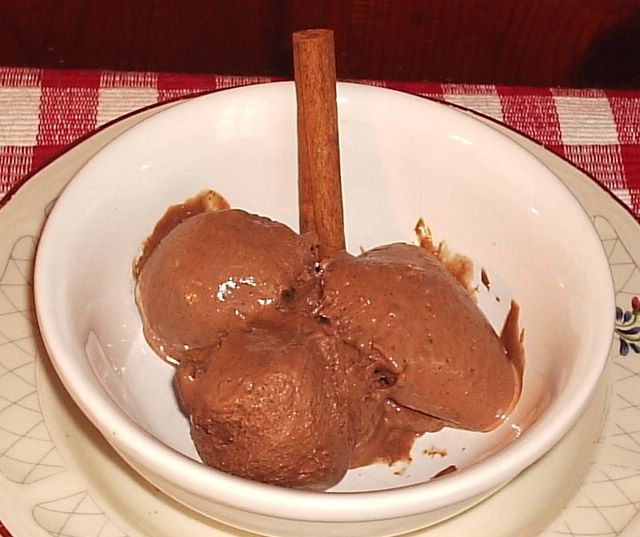
Take a pint of Sweet cream, whip it well, and fold it into 6 ounces of curdled cream [Cream cheese]; add sugar to taste, and a little water of orange flower; pass the whole through a sieve: then put it in a mould and freeze. You can diversify the taste and the color, by adding ingredients according to the seasons, like strawberries, raspberries, or orange flower petals, which you mix with yours creams while passing through the sieve. The orange flower does not pass, but leaves its taste there. In winter one cooks the mixture as in custard, and one uses cinnamon, chocolate, lemon, or oil of bergamotte (orange flower water).

Related Posts Plugin for WordPress, Blogger...