Thursday, October 27, 2005

Cornichons


Les cornichons sont des concombres qui n’ont pû profiter & parvenir à maturité. Onles confit sur la fin d’Aout & en Septembre de cette maniere; on les lave dans le l’eau fraîche,ou les essuye, on les pique avec un piquoir fin en plusieurs endroits; on les range dans un pot avec de bon vinaigre; assaisoné de sel & poivre concassé, & de quelque clous de girofle; qu’ils trempent aisément, & les tenir bien couverts. On confit aussi de gros concombres, mais tenders & avant que la graine y soit formée.

The gherkins are cucumbers which do not have to arrive at maturity to be useful. Pickle them at the end of August or September in this manner; one washes them in fresh water, or wipes them, one pricks them with a fine pricker in several places; one arranges them in a pot with good vinegar; seasoned salt & crushed pepper, & of some cloves; that they soak easily, & to hold them covered well. One pickles also large cucumbers, but [while they are still] tender & before the seed is formed there.

Page 448-9, Nouvelle instruction pour les confitures, les liqueurs et les fruits de Massialot

Wash and wipe your cucumbers, prick all over with a needle and layer as tightly as possible in a crock. Add salt, pepper and a couple of whole cloves to enough good vinegar to cover the cucumbers and bring to a boil in a non-reactive pan. Pour over cucumbers, cover and leave for two days. Drain vinegar and bring to a boil again and repour it over pickles in crock. Repeat at the end of two days; repeat one more time; then leave covered for two weeks [be certain vinegar mixture completely covers pickles at all time--weight with a piece of crockery, if necessary]. Cornichons will be crisp and sour--just right to serve with richly seasoned meat preparations.

I grew Parisian Pickling cucumbers, a rare, tiny variety, especially grown for cornichons. The weather here has been somewhat mild for so late in the fall. At the beginning of October, I pulled up my cucumber vines and picked through them to find the smallest cucumbers to preserve as cornichons to use with patés.

Wednesday, October 26, 2005

Treacle Baked Beans


Moira "sent" some black treacle, a rich molasses that is just right for baking with beans.

Molasses Baked Beans
2 cups dried navy beans
1/2 cup molasses
1/4 cup brown sugar
1 teaspoon salt
1/4 teaspoon freshly ground black pepper
1 Tablespoon prepared mustard
2 medium onions, diced
1/4 cup butter or smoked meat grease

Soak beans as least 8 hours. Drain, add to a kettle with 2 quarts fresh water; cover and put to slow fire until soft (1-2 hours). Drain liquid, but reserve. Place beans and other ingredients in a bean pot or marmite, covert and cook slowly in the coals, adding reserved liquid as needed, for 6-8 hours, until beans are dark, rich and have absorbed all liquid.

Monday, October 24, 2005

Just in on the last canoe - EBBP2


In September I received an invitation from Andrew to participate in Euro Blogging by Post, a "secret blogger" kind of event in which bloggers send local, seasonal products and secret items from their cupboards to another who then must create a recipe using one of the items received. I sent my package to Christina.

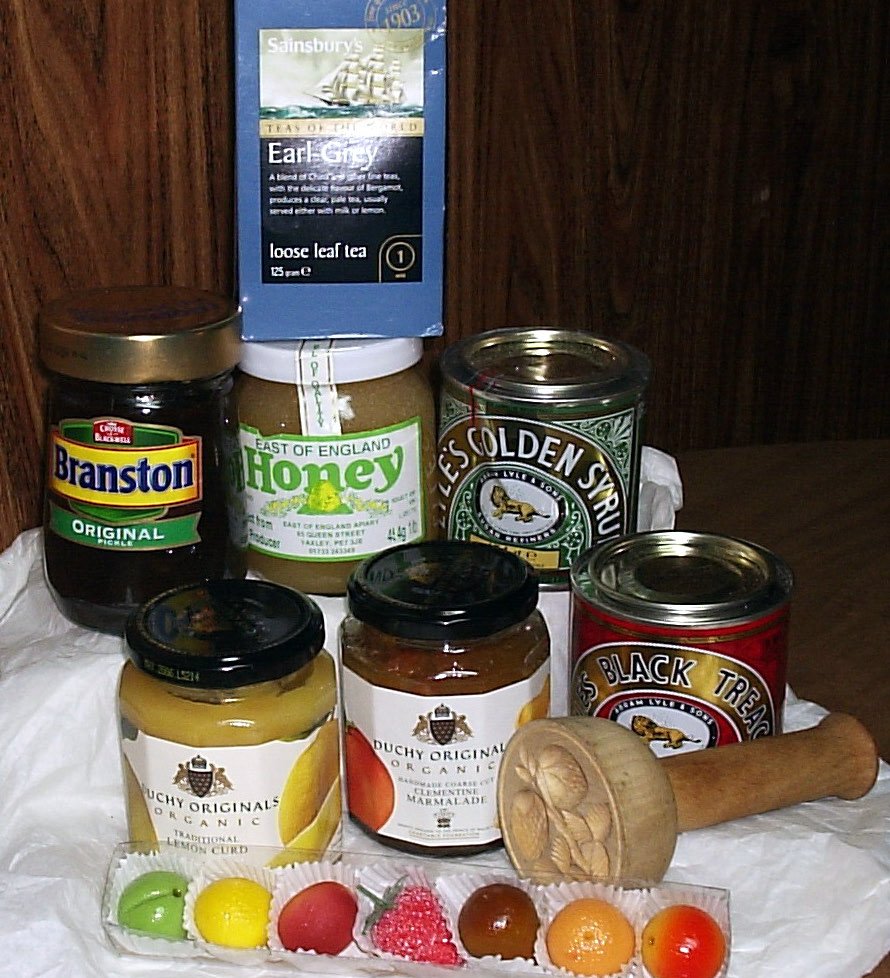
Each time a canoe put into port, I sent my husband down to the lakeshore to see if I had received any packages. Each time he came home empty handed--until today. On the last canoe arriving before freezeup, I received a wonderfully heavy package, brimful with delights from England. Moira had sent me products that are next to impossible to get--sometimes packages are lost in canoe upsets or portages or through the knavery of the those wily boatment--marvelous marzipan, treacle and confitures and a lovely antique butter stamp, pickle and tea.

Thank you, Moira. I plan to use the black treacle to make baked beans.


Search Tags: ebbp food & drink euro blogging by post

Friday, October 21, 2005

Massepains de Chocolat - Chocolate Marzipan


A royal treat for this month's Sugar High Friday . . . Dark Chocolate

Massepains de Chocolat
Echaudez deux livres d’almandes douces, lavez le dans de l’eau fraîche, pilez les bien dans un mortier; faites cuire une livre de sucre à la plume, mettez les amandes dedans; desiechez la pâte à petitfeu, tirez la de la poële, and la mettez refroidir, and quand elle sera froide, vous y mettrez trios onces de chocolat pilé and passé au tamis, and un blanc d’œuf, que vous manierez le tout ensemble; vous pourrez former une a baisse d’une partie de ladite pâte, and la découperez avec des moules de fer-blanc, and en passer aussi a la seringue: ceux qui seront découpez, vous les pourrez glacer d’une glace Royale, comme ceux ci-dessus. Le Massepain de Canelle se fait de même.

Massialot, François. “Massepains de Chocolat.” NOUVELLE INSTRUCTION POUR LES CONFITURES, LES LIQUEURS ET LES FRUITS. Trans. Carolyn Smith-Kizer. Chez Claude Prudhomme, Paris, 1716, pp. 205-6.

* * * * *

Chocolate Marzipan
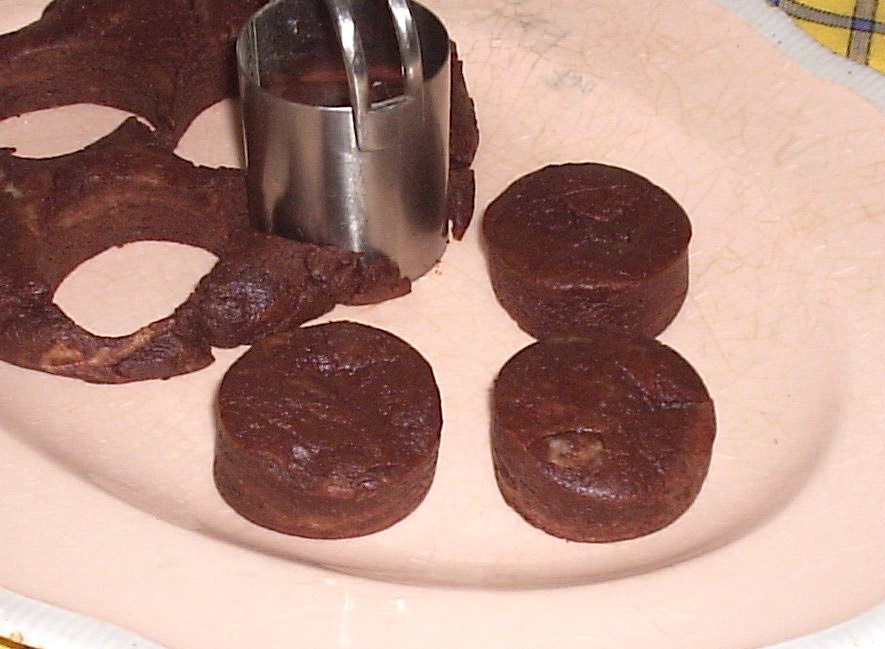
Scald two pounds of sweet almonds; wash them in fresh [cold] water [this should make the brown skins slip off when you rub them with your hands or a clean towel]; crush them well in a mortar; cook a pound of sugar to the feather [stage] (Hess* identifies the temperature as 232ºF, Recipe S6, "grand soufflé or feather."); put almonds inside [add to sugar]; desiccate the paste with a small fire, withdraw from the stove, and put it to cool [pouring onto a marble slab is best], and when it is cold, you will put [mix] in three ounces of crushed, sifted chocolate, and an egg white; that you will handle the whole together [knead on your marble slab]; you will be able to form the aforesaid paste into one mass, and will cut it out with tinplate moulds, and to also pass some to the syringe [extrude shapes from a pastry bag with tips]: those which will be cut out, you will be able to frost them with a Royal icing, like those above [massepains de pistache]. The Cinnamon Marzipan cake is done in the same way.

*Karen Hess(Martha Washington's Booke of Cookery)

Tuesday, October 18, 2005

Thon en sauce à poivre - Tuna in Pepper Sauce

Attendez jusqu'à ce que vos poivres soient rouges et bien mûrs ; suspendez chacun sur une fourchette au-dessus des charbons jusqu'à ce que la peau tourne le noir et ait boursouflé. Placez dans une cuvette et une couverture pendant plusieurs minutes jusqu'à ce que vous puissiez effacer la peau ou l'éplucher au loin. Ouvrez les poivres et enlevez les graines et les membranes intérieures et découpez la chair. Employez un poivre par personne à servir.

Font sauter un oignon doux, découpé et un ail de clou de girofle, haché en huile d'olive jusqu'à ce que translucide au-dessus d'une flamme lente. Ajoutez les poivres découpés et fermentez doucement jusqu'à ce que vous prenniez une sauce épaisse et riche. Réservation, chaude.

Le sel et poivrent votre bifteck de thon et dessèchent en beurre clarifié des deux côtés jusqu'à fait à votre goût. Service avec de la sauce chaude à poivre ; arrosez avec le lard ou la saucisse fini gauche emietté de boeuf.

* * * * *


This edition of Blog Appetit focuses on tuna and peppers.

Wait until your peppers are red and fully ripe; suspend each on a fork over the coals until the skin turns black and blistered. Place in a bowl and cover for several minutes until you can rub the skin off or peel it off. Open the peppers and remove seeds and inner membranes and dice the flesh. Use one pepper per person to be served.

Saute one sweet onion, diced and one clove garlic, minced in olive oil until translucent over a slow flame. Add diced peppers and gently simmer until you have a thick, rich sauce. Reserve, warm.

Salt and pepper your tuna steak and sear in clarified butter on both sides until done to your taste. Serve with warm pepper sauce; sprinkle with crumbled left over beef bacon or sausage

Thursday, October 06, 2005

Kitchen Invitation

I was tagged by Andrew to ask you into my kitchen. Come in and warm yourself by the fire; have a seat and I'll put the kettle on for chocolat.

My kitchen, a place of warmth and cheer.


My favorite appliance--it requires lots of elbow grease!


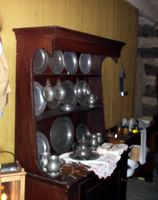
My one and only cupboard which holds my pewter dishes.


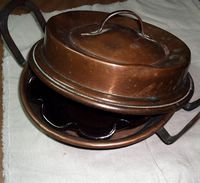
My favorite cooking pan--my tourtiere--I can keep ashes out of my pies and yet brown them beautifully.


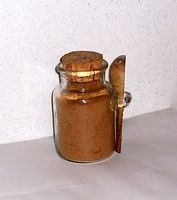
My favorite ingredient--a spice mixture I use in many meat and savory dishes.


I would like to tag Danno to carry on this meme with the following rules:

1) Show us your kitchen ( a picture) and tell us what is it about this place that reflects your own personnality.
2) Open a cupboard (the one you feel to open), take a picture and tell us what we see.
3) Present us your favorite kitchen-based electrodomestic tool.
4) Take out the ingredients you like the most, the ones you always keep stored.
5) My little steel friend: present us to your favorite cooking/baking receipient.

Sunday, September 18, 2005

Farced Eggs


Wood platter Old Bedford Mercers

One of the ways that La Varenne uses eggs for an entree is to farce them.

"Take some hard eggs, cut them into halfes, across or in length, and take out the yolks, and mince them with your farce" (in this case, I used mayonnaise), and "put to it a little nutmeg."

Also consider sautéing the minced (mashed) yolks in a little browned butter instead of mayonnaise--in which case, the nutmeg may be more in line with our current tastes. Nutmeg is not a spice we ordinarily think of in use with eggs, but it is an interesting flavor.

The French Cook, François Pierre La Varenne, Englished in 1653.

Wednesday, September 07, 2005

French Chocolate Cake

Clothilde hosts Wine Blogging Wednesday today and has chosen a wine that will taste great with chocolate. Here is my recipe for a rich, decadent chocolate cake. I often serve this cake or pots de crème when I'm out to impress as the end of a five-course meal . I always preface this dessert with a green salad dressed with vinaigrette to cleanse the pallate and to prepare for the intense enjoyment of chocolate and raspberry wine.

French Chocolate Cake
8 squares (8 oz) bittersweet chocolate, chopped into small pieces
2 sticks butter, cut into small pieces
1/2 cup sugar
2 tablespoons Armagnac
4 eggs
1 tablespoon flour
Powdered Sugar and a lacy doily
Crème fraîche for serving

Preheat your oven to medium heat (350F). Grease a 9' spring form pan with butter. Line the base with waxed paper and grease the paper. Wrap the bottom of the pan with foil to keep water from seeping in.

Melt butter, chocolate and sugar together over low heat. Remove from heat and stir in the Armagnac.

Beat eggs for 50 strokes. Beat in flour, then slowly fold in the chocolate mixture. Pour into your prepared pan.

Place the springform pan into a larger pan and place it into the oven. Pour enough boiling water around the springform pan to come more than halfway up the sides. Bake about 30 minutes, or until a broom straw inserted in the middle comes out clean. Remove the cake pan and set it on a rack to cool. The center may sink or crack--it's okay.

When the cake is almost cold, turn it out and over onto a serving plate and carefully peel back the paper. The bottom is now the top, so any cracks or sinking will be disguised.

At serving time, place a doily on top and sift powdered sugar through the lace. Cut into slices and serve with crème fraîche.

Frambrosia Oregon Raspberry wine takes the category of "berry wine" to a new height. Fine wine shops and restaurants seek out this wine for its pure, concentrated depth of flavor, and its ability to match exquisitely with a wide range of desserts. As an alternative to late harvest wine, port, or sherry -- Frambrosia is a delight to anyone who enjoys the true essence of this marvelous fruit." This wine was brought by a guest one evening--he had called before coming to ask if he could bring a wine that would go with dessert--he couldn't have made a better choice.

Saturday, September 03, 2005

New Orleans Menu - In Remembrance

As a tribute to the refugees from Katrina, IMBB and Paper Chef have joined together in asking you to stay home this weekend and cook, donating what you would have spent on dinner out to the relief effort.  Owen has chosen tomatoes, sausage, shrimp and beer as the ingredients.  I do not eat pork or shellfish, so I will substitute beef sausage and chicken.  I have included both breakfast and lunch, as well.  Enjoy your “day in New Orleans,” in remembrance.


Breakfast
Beignets or
Brioche or Croissants (with jam and real butter)
Café au lait

Lunch
Paté de Campagne
Crusty baguette
Cornichons
Brie or Camembert
Fresh fruit
Bottle of wine

Supper
Chicken & Okra Gumbo (Thanks to Jan and Donna from Metarie, LA, who helped me perfect my roux)

1/3 c flour
1/3 oil
1 chicken, cut up, (back, wings and neck reserved for stock at later date)
½ pound smoked beef sausage, diced or in thin slices
1 onion, diced
1 bay leaf
1 teaspoon dried, crushed thyme
2 teaspoons Louisiana hot sauce (not Tabasco®, but one more vinegary than hot)
1 can okra with juice (frozen or fresh okra will not impart the tang of canned—critical to my version)
1 can diced tomatoes with juice
salt and cayenne pepper to taste
filé powder
water or chicken broth
1 1/3 cup white rice

Make a nut brown roux with flour and oil in a cast iron (enameled Dutch oven) .  When done to your taste, add diced onion to hot roux, along with thyme and bay leaf, sausage and chicken, stirring and browning onion and chicken in the hot roux (Adding the chicken and browning it in the hot roux prior to adding liquid will set the flesh of the chicken—it will stay together—flesh on the bone.). Add canned okra and tomatoes, stirring constantly to prevent scorching.  Add 2 quarts boiling water or broth and Louisiana hot sauce and simmer for at least one hour.  Add salt and cayenne to taste.  Keep hot.

Add 1 1/3 cups uncooked rice, 3 cups cold water and ½ teaspoon salt to a saucepan and bring to a boil--do not stir!  Turn down to low and cover; simmer for 15 minutes or until rice is done and fluff with a fork.  

Stir filé powder into gumbo and serve immediately over rice in soup bowls.  Have extra hot sauce and filé powder on the table to add for taste.

Serve with crusty bread and a glass of cold beer

Dessert
Cream Cheese Ice Cream
Your favorite dessert wine

Monday, August 29, 2005

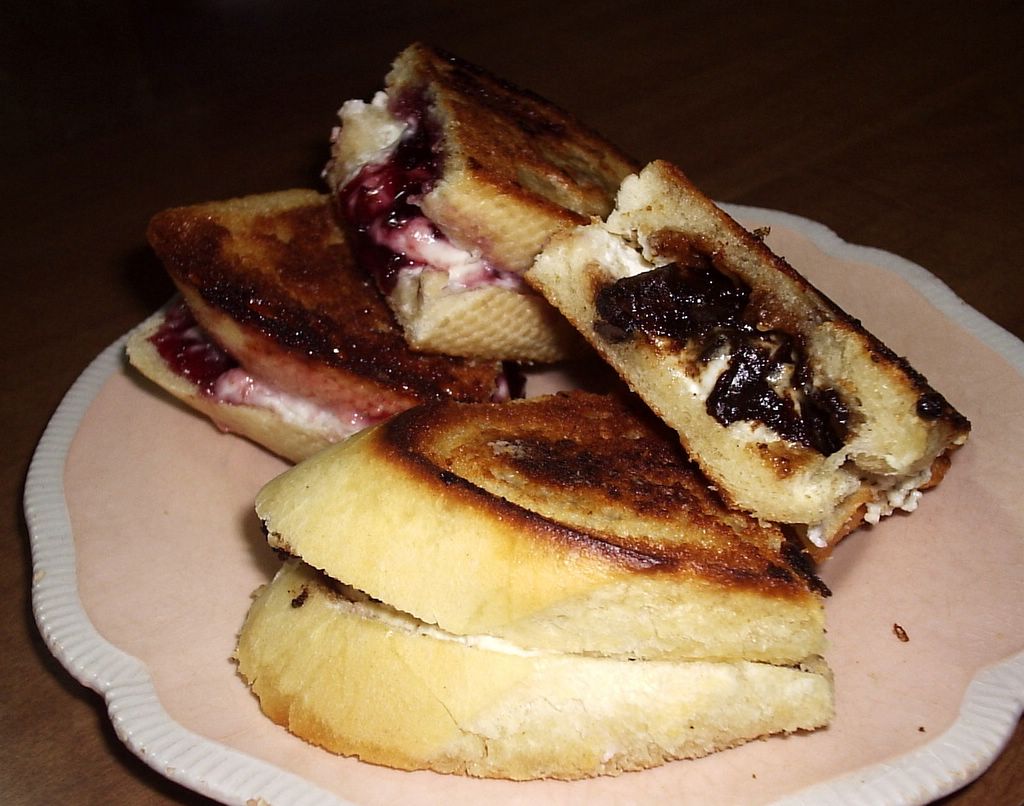
Grilled Goat Cheese Sandwiches with Chutney or Jam


Today is Grilled Cheese All Day. Goat cheese lends itself to either savory or sweet uses. Grilling the cheese helps it meld with the flavors used.

Here are two: a savory morsel with green walnut chutney--dark, gooey and tangy; and a sweet cherry jam--ooh, cheesecake as fingerfood.

Sunday, August 28, 2005

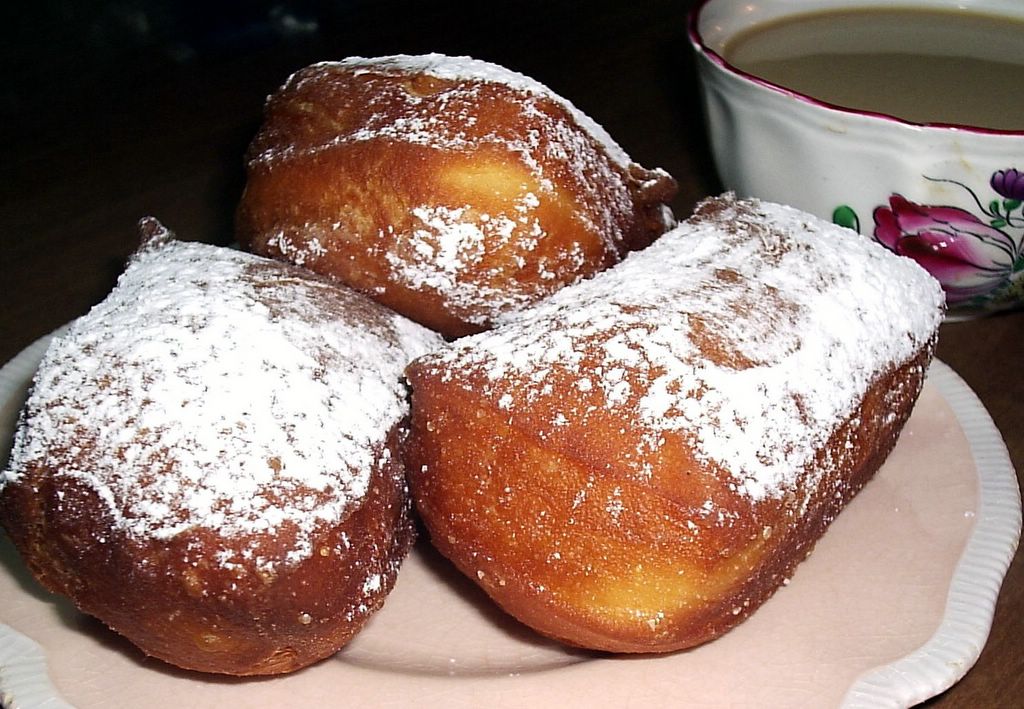
Beignets


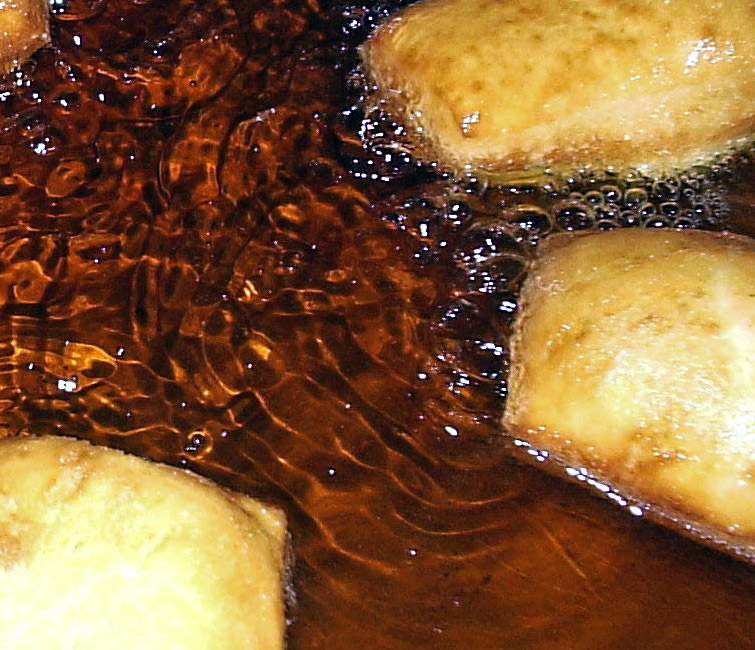
Frying. this month's IMBB, allowed me to brush up on my beignets--they are now picture perfect.

Danno from New Orleans Cuisine stopped by the other day to help me with my beignets recipe. I had not been letting my beignets rise after rolling them out and cutting. I had been relying on the hot oil to make them puff up, which they did, but I had very large holes and little dough in my beignets.


By letting them rise double in bulk before frying, I now have puffy and fluffy beignets.

When I feel truly decadent, I grate some chocolate into my café au lait.

Tuesday, August 23, 2005

Sassafras and Filé Powder

Now is the time to gather your sassafras leaves to dry for filé powder. Danno has a great post on filé powder at NolaCuisine.

Gather your leaves on stems in the early evening in mid-August in mid-America--hang upside down in paper bag to help keep them free of dust and to catch any leaves that may fall. When the leaves are dry, remove from stems and crush. Store in an air-tight container--the leaves contain a volatile oil. Use in stews and gumbos to add a certain thick richness to the broth. Do not add until the stew is almost done, and do not boil after the addition of the filé. Enjoy.

As an aside--sassafras roots are an ingredient in modern rootbeer.

Monday, August 22, 2005

Clafoutis

This summer I tried experimenting with clafoutis recipes.

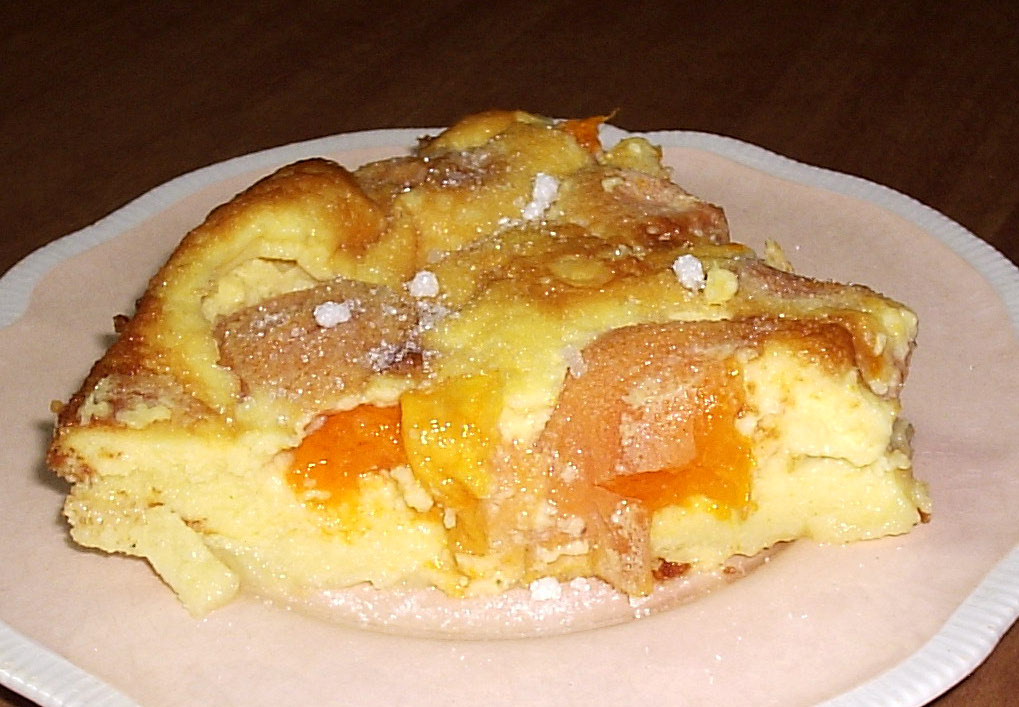
Here is my apricot clafouti made with Hélène's recipe.


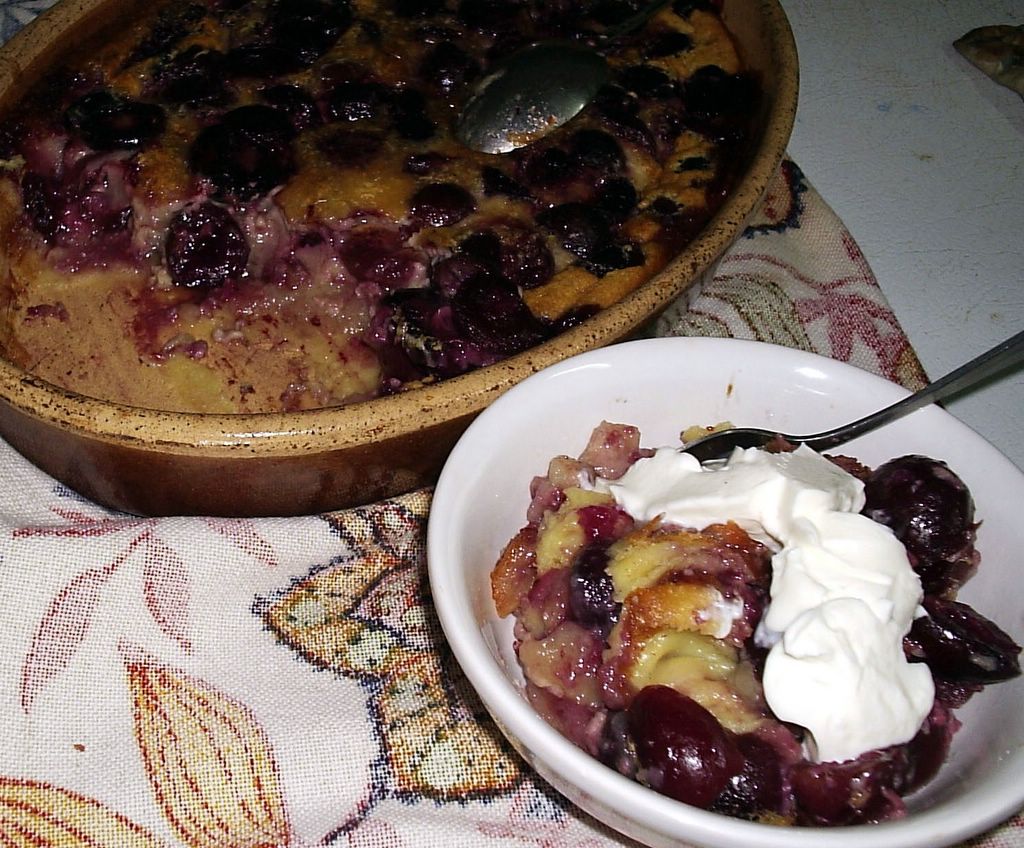
And here is my clafouti made from Cooking with Amy's posted recipe for cherry clafouti by Julia Child


Both recipes were followed exactly. However, I found that the apricot recipe needed a touch more sweetness, hence the crushed sugar sprinkles. I much preferred Hélène's recipe for its inclusion of melted butter--it added a richness that even adding crème fraîche could not match in Julia Child's recipe. Prior to trying Hélène's recipe, I had always preferred Julia's recipe, especially in technique.

I highly recommend either recipe--they are great ways to use up small pieces of or irregularly shaped fruit. Think of the batter as a cross between a custard and a crepe--eaten either warm or cold, with or without extra sugar or crème--clafoutis are delicious.

Tuesday, August 16, 2005

oignon confit

Le confit d'oignon est employé avec des gras de fois, agneau, canard ou juste seule comme spead sur le pain avec l'apèratif. J'emploie également ceci comme base en quiche d'oignon avec le gruyère.

La fonte 4 cuillers à soupe chaque huile et beurre d'olive dans le skillet et ajoutent 3 grands oignons coupés en tranches. Arrosez légèrement avec du sel et le sucre. Placez ou 1 feuille de laurier ou quelques feuilles emiettées de thym au-dessus des tranches puis ajoutent 3 oignons et sels coupés en tranches plus grands de répétition, sucre et herbes.

L'endroit sur un bas au feu moyen et remuent occassionally, ne veillant jamais à roussir, jusqu'à ce que profondément et caramalized. Finissez avec une éclaboussure du vinaigre ou du vin blanc pour l'oignon blanc, vin rouge pour les oignons rouges. Feuilles enlevées de compartiment si utilisé. Couverture et congé à adoucir avant l'emploi. Gardera plusieurs semaines si resté calme.

* * *


Onion confit is used with fois gras, lamb, duck or just on its own as a spead on bread with apèratif. I also use this as a base in onion quiche with gruyere.

Melt 4 tablespoons each olive oil and butter in skillet and add 3 large sliced onions. Sprinkle lightly with salt and sugar. Place either 1 bay leaf or a few crumbled leaves of thyme over slices then add 3 more large sliced onions and repeat salt, sugar and herbs.

Place on a low to medium fire and stir occassionally, making sure never to scorch, until thick and caramalized. Finish with a splash of vinegar or white wine for white onion, red wine for red onions. Removed bay leaves if used. Cover and leave to mellow before use. Will keep several weeks if kept cool.

Sunday, August 14, 2005

July/August Chow Magazine - verjus

I was interviewed by Ella Lawrence for an article on verjus in this month's Chow in the "Tactics" section, portions of which were previously published in MetroActive Online.

I was out looking at my grapes to see what kind of crop I'll have, and there will be plenty for another jug of verjus for myself--I may try several different recipes this Fall.
Related Posts Plugin for WordPress, Blogger...